


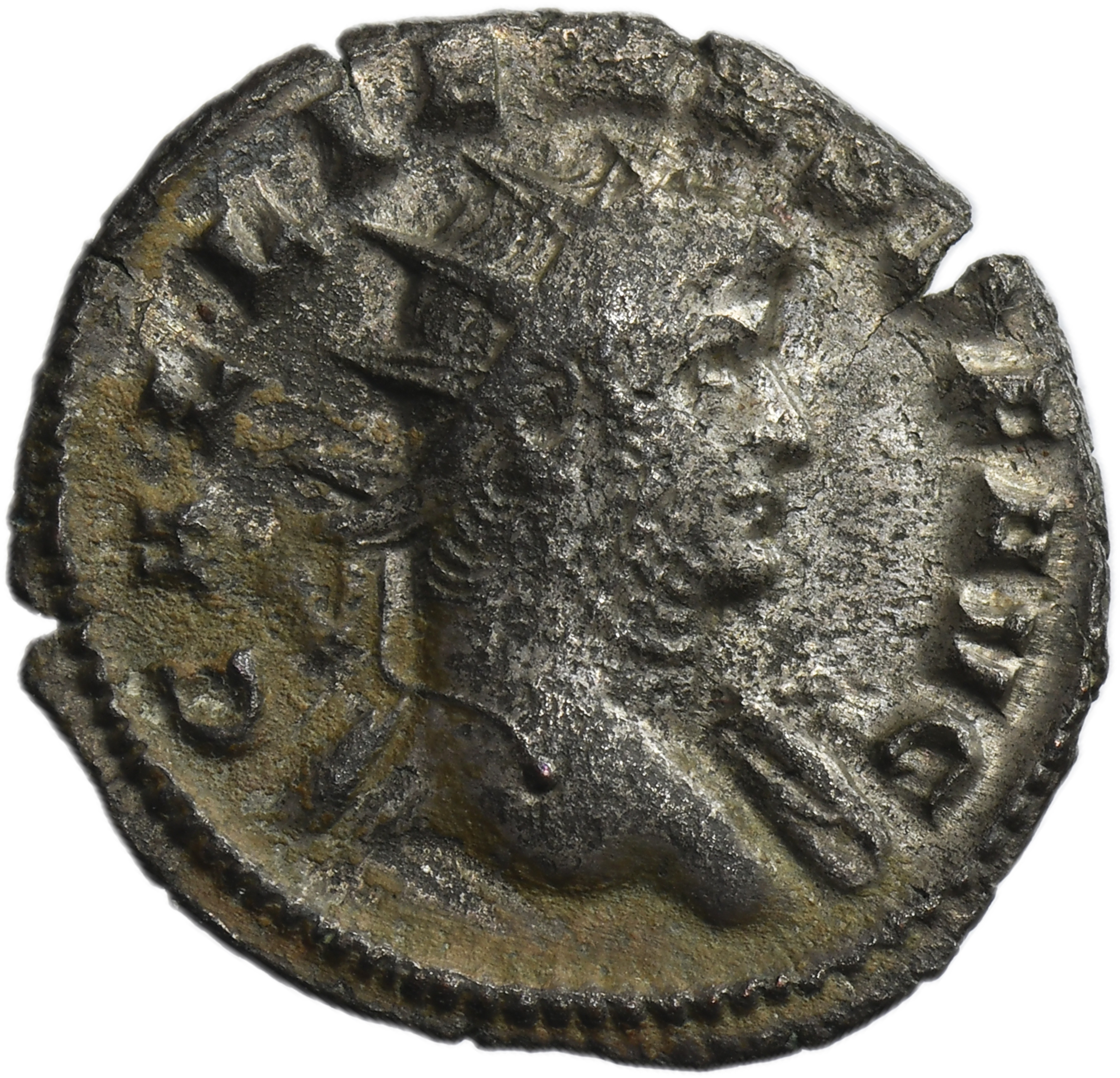


Antoninian of Gallienus (AD 260–268), struck at the Milan mint, belongs to issues from the period of his sole rule following the capture of Valerian I by the Persians, when coinage played a significant role in reinforcing imperial authority.
The obverse presents a radiate head of the emperor facing right, with the legend GALLIENVS AVG, identifying him as augustus. The radiate crown denotes the antoninianus denomination, which at this time functioned as the principal coin despite the continued reduction of silver content.
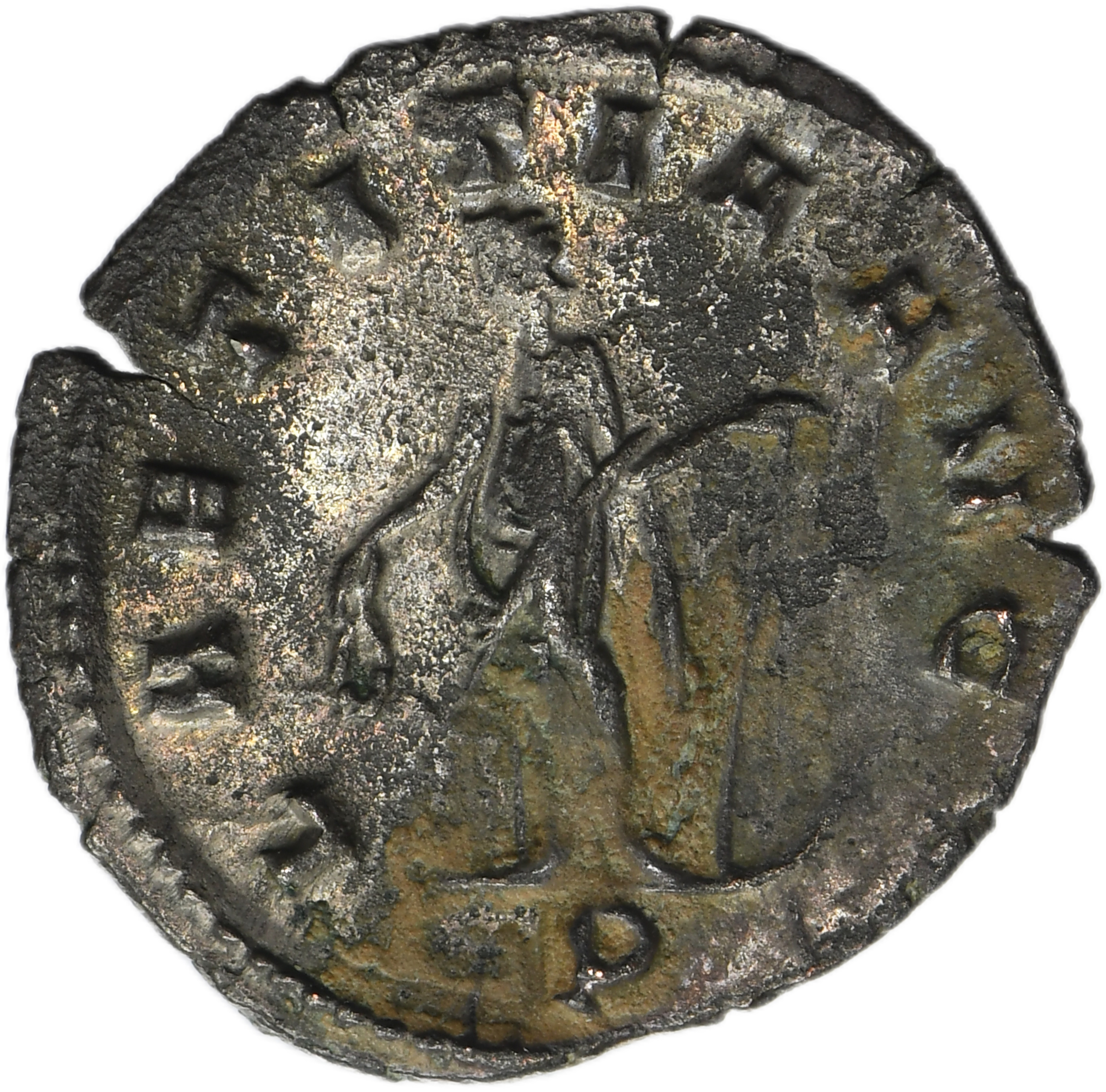
The reverse depicts Laetitia standing left, holding a wreath and an anchor, with the legend LAETITIA AVG, and the mark P in the exergue, indicating the officina. Laetitia, as the personification of joy and prosperity, belongs to a well-established iconographic repertoire used to emphasize the positive aspects of imperial rule.
The wreath symbolizes success and achievement, while the anchor less common in this context may be interpreted as a sign of stability and endurance, particularly meaningful during the political and military crises of the mid-3rd century AD.
Together, these elements form a coherent ideological message presenting the reign of Gallienus as a period of renewal and stabilization despite the challenges faced by the empire.
The coin retains traces of original silvering, a characteristic feature of antoniniani of this period.
Roman Imperial
Gallienus (253-268), Antoninianus 260-268, Mediolanum mint
Obverse: radiate head right
GALLIENVS AVG
Reverse: Laetitia standing left, holding wreath and anchor, P in exergue
LAETITIA AVG
Diameter 21 mm, weight 2.32 g











