


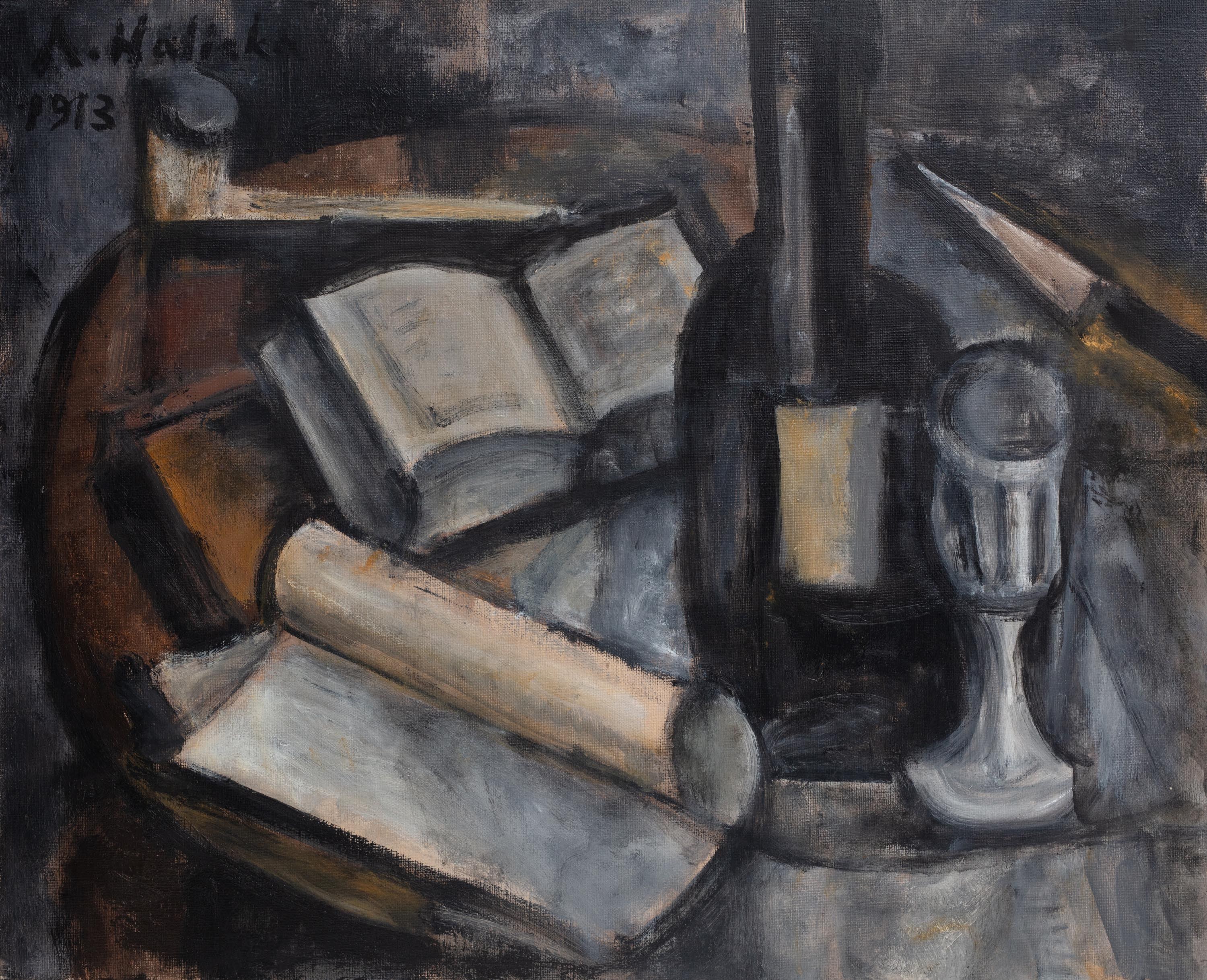
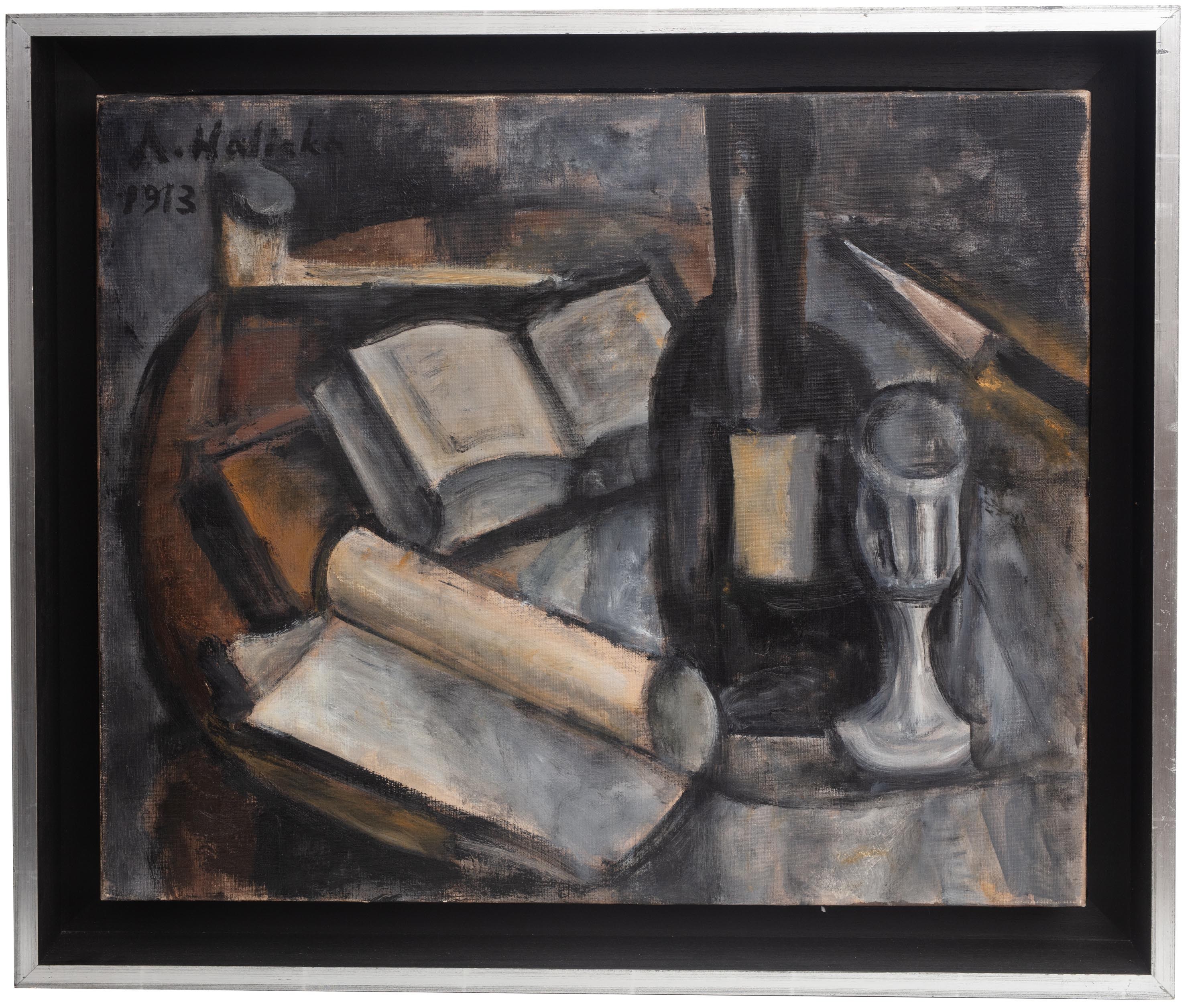
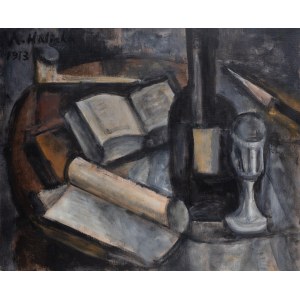
oil, canvas, 50 × 61 cm
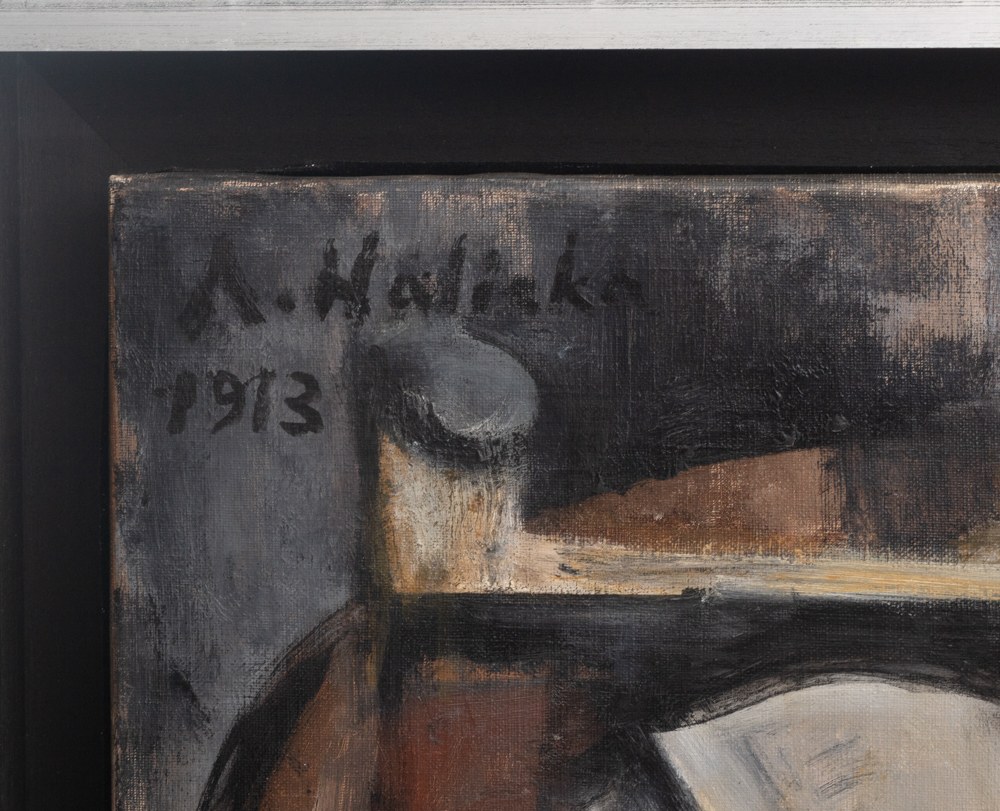
Signed l. g.: A. Halicka 1913
Exhibited:
From Renoir to Chagall 100 years of painting, July 8-September 2, 2025, Manes Gallery, Prague
Reproduced:
M.Ottavi, A.Mrowiec, From Renoir to Chagall 100 years of painting [exhibition catalog], cat.no.74, p.105.
At the beginning of 1912, Alicia Halicka visits Paris for the first time. Less than a year later, she arrives again in the French capital, with which she would already be associated for the rest of her life. Here the artist continued her study of painting begun in Munich. Thus, she studies at the Académie Ranson, and in the studios of Maurice Denis and Paul Sérusier. He participates vividly in the life of the local Polish artistic bohemia. Here she meets Louis Markus, whom she married in 1913. Marriage to the artist had a decisive influence on the further development of Halicka's artistic work. Markus introduced her to such artistic celebrities of painters and writers as Picasso, Braque, Apollinaire and Gris. Juan Gris was mentioned by Halicka herself: "I listened greedily to the brilliant discussions between him and Marcoussis. I understood (without joining him) the significance of the Cubist movement, this search for a new discipline as a reaction to the state of anarchy toward which painting had been sliding since the 19th century, and its deep philosophical reach: the transformation of ordinary objects, the 'new alchemy of values' through which Cubism merges with the world of Baudelaire and Rimbaud, seeking to 'ennoble the fate of the most common things.'" (Alicja Halicka, Yesterday. Memories, Krakow 1971, p. 54, quoted in "Alicja Halicka. Masters of École de Paris", text by Krzysztof Zagrodzki, exhibition catalog, Villa la Fleur, Konstancin - Jeziorna, Warsaw 2011, p. 75 pp. 11-13). These not-so-enthusiastic words about Cubism did not fully illustrate Halicka's actual attitude to this avant-garde trend. The artist created in this style, and her first works received acclaim, including from Apollinaire himself, who wrote of her: "Halicka possesses the gift of masculinity and realism, which allows her to wisely construct a picture without deforming the composition" ("Soirées de Paris," November 1914, p. 187, quoted in Alice Halicka, op.cit., p. 17). Halicka's successes did not exactly please Markus, who was to begin treating her as a rival. Under the pretext of protecting his wife, he began to isolate her. "One cubist in the family is enough," he was to say to Halicka. Some of her paintings Halicka was even said to have destroyed on her husband's orders. The turning point in the artist's career was Markus' enlistment in the Foreign Legion during World War I. The prolonged separation allowed the artist to freely choose a style, which fell on just Cubism. "In 1924 Louis went off to war, while I went to the Normandy farm, where I could paint for pleasure. Upon his return, I abandoned my Cubist paintings and forgot about them. To my great surprise almost sixty years later, I received in the mail a large roll sent from Normandy: sixty canvases, gouaches and drawings. The heirs of my friends had found them in the attic." (Jeanie Warnod, "L`École de Paris," Paris: Arcadia Ed., 2004, p. 84, quoted in "Alicia Halicka. Masters of École de Paris", text by K. Zagrodzki, introduction by A. Winiarski, cat. exhibition, Villa la Fleur, Konstancin Jeziorna, Warsaw 2011, p. 19.)










최근 확인한 경매
경매품 리스트를 확인하려면 로그인하세요
관심있는 경매품
경매품 리스트를 확인하려면 로그인하세요