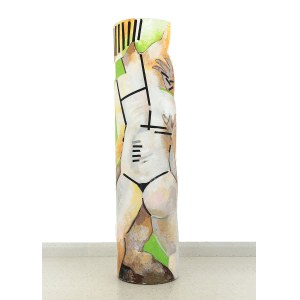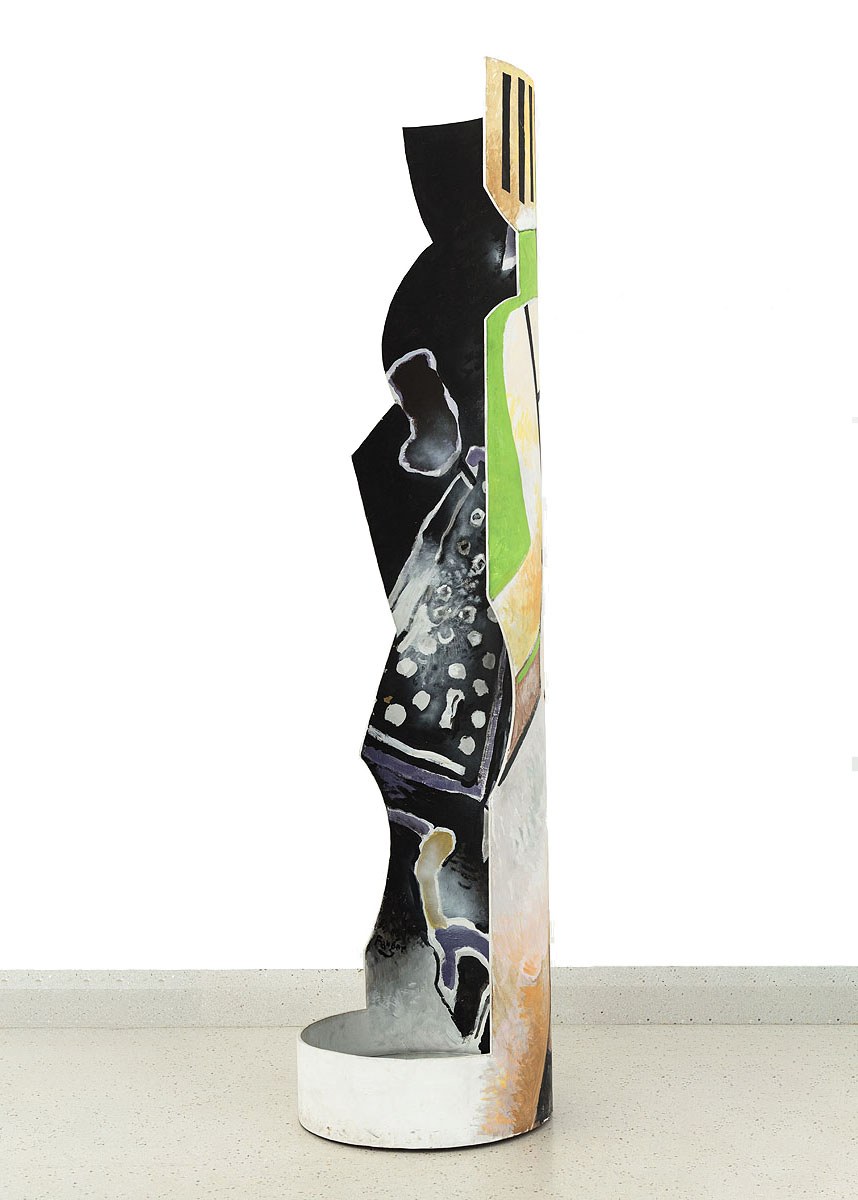
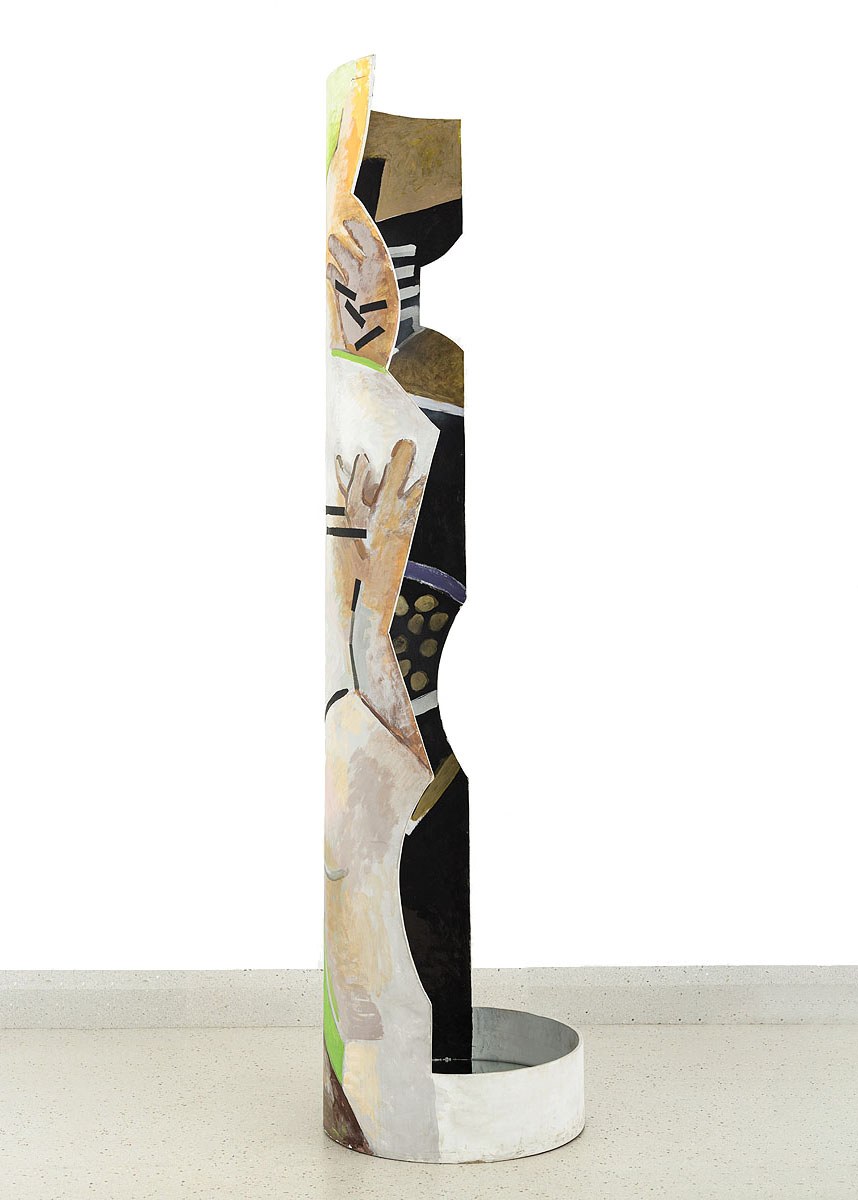
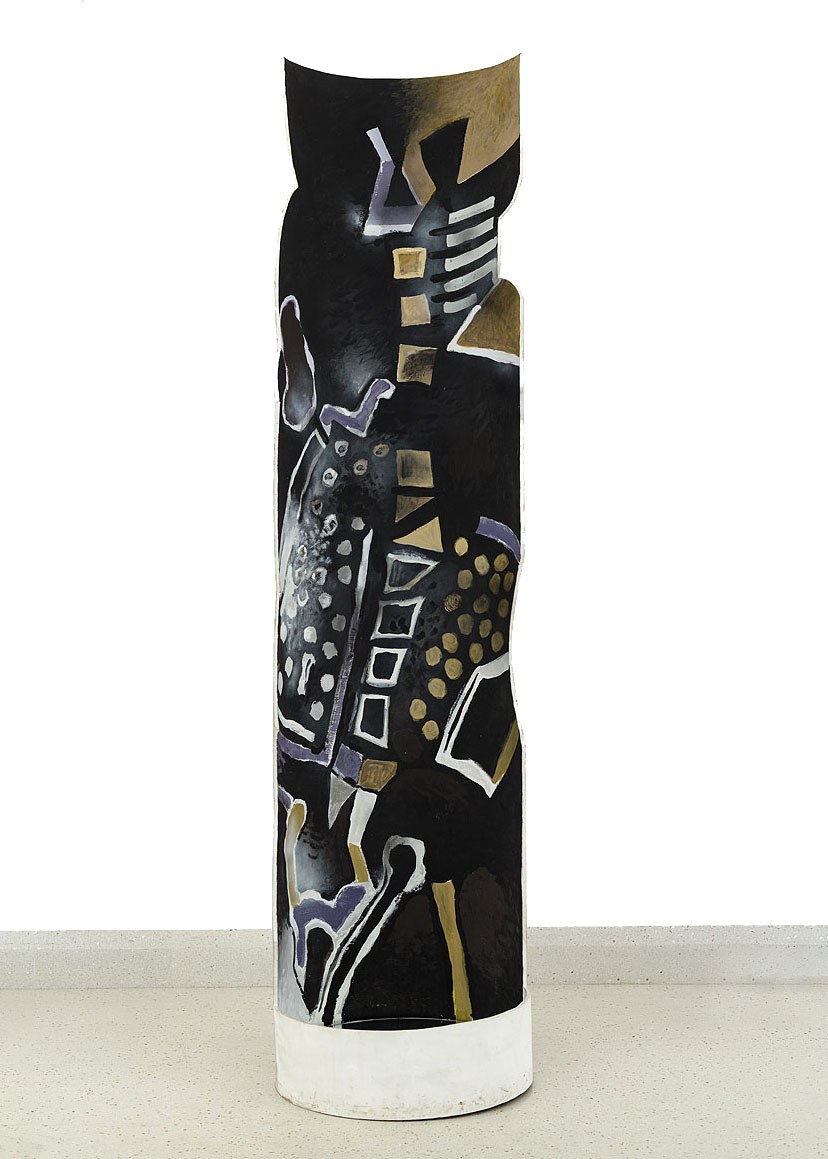
Dimensions: 250 x 60 cm
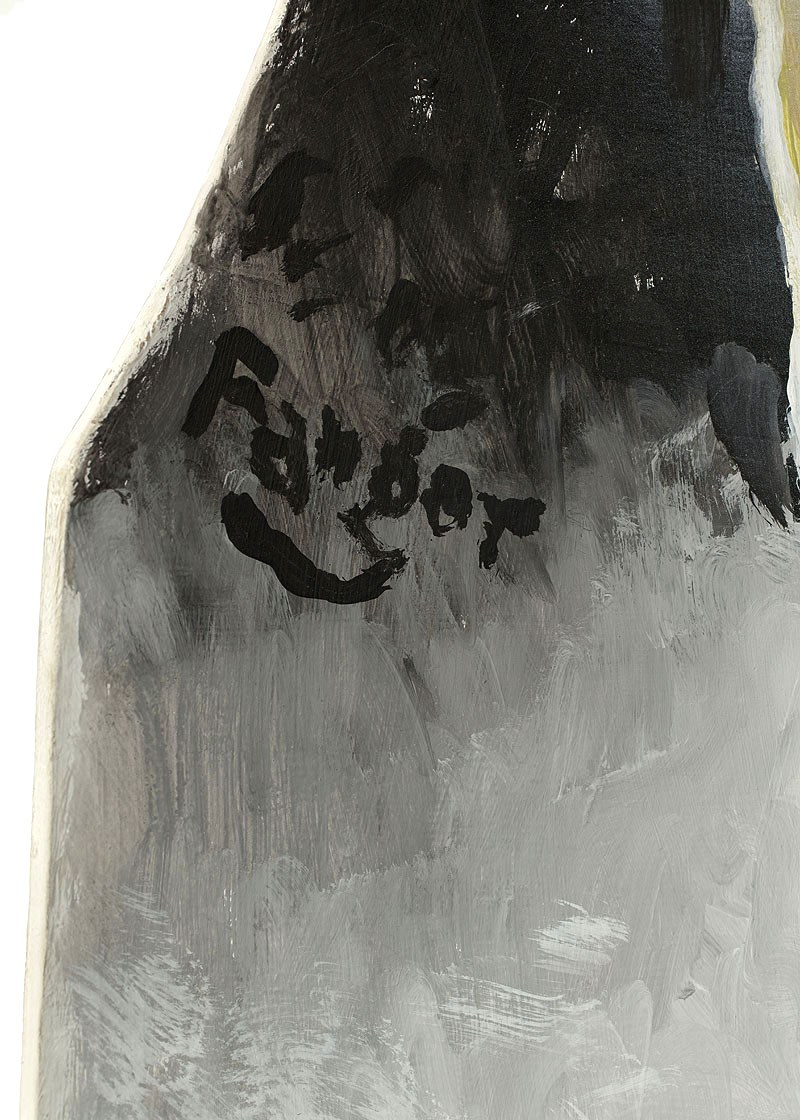
Signature: signed inside at the bottom: Fangor
Reproduced
Wojciech Fangor. Three Dimensions—A Retrospective [exhibition catalog], Orońsko 2015, p. 113.
“In the late 1950s, Fangor found a way to transition from environmental forms to paintings. In the late 1990s, by contrast, he found a way to transition from paintings to spatial structures,” wrote Stefan Szydłowski in the catalog of Wojciech Fangor’s exhibition in Orońsko (Wojciech Fangor. 3 Dimensions. Retrospective, published by CRP, Orońsko 2015, p. 142). These two spheres of his artistic practice were inextricably intertwined, forming a continuum of creative exploration. The spatial structures he created beginning in the 1990s drew both from his experience with the “environment” and from the concept of “Positive Illusory Space,” which had dominated Fangor’s painting since the 1950s. Defining the purpose of their work at the time, together with Stanisław Zamecznik, they wrote: “Everyone has an innate internal apparatus for perceiving spatial emotions. However, just like musical hearing, it may be more or less developed by nature. We use it unconsciously and rather on special occasions. In our daily lives, we think and feel out of habit, but at the seaside or in the mountains, during a flight or a dive, we experience profound emotions—provided these are not everyday occurrences for us. Just as with musical ear, there is a universal predisposition for perceiving space, a “sense of space” (Wojciech Fangor [exhibition catalog], CSW Zamek Ujazdowski, Warsaw 2003, p. 10). Created in this spirit, the artist’s sculpture is thoroughly modern, fitting into a creative trend characteristic of the 20th and 21st centuries—one defined by the crossing of genres and forms, revealing new possibilities for combining elements and going beyond what is already known in the visual arts.
Fangor created his first large-scale spatial compositions in 1980, commissioned by a magnate from Ottawa Silica in Illinois (USA). These were three steel heads which—positioned in the open space of the park surrounding the company—clearly embodied, through their placement, self-supporting structure, scale, and openness, the principles of viewer-object interaction arising from the experience of the environment. The first project, the American “Giants,” opened up a new perspective on spatial form in the artist’s work.
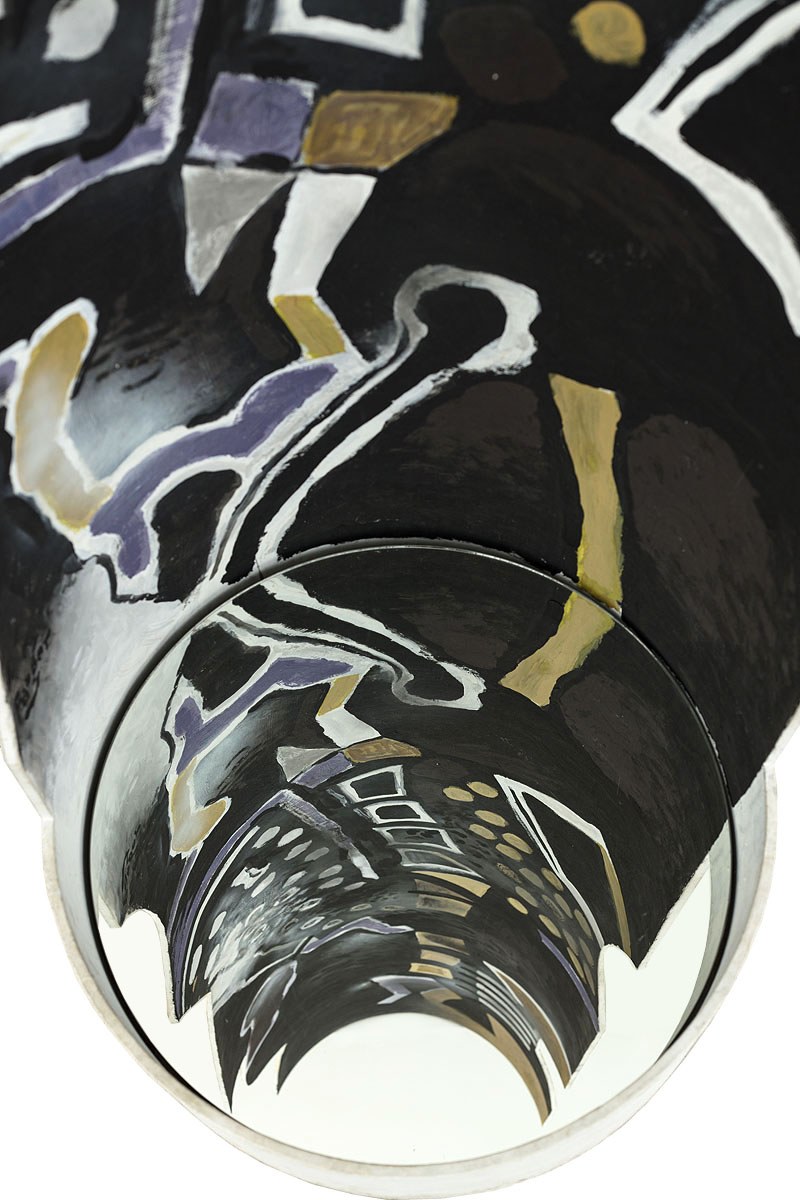
The 2003 series “Tubes of Life and Death” marked the next stage in Fangor’s spatial explorations. At the age of eighty, the painter created a series of eight sketches depicting objects that were both sculptures and paintings. He initially referred to them simply as “Poles.” Later, at the initiative of Aleksander Wojciechowski, the compositions were given the more explicit name “Tubes of Life and Death” or, alternatively, “Deadly Tubes.” In reality, they are 250-centimeter-tall cardboard-and-plaster tubes that open on one side. A mirror is mounted in their round base, creating the illusion of space by multiplying the image. The columns were painted by the artist in his characteristic, dual style—on the outside, they feature colorful, stylized depictions of female bodies, overlaid with grids of lines and dots, while the interior reveals dark compositions featuring skeletons as the central motif. As a unique spatial installation, the project draws on the dichotomies of interior-exterior, life-death, and light-darkness that fascinate the artist. Aligning visually and thematically with Fangor’s entire body of work, it essentially highlights the tensions and contradictions present both in the world and within ourselves.