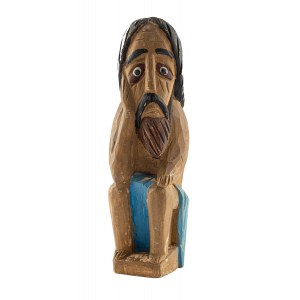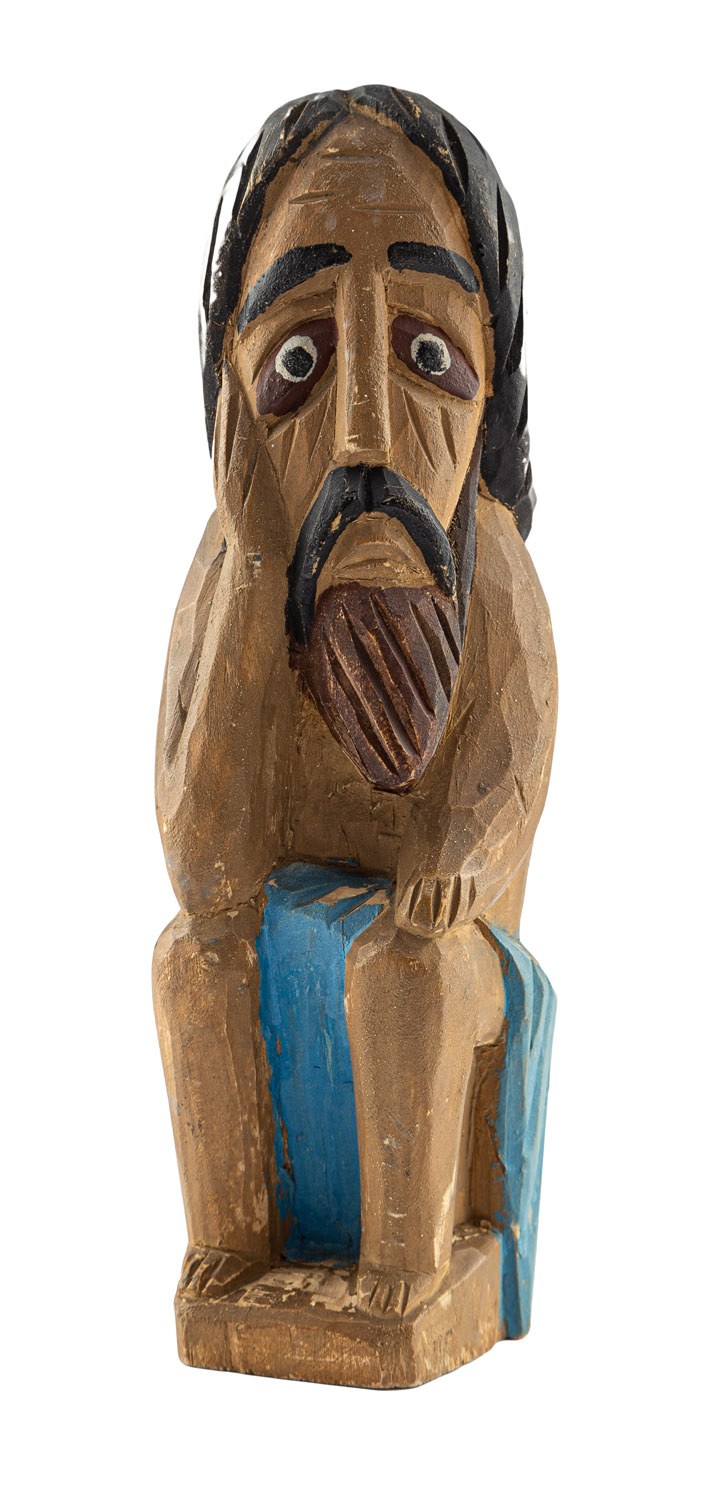
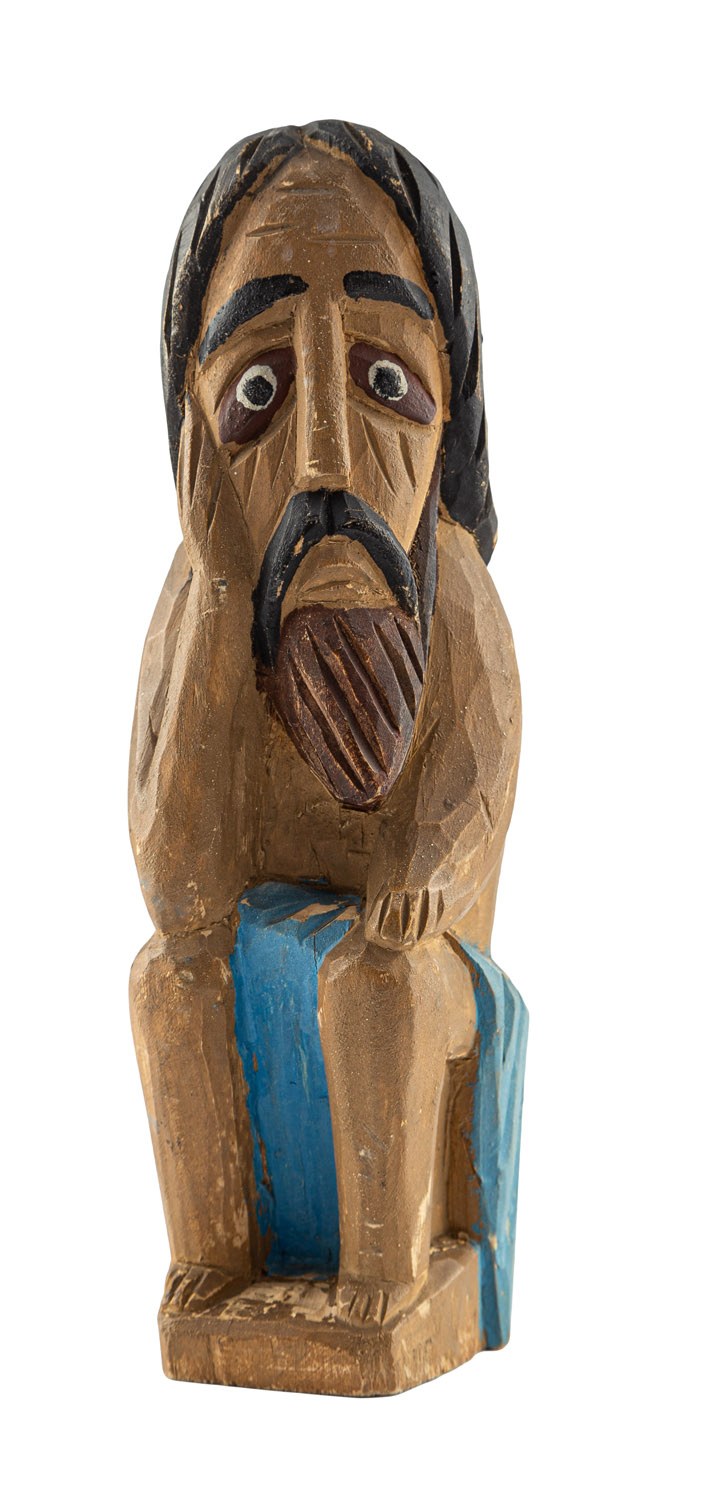
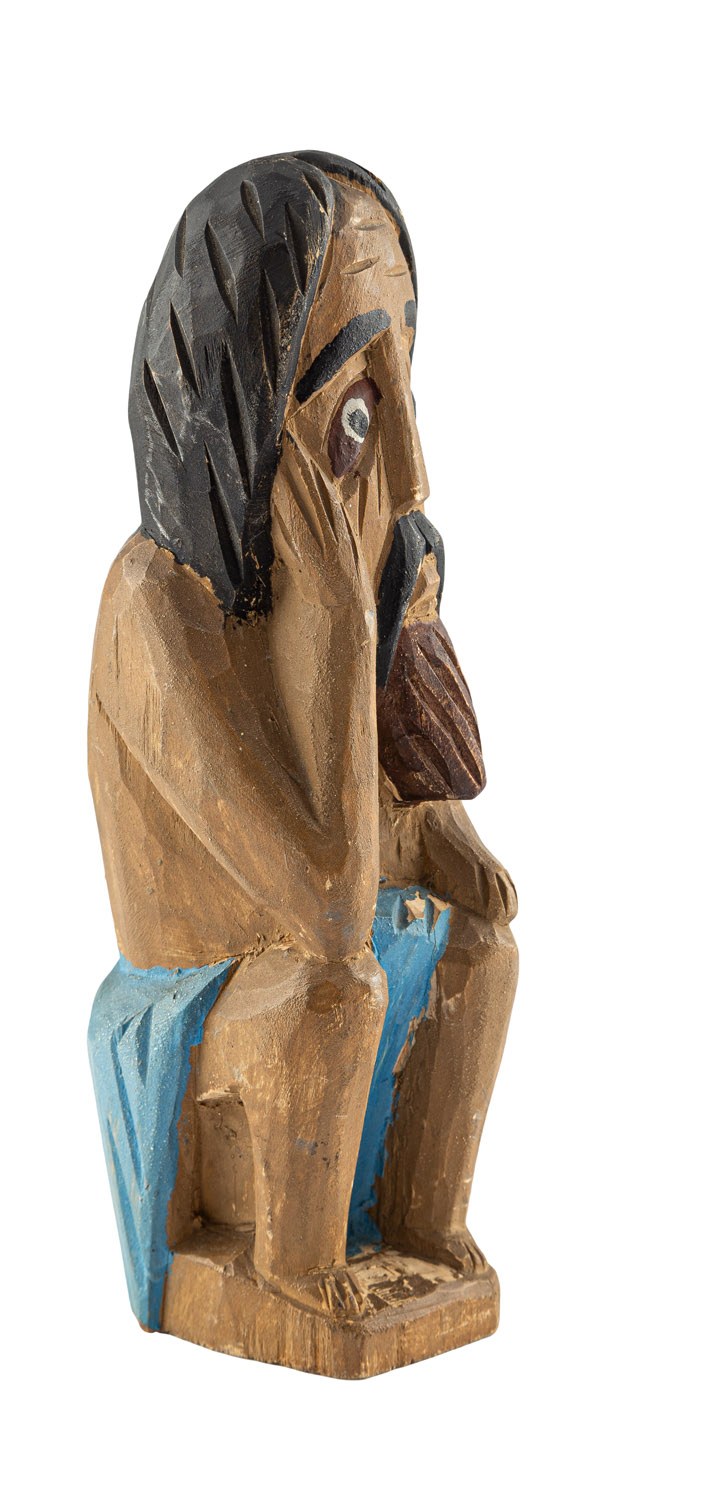
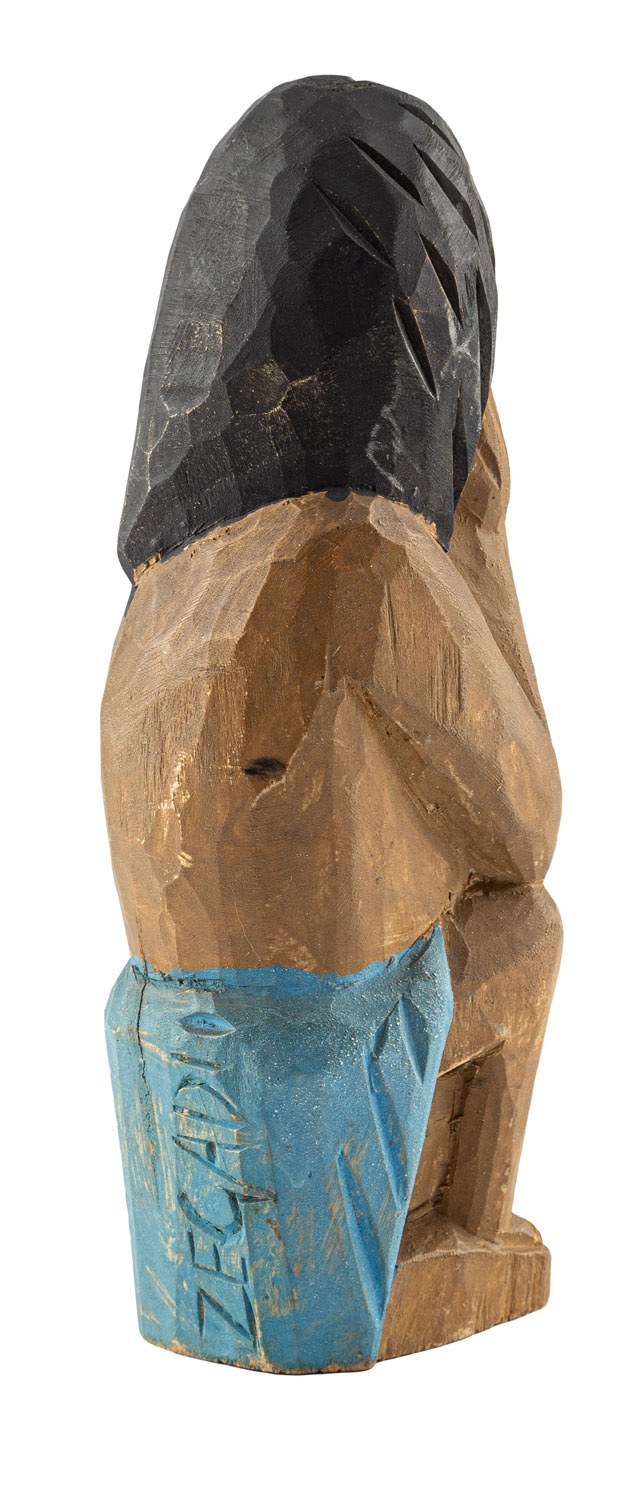
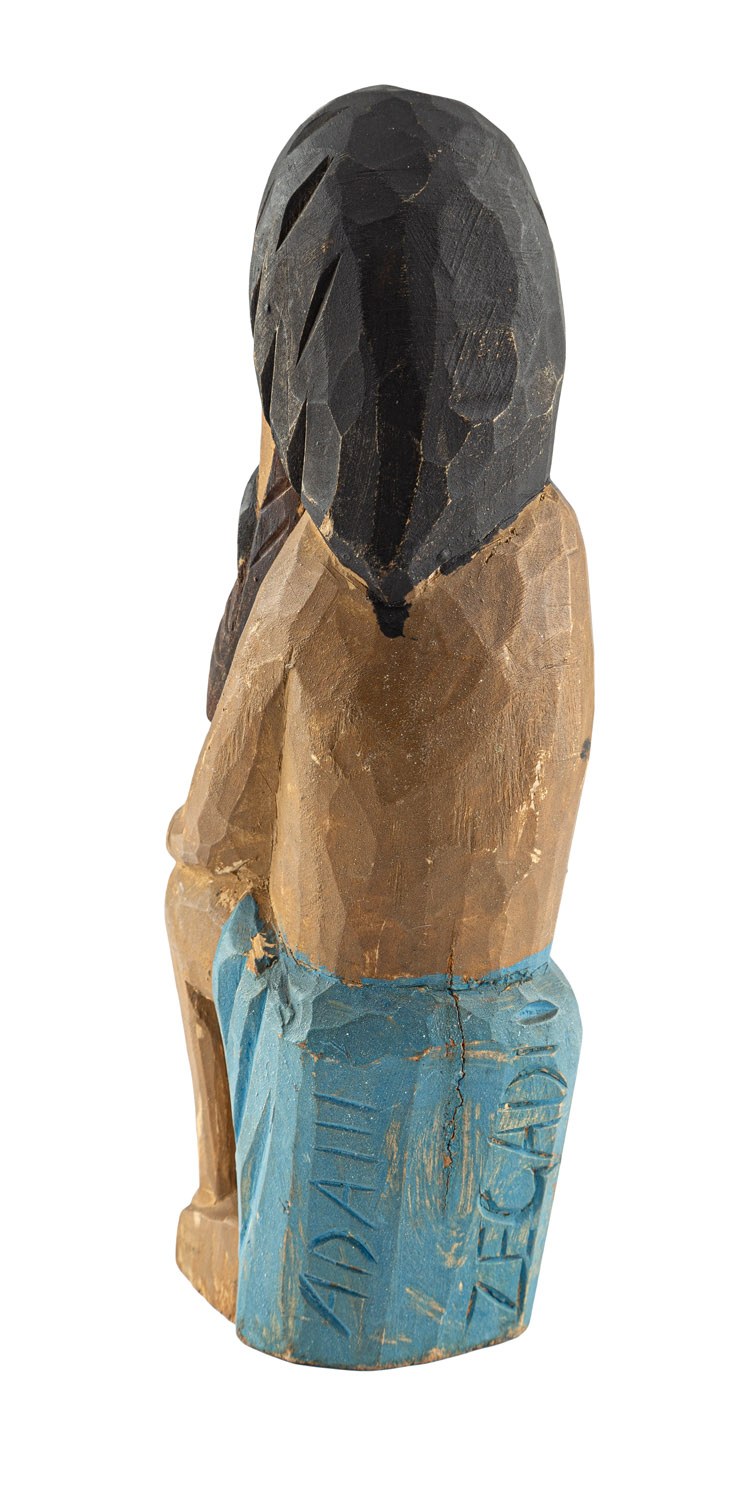
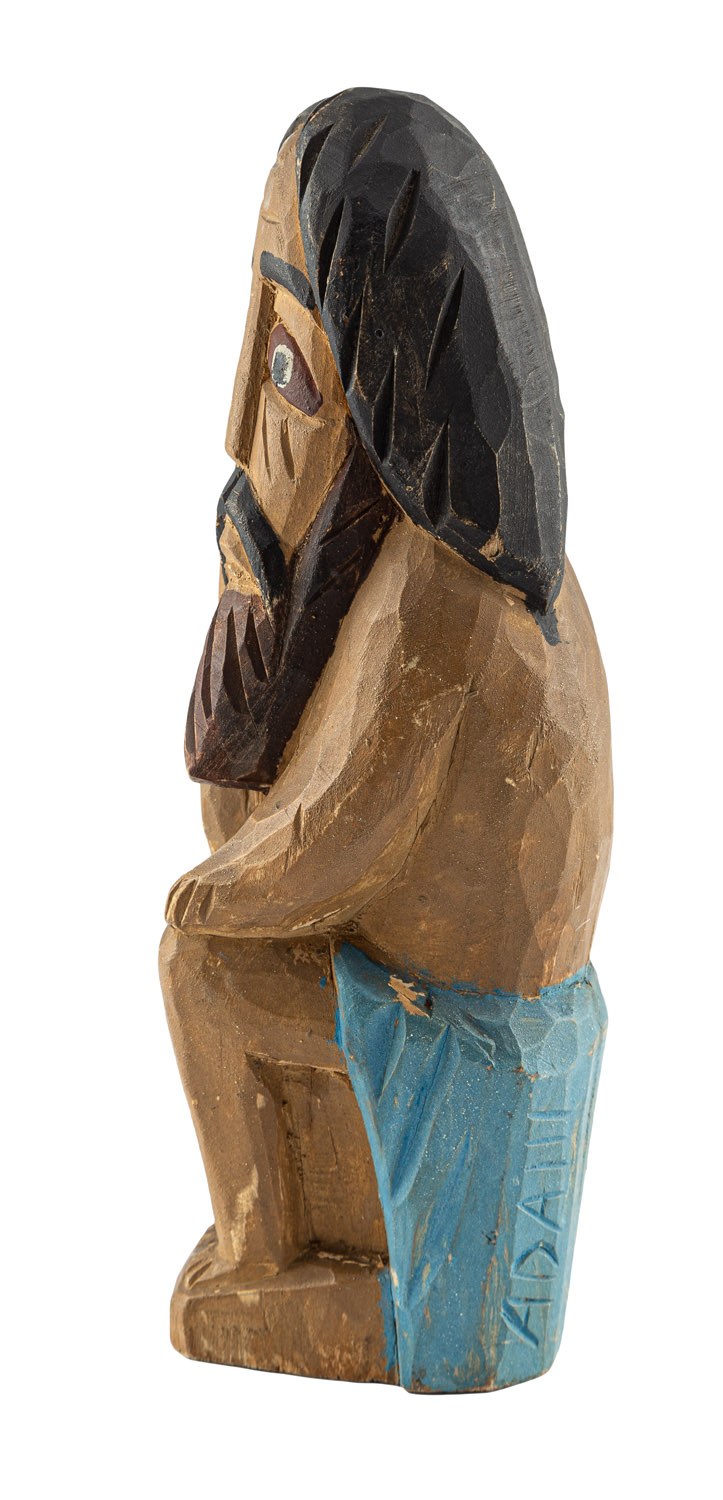
Dimensions: 23.5 x 5.5 x 7 cm
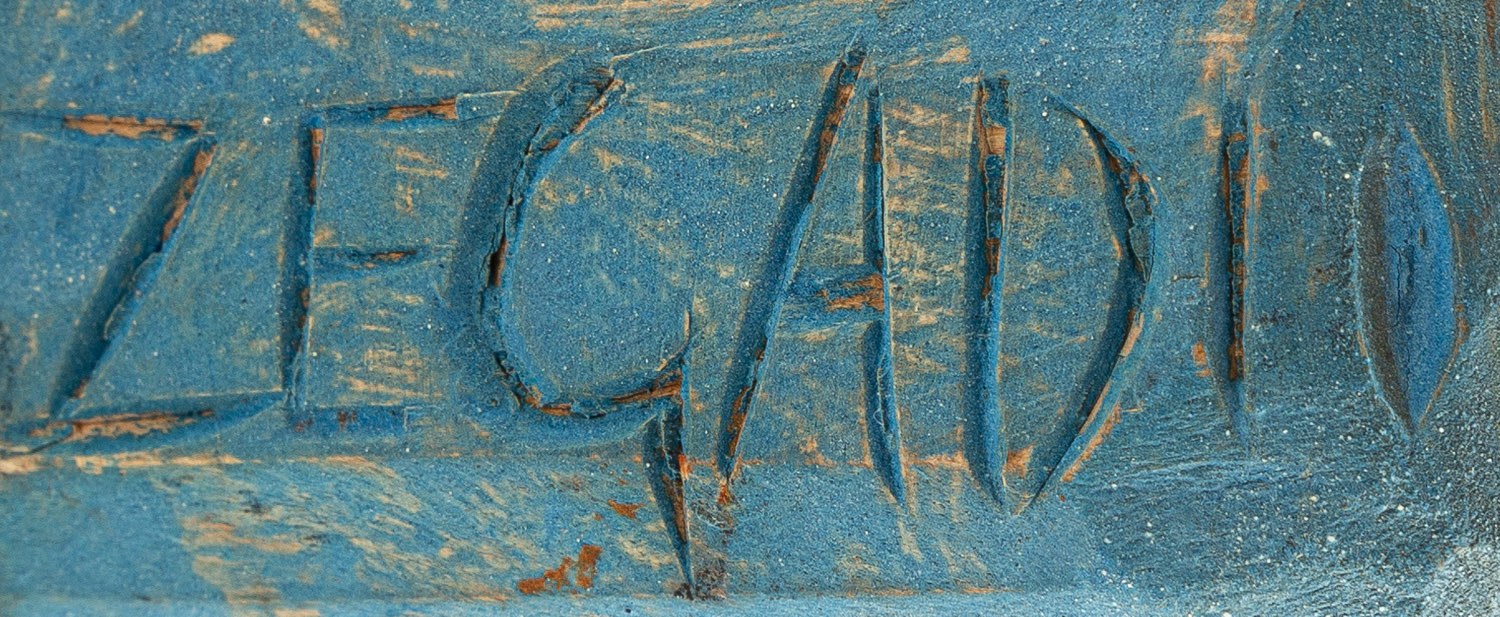
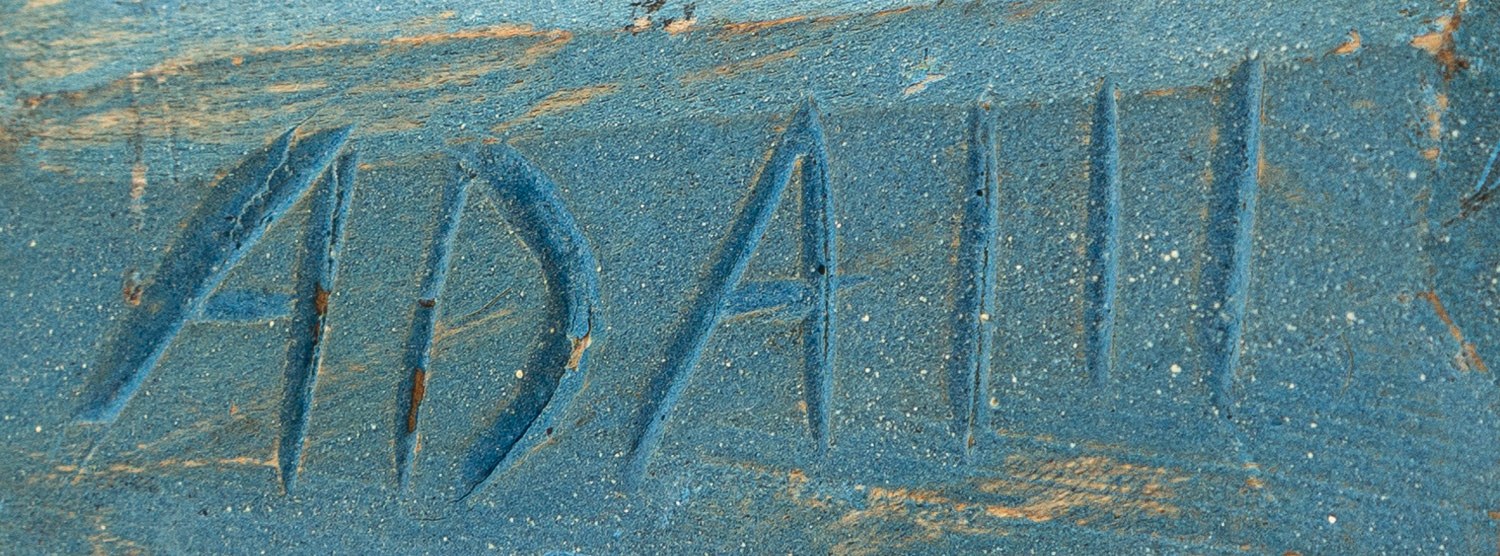
signed on the back: 'ADAM | ZEGADŁO'
Biography
Adam Zegadło came from a hard-working family - his grandfather worked in the Suchedniów iron ore mines, and his father was a farmer. Due to the quick death of his father, young Adam took a job at the age of 13 and worked at an agricultural machinery factory in Suchedniów. After World War II, the family's financial situation deteriorated badly, and Zegadlo was unable to support his family from the farm alone, so he took on various jobs in an effort to provide for his family. He was mainly involved in work related to craftsmanship - he made simple furniture, agricultural and household equipment, but also simple toys - rocking horses, carousels, figurines, cars, which gave rise to Zegadło's sculpting.
The beginning of Zegadła's sculpting career can be dated to the 1960s. The first sculptures were bought for the collection of the Swietokrzyskie Museum in Kielce and in 1964 they were shown at an exhibition of contemporary folk art of four provinces: Bialystok, Lublin, Kielce, Rzeszow. A year later, Zegadla's sculptures were shown in Warsaw's Zachęta Gallery at the "Others" exhibition, which brought Zegadla great recognition. Adam Zegadla's works have been shown in today's Slovakia, Germany, Sweden, Italy, Switzerland and Finland, among others. The artist was associated with Desa and Cepelia, which made his foreign exhibitions possible. Together with his son, also a sculptor, Henryk, they had a joint exhibition in 1971. Adam Zegadła's works are characterized by rich subject matter, inspiration from local legends and stories, use of a wide, strongly contrasting color palette, unconventional forms and precision workmanship. Zegadła's works have been purchased for institutional and private collections, including those of Ludwik Zimmerer and Leszek Macak.