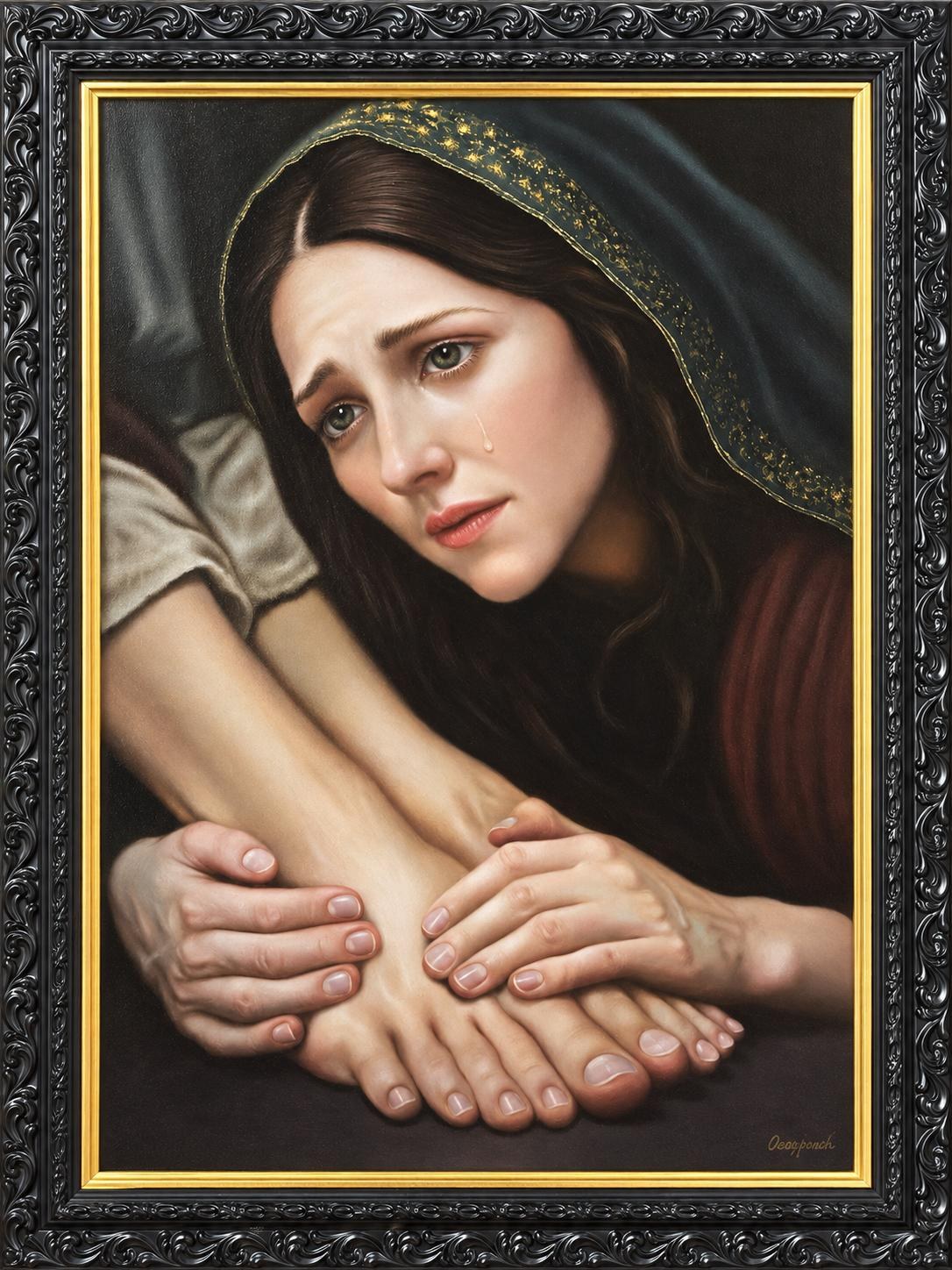
Oil on panel, 40 x 60 cm; framed dimensions: 68 x 48 cm
Paweł Orzechowski is a Polish artist specializing in realistic and hyperrealistic oil painting. At the center of his work is the human being—their face, emotions, spirituality, and the stories that can be told through a glance, a gesture, and light.
The artist consistently refines his own technique, drawing on the traditions of classical European painting. In his creative process, he employs, among other things, imprimatura, multi-layered composition, and an underpainting inspired by the techniques of the Old Masters. This allows him to achieve subtle tonal transitions, natural plasticity in the depiction of faces and hands, and a characteristic depth of color.
A significant stage in the development of his painting was his study and exchange of experiences with Rafał Stanuła—a highly regarded representative of contemporary Polish realistic figurative art. Exposure to Stanuła’s technique helped Orzechowski refine his approach to modeling figures, handling chiaroscuro, and building psychological tension in portraits.
Paweł Orzechowski’s work is distinguished by an extraordinary attention to detail. The artist renders the texture of skin, hair, fabrics, and objects with great precision, but technical perfection is not an end in itself for him. Realism serves primarily to convey emotions—concentration, longing, pain, tenderness, hope, or spiritual tranquility.
Portraits and figurative compositions of a symbolic and sacred nature hold a special place in his body of work. The artist readily tackles subjects that require not only technical proficiency but also the right mood and sensitivity. His figures are relatable, human, and emotionally authentic, even when depicted in scenes drawn from religious tradition.
Paweł Orzechowski also accepts individual portrait commissions. He treats each work as a unique encounter with a person and their story, seeking not only physical resemblance but also the character and emotional truth of the subject.
His painting combines classical technical discipline with contemporary sensibility. Thanks to the precision of his execution, the carefully crafted atmosphere, and his ability to convey emotion, the artist’s works are appreciated by viewers seeking both a high level of technical skill and expressive, moving content.
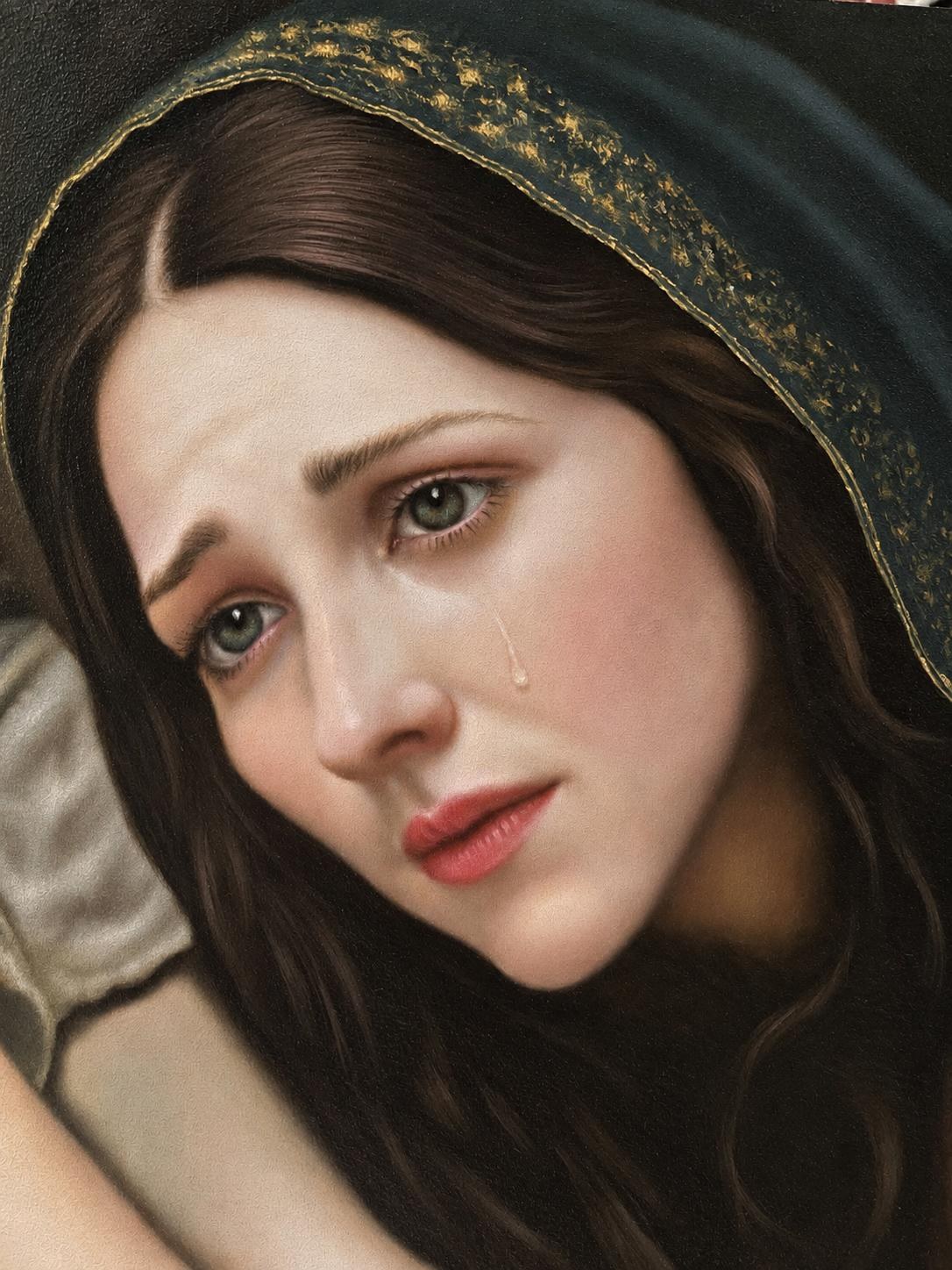
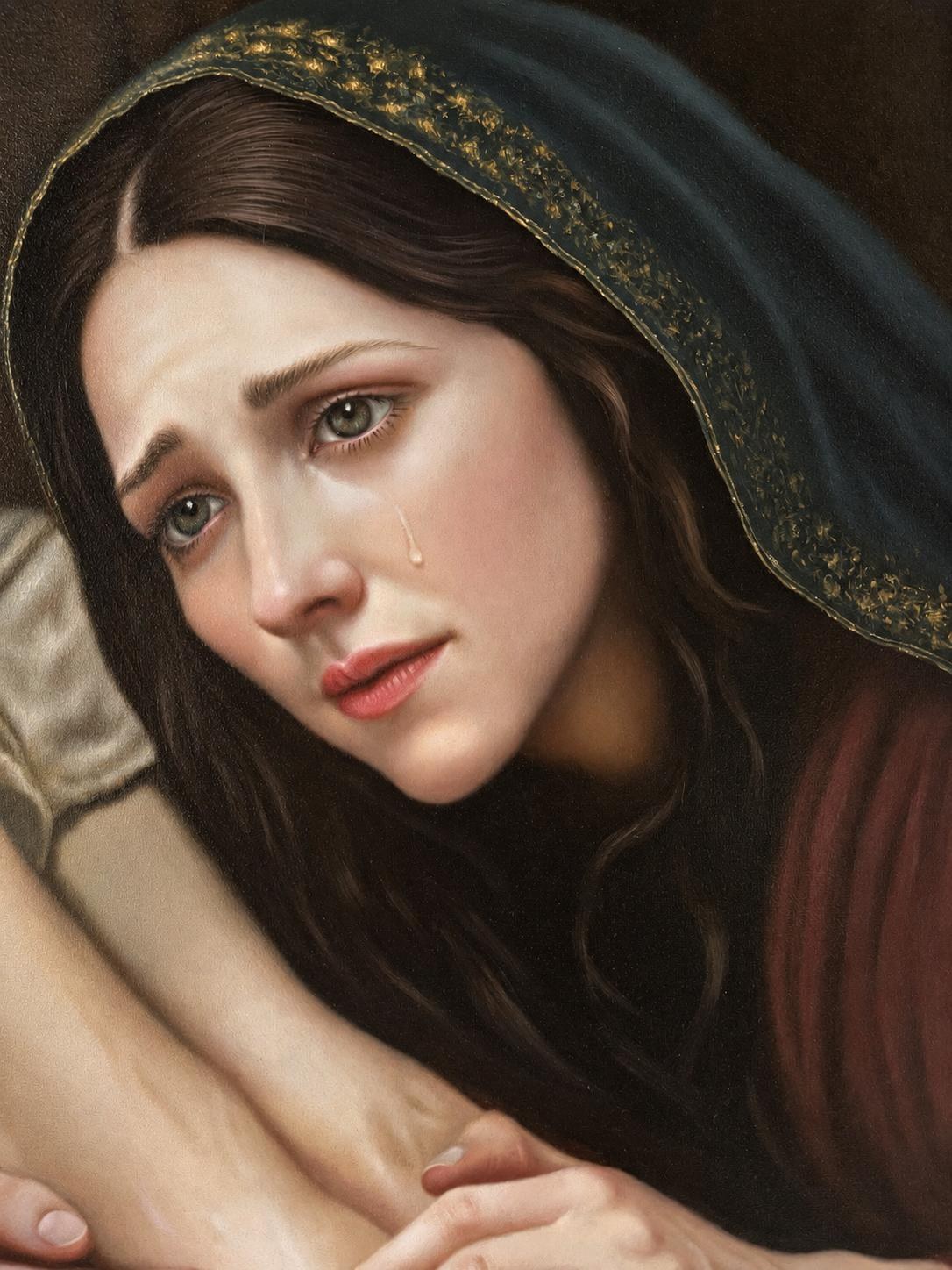
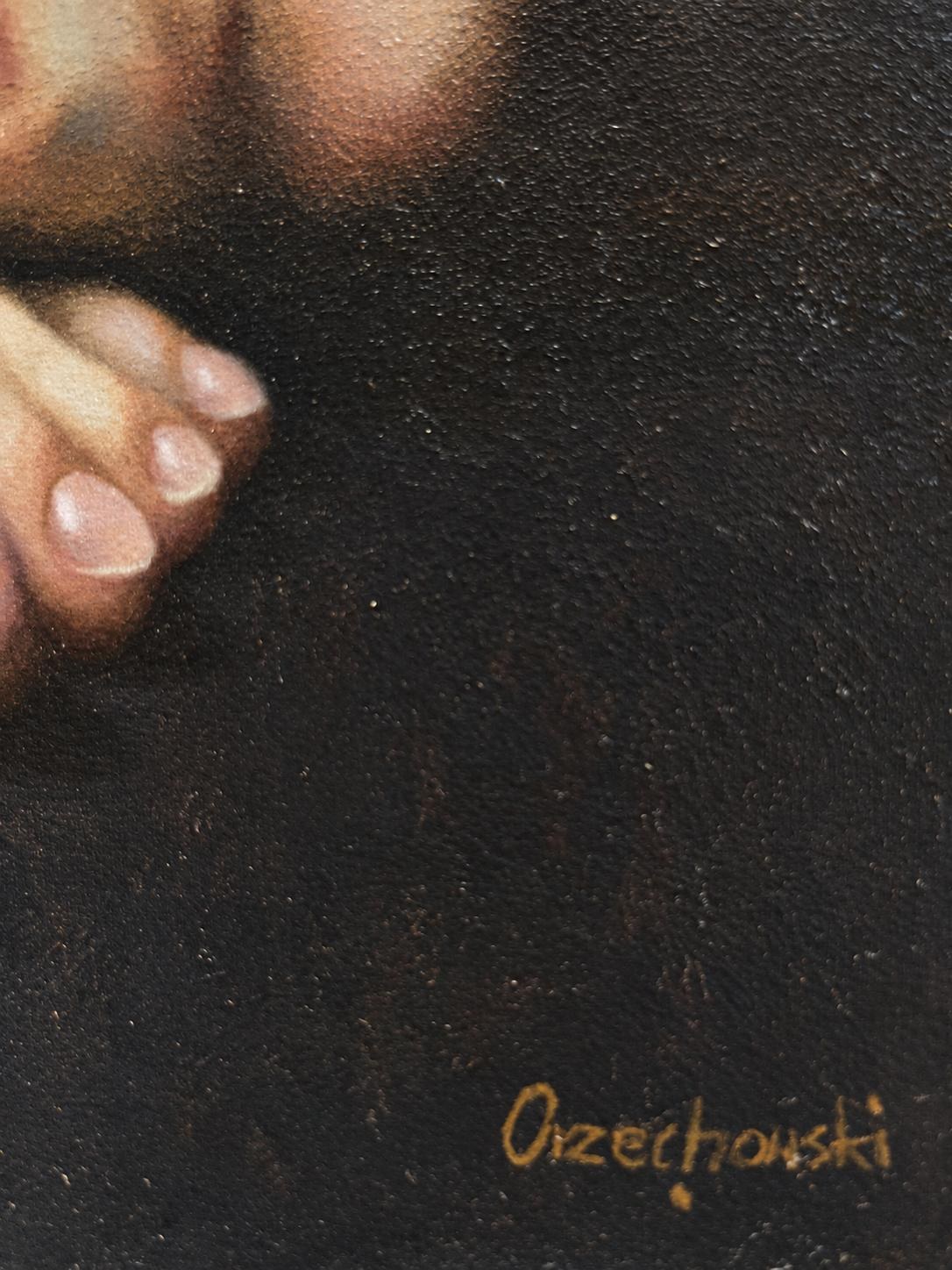
Paweł Orzechowski, “Salvation”
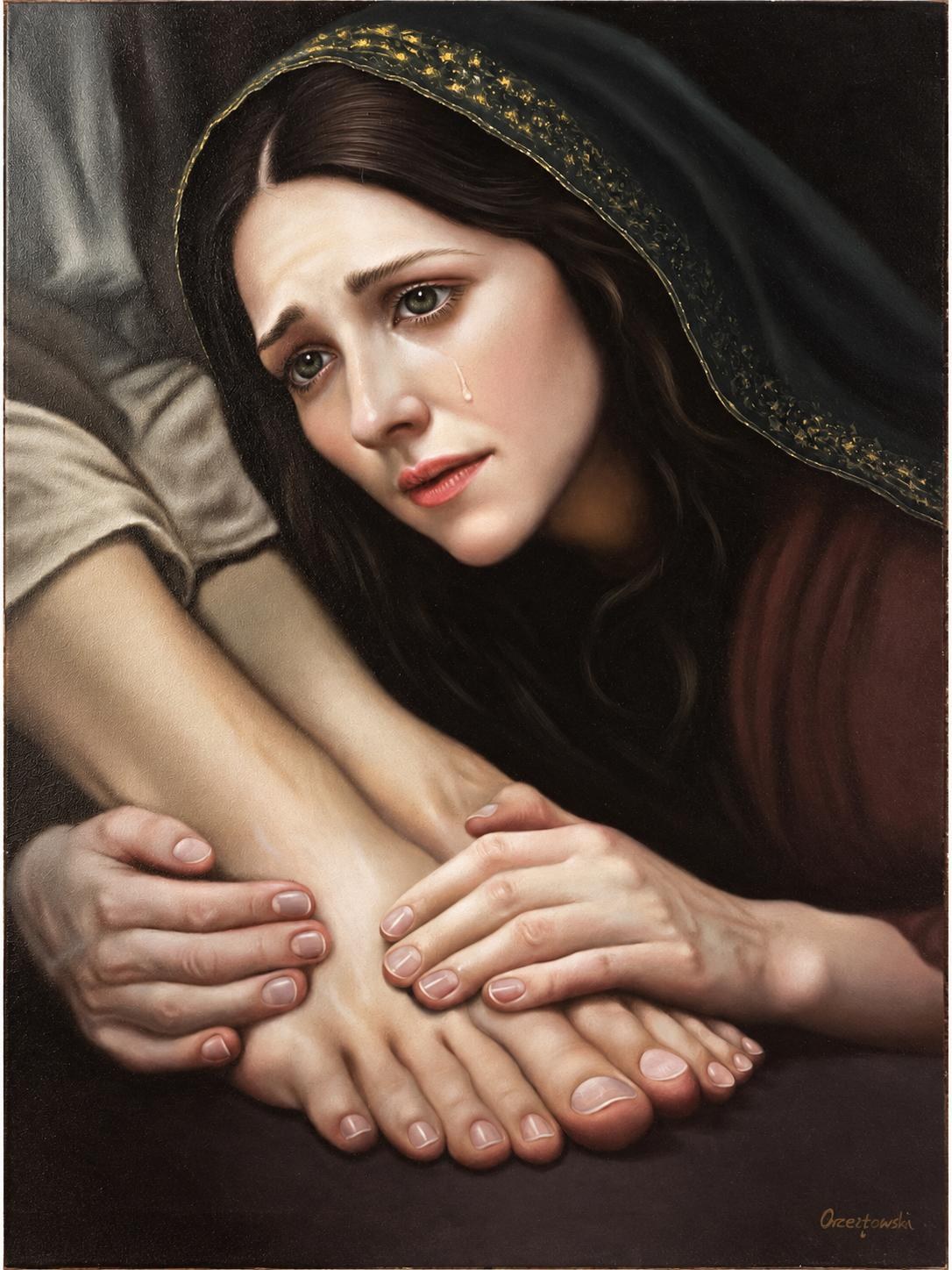
Paweł Orzechowski’s “Salvation” depicts one of the most moving and multifaceted scenes in the New Testament—the anointing of Jesus’ feet during the Last Supper.
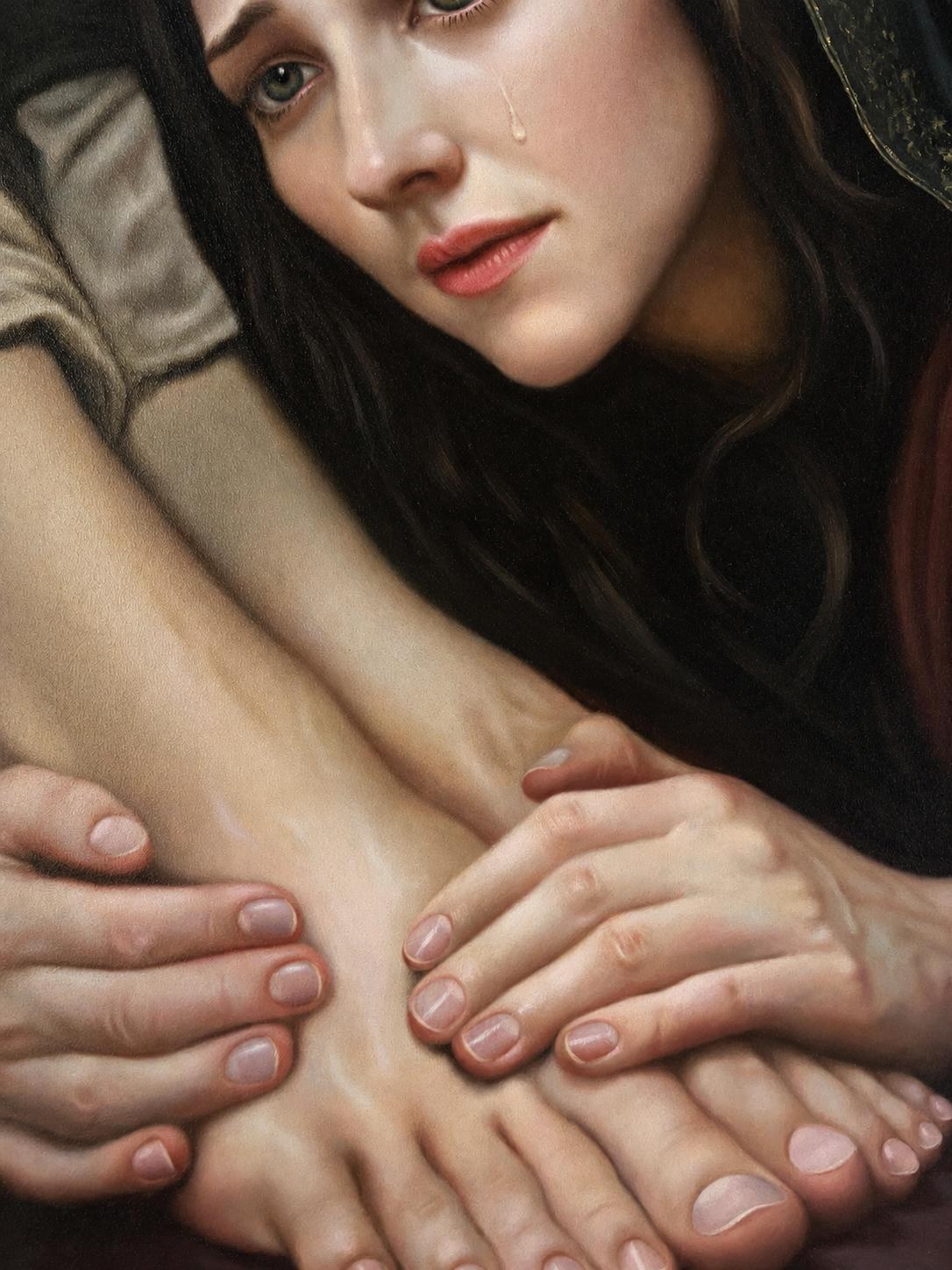
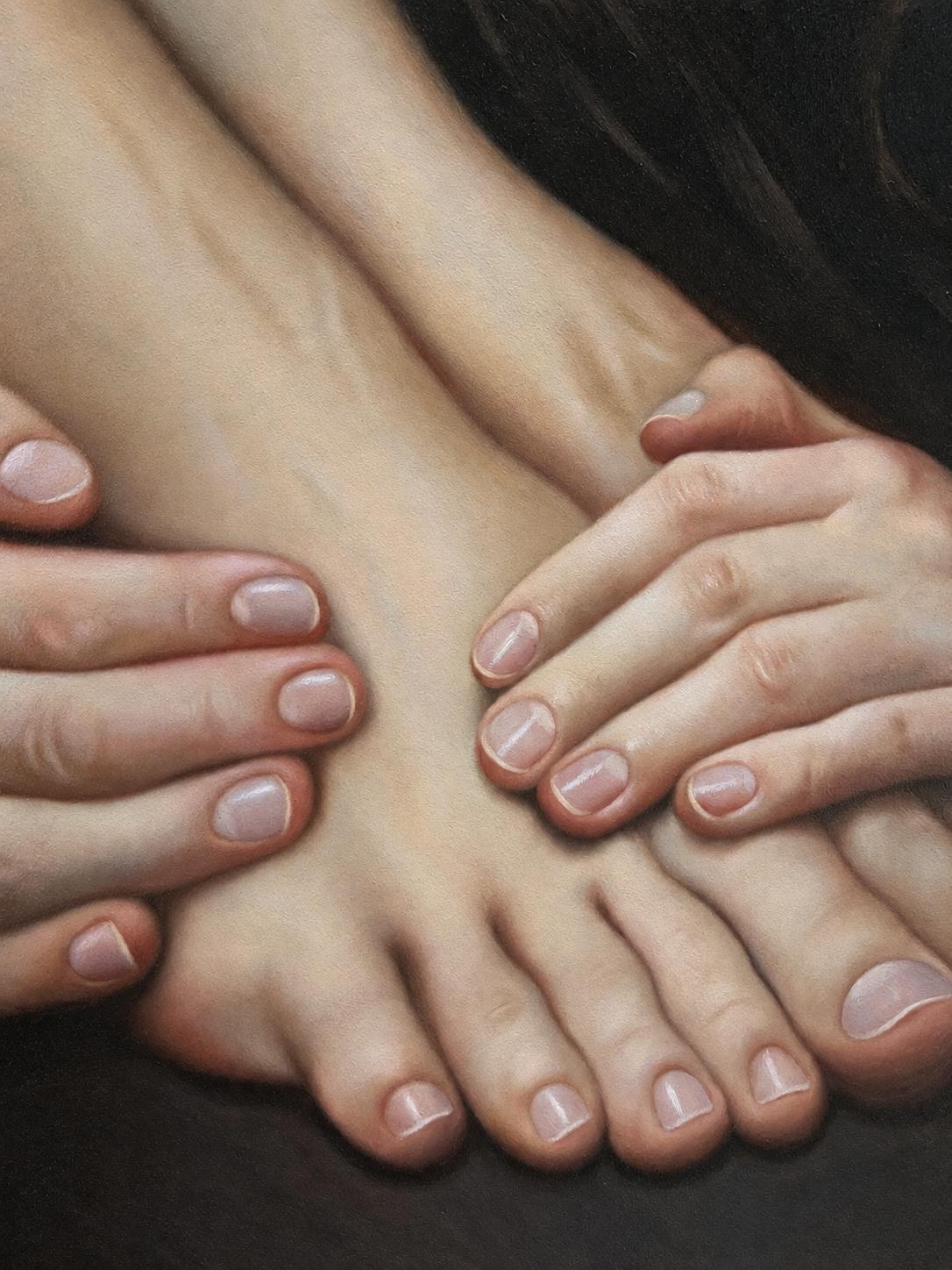
A woman—identified in Christian tradition as Mary Magdalene—approaches those gathered at the table. She kneels at Christ’s feet, washes them with her own tears, dries them with her hair, kisses them, and then anoints them with precious oil. Her gesture expresses at once repentance, love, sorrow, boundless devotion, and hope for forgiveness.
The title of the painting directly references the words Jesus addressed to the woman: “Your faith has saved you; go in peace.” Salvation here does not mean merely deliverance from guilt, but also the restoration of dignity, inner peace, and spiritual freedom. It is a story of a person who arrives bearing their suffering and departs transformed.
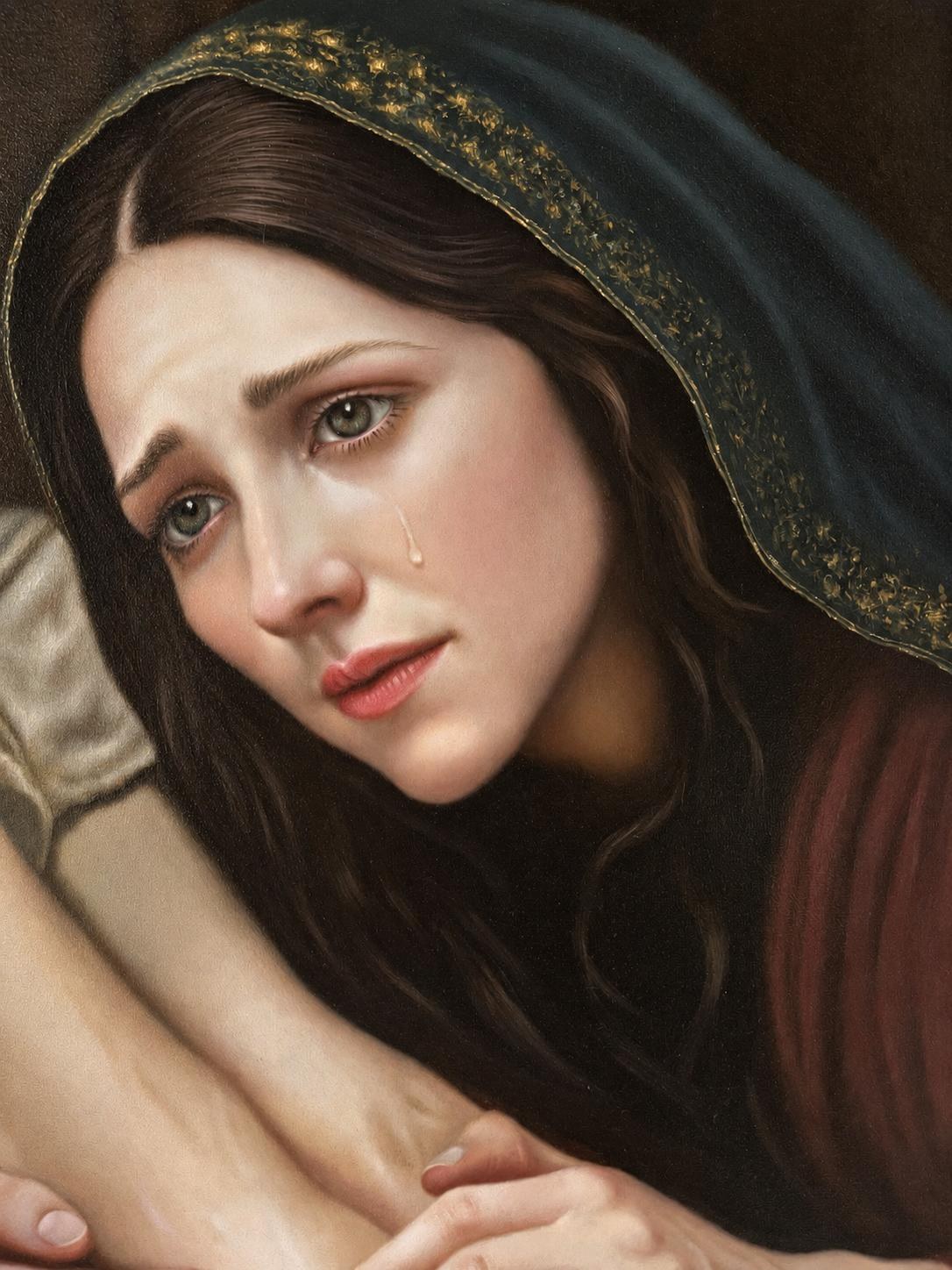
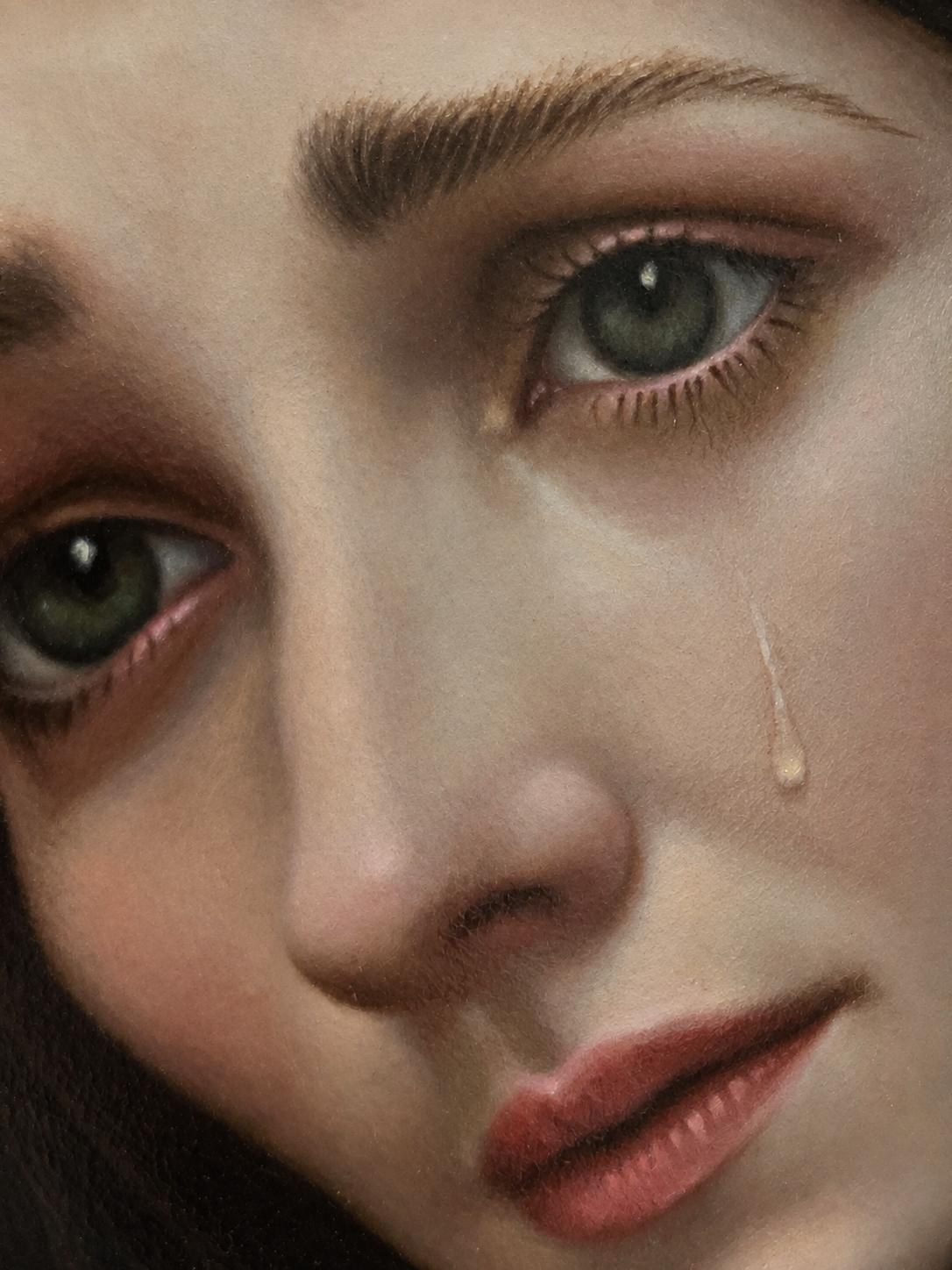
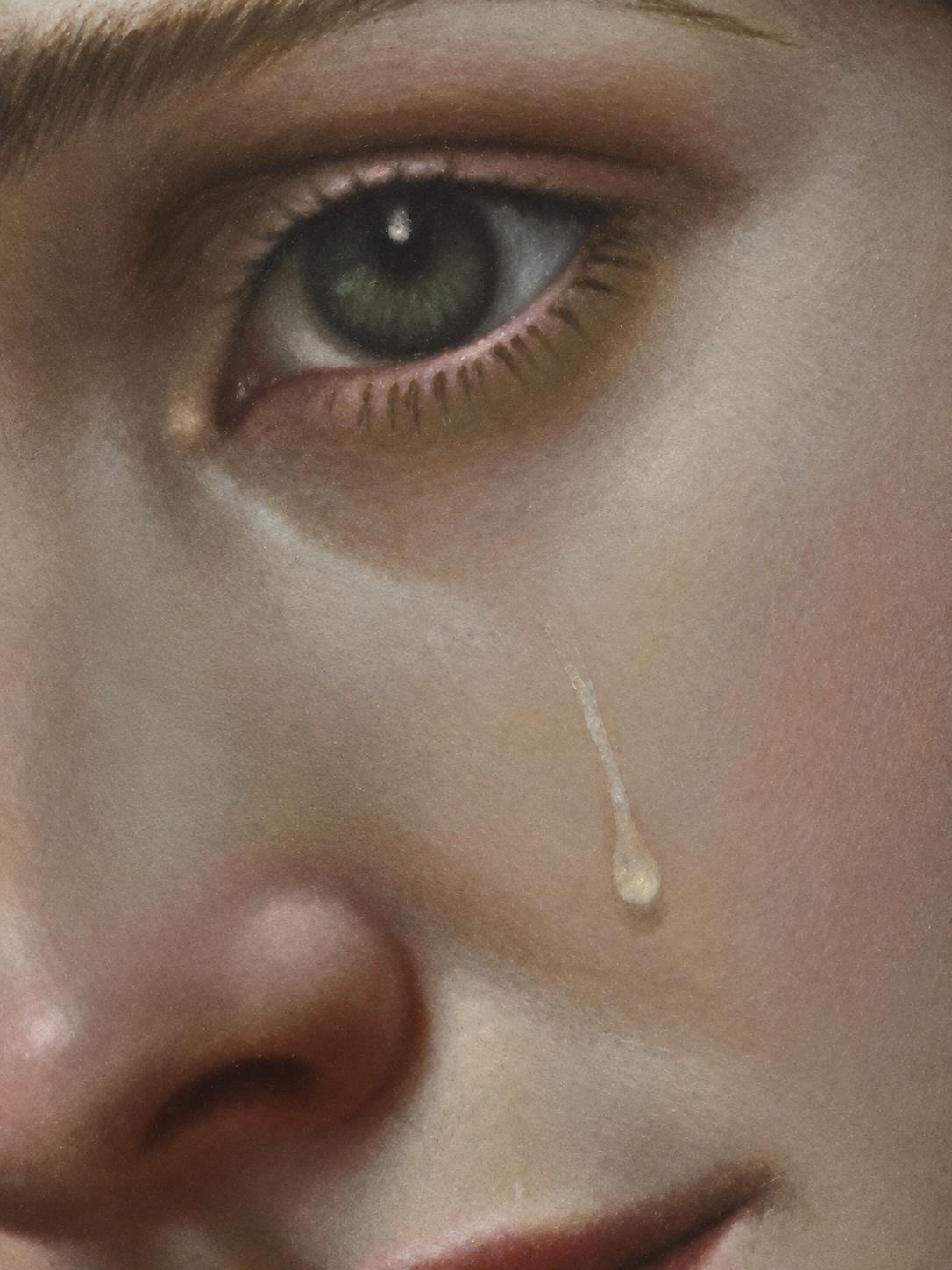
Paweł Orzechowski chooses not to depict the entire feast and focuses the composition on the most important, most intimate moment of the encounter. Mary Magdalene embraces Jesus’ feet, as if they were her only source of support. Her face reveals pain, tenderness, and deep emotion. A single tear rolling down her cheek becomes the symbolic center of the entire painting.
The monumental close-up lends the scene exceptional power. Mary Magdalene’s face, her hands, and Christ’s feet fill nearly the entire canvas. In this way, the artist brings out the extraordinary emotional intensity of the gesture while allowing the viewer to feel as though they are right in the midst of the unfolding event.
The painting captivates with its hyperrealistic execution. The subtly modeled face, the moist gaze, the natural complexion, the softness of the hair, and the exceptionally precisely rendered hands and feet attest to the artist’s masterful command of his craft. Particularly challenging anatomical details were painted with great ease, yet with almost photographic precision.
A dark shawl with golden accents frames Mary Magdalene’s face and lends the composition a sacred, almost iconic character. The deep black contrasts with her fair skin, while the burgundy robe reinforces the mood of suffering, love, and spiritual focus. The limited color palette and dark background direct all attention to the figure and her poignant experience.
“Salvation” is an extraordinarily moving work—it combines the artistry of hyperrealistic painting with a timeless message of forgiveness, love, and the possibility of spiritual transformation. Its perfectly thought-out composition, masterful attention to detail, and profound emotional impact make it a unique addition to a private collection, especially for viewers seeking contemporary figurative art with strong symbolic and religious content.