


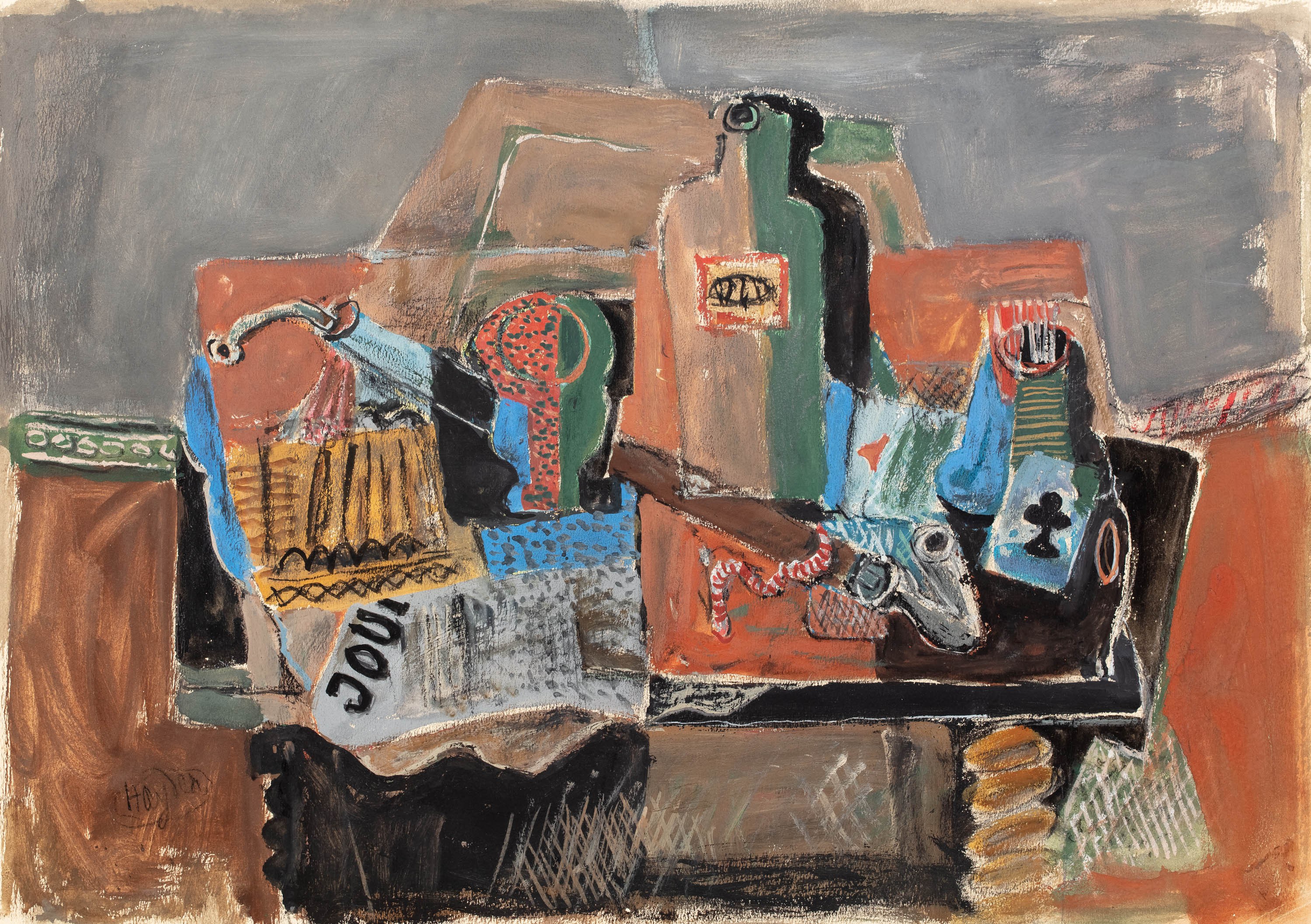
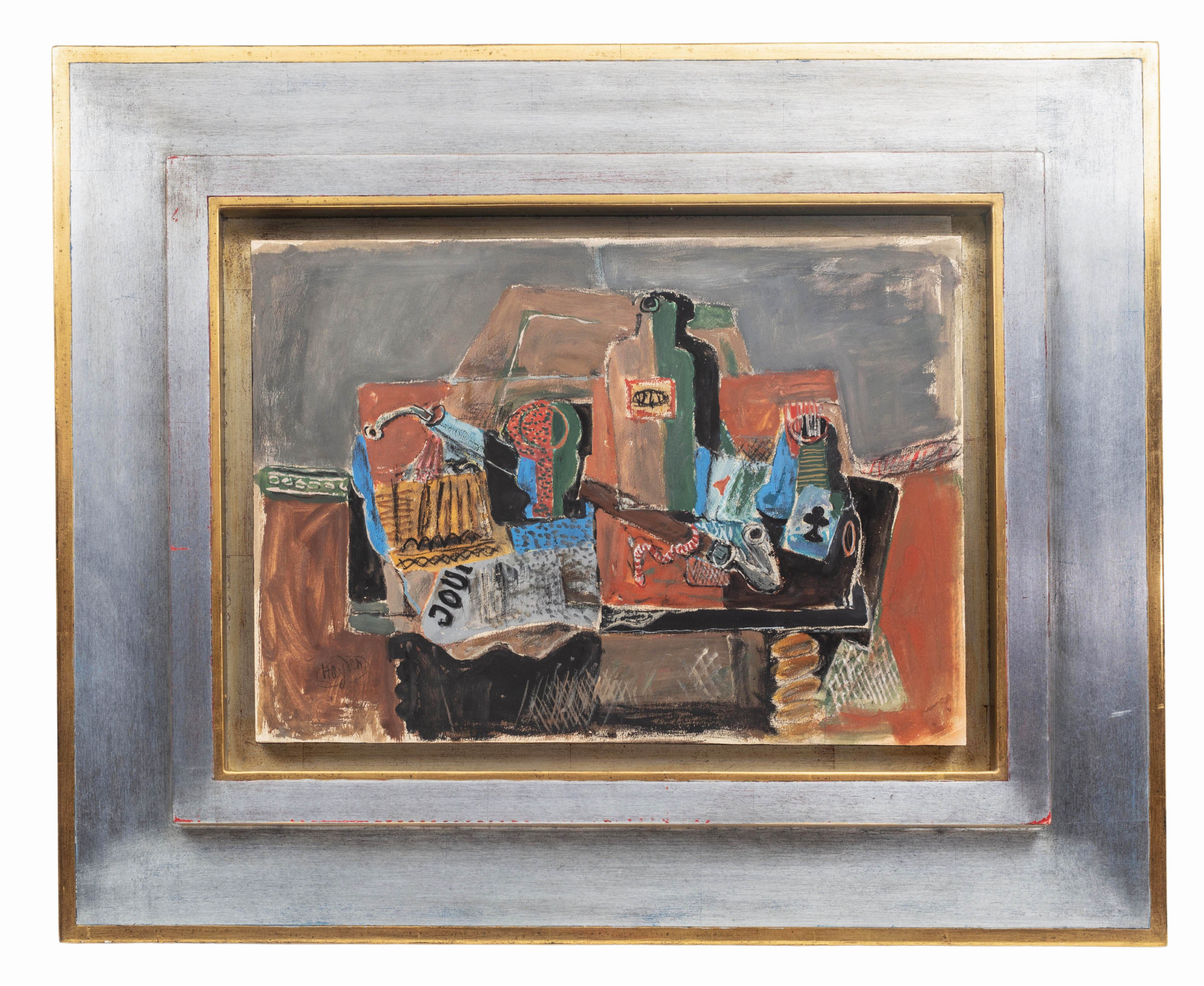
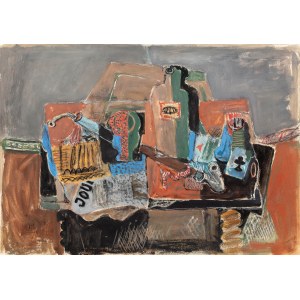
gouache on paper, 29.5 × 41.5 cm
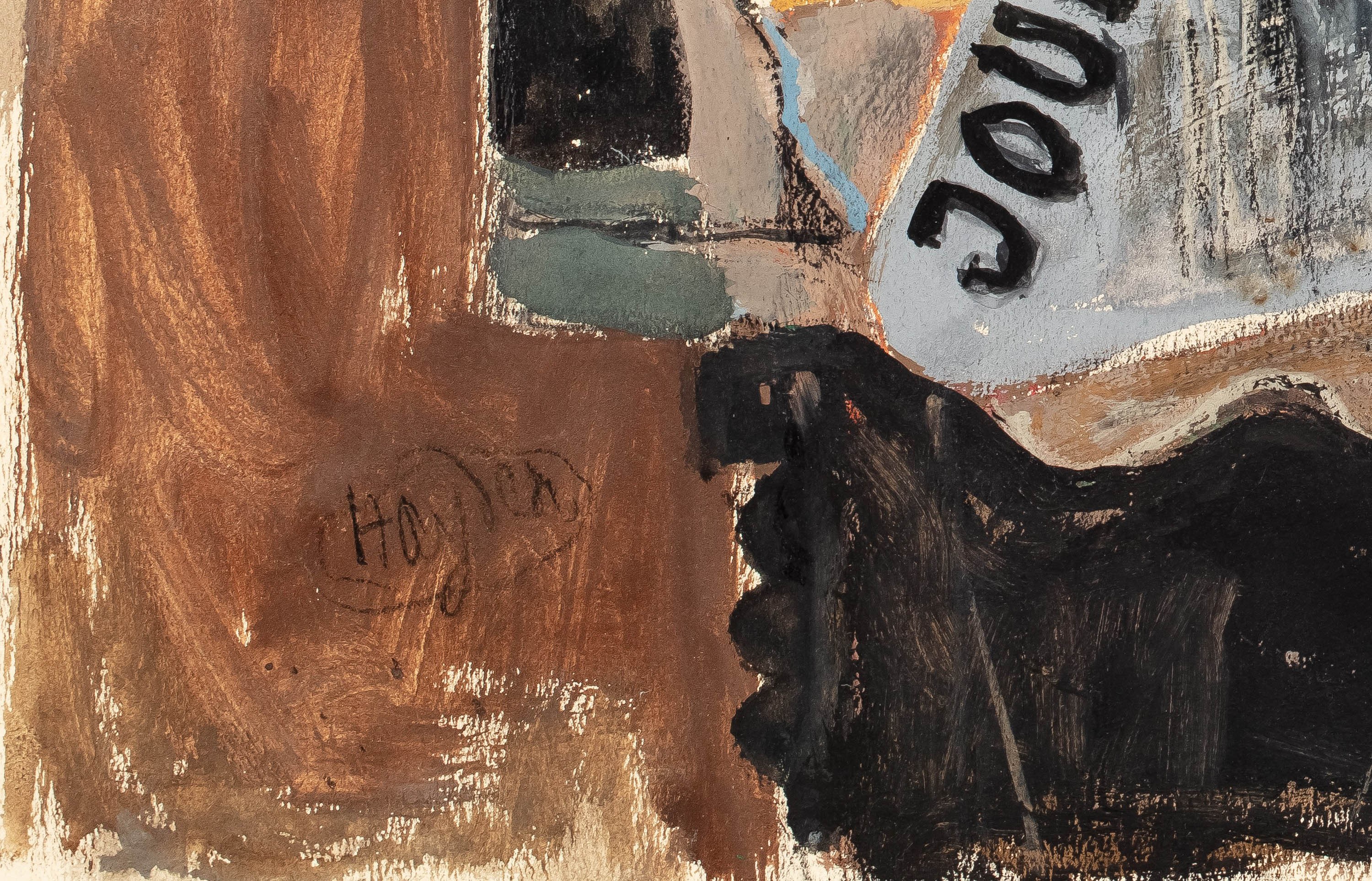
signed lower left: “Hayden”
other titles: Nature morte ocre, Nature morte à la clarinette
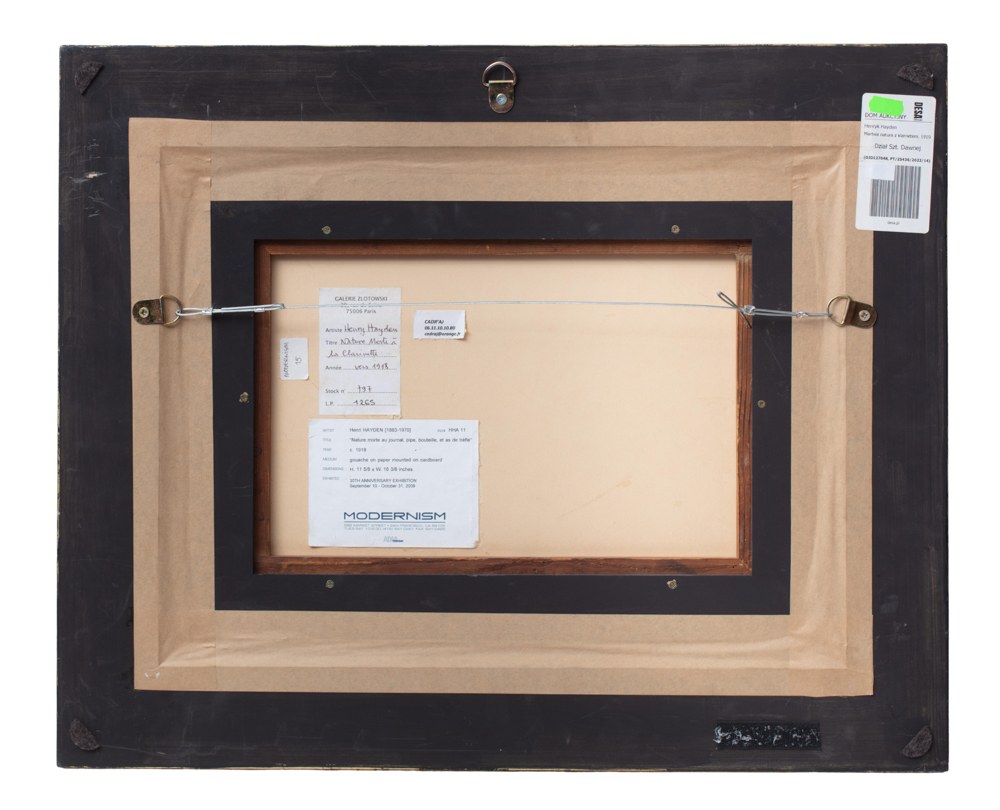
On the reverse: a paper sticker from Galerie Zlotowski in Paris, two paper exhibition stickers from the Modernism Gallery in San Francisco, and a sticker from the framing studio
Provenance:
– Sotheby’s, London, November 1988
– private collection, Europe
– Galerie Zlotowski, Paris (after 1998)
– private collection, Europe (?)
– Millon & Associés auction house, Paris, May 2020
– private collection, Poland
“More than a year after the outbreak of the war, Hayden’s painting evolved in an extremely logical manner toward pure Cubism. By the time he became a member of the movement in 1916, Cubism was already a well-established movement that had passed through its analytical phase. During Hayden’s period of artistic exploration from 1912 to 1914, he created paintings that can hardly be described merely as inspired by Cézanne. Even then, the artist was employing formal devices corresponding to the parallel developments of the Cubists. Joining this select group became possible for him thanks to his acquaintance with the sculptor Jacques Lipchitz, who subsequently introduced him to Juan Gris. Gris, in turn, introduced the Warsaw-born artist to the Cubist art dealer Leonce Rosenberg, who at the time ran a gallery at 19, rue de La Bau me (which after the war was renamed L’Effort Vloderne). His acquaintance with Rosenberg led to the signing of a contract, which placed Hayden among the inner circle of Cubist artists, which included, among others: Picasso, Braque, Léger, Gris, Metzinger, and Severini.” (Artur Winiarski, “Henri Hayden, Masters of the École de Paris,” exhibition catalog, Villa la Fleur, Warsaw 2013, p. 49.)










최근 확인한 경매
경매품 리스트를 확인하려면 로그인하세요
관심있는 경매품
경매품 리스트를 확인하려면 로그인하세요