


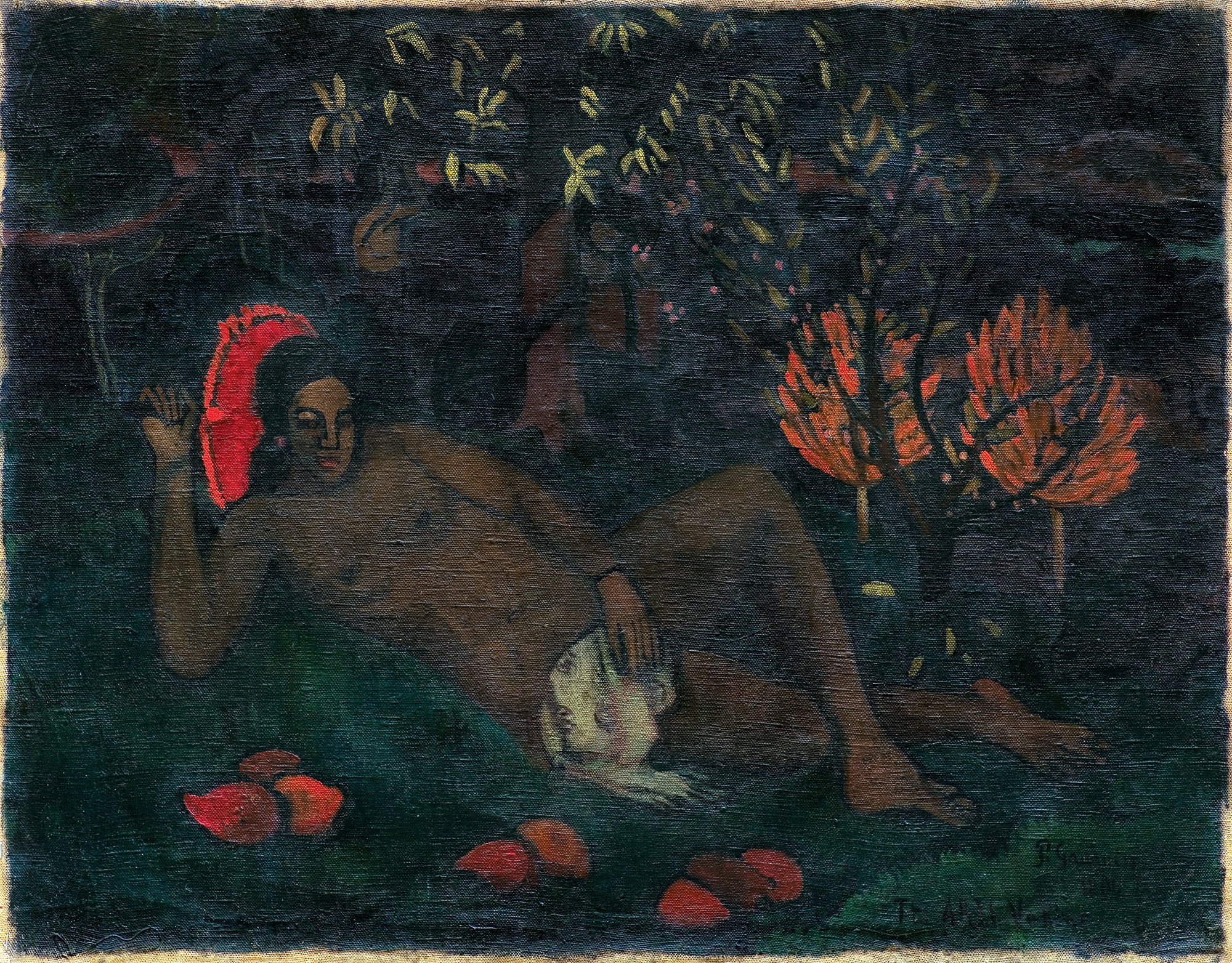
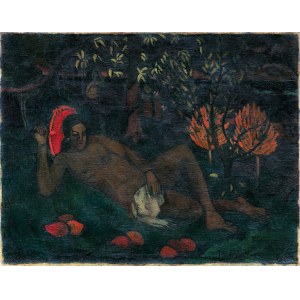
60 x 79 cm - oil on canvas
bottom right: Gauguin | 1896 | TE ARII Vahine
The painting is accompanied by an expert report by Dr. Anna Żakiewicz dated September 2026.
Witkacy learned to paint by copying renowned works. As a child (around 1892), he made a copy of his father’s painting *Pond in the Forest*, titled *Inside the Forest* (currently at the Upper Silesian Museum in Bytom). In later years, Paul Gauguin became his primary influence, a development influenced by the 1907 posthumous exhibition in Vienna of the famous Symbolist artist as well as Władysław Ślewiński, a member of the circle of painters associated with Gauguin, from whom Witkacy took painting lessons.
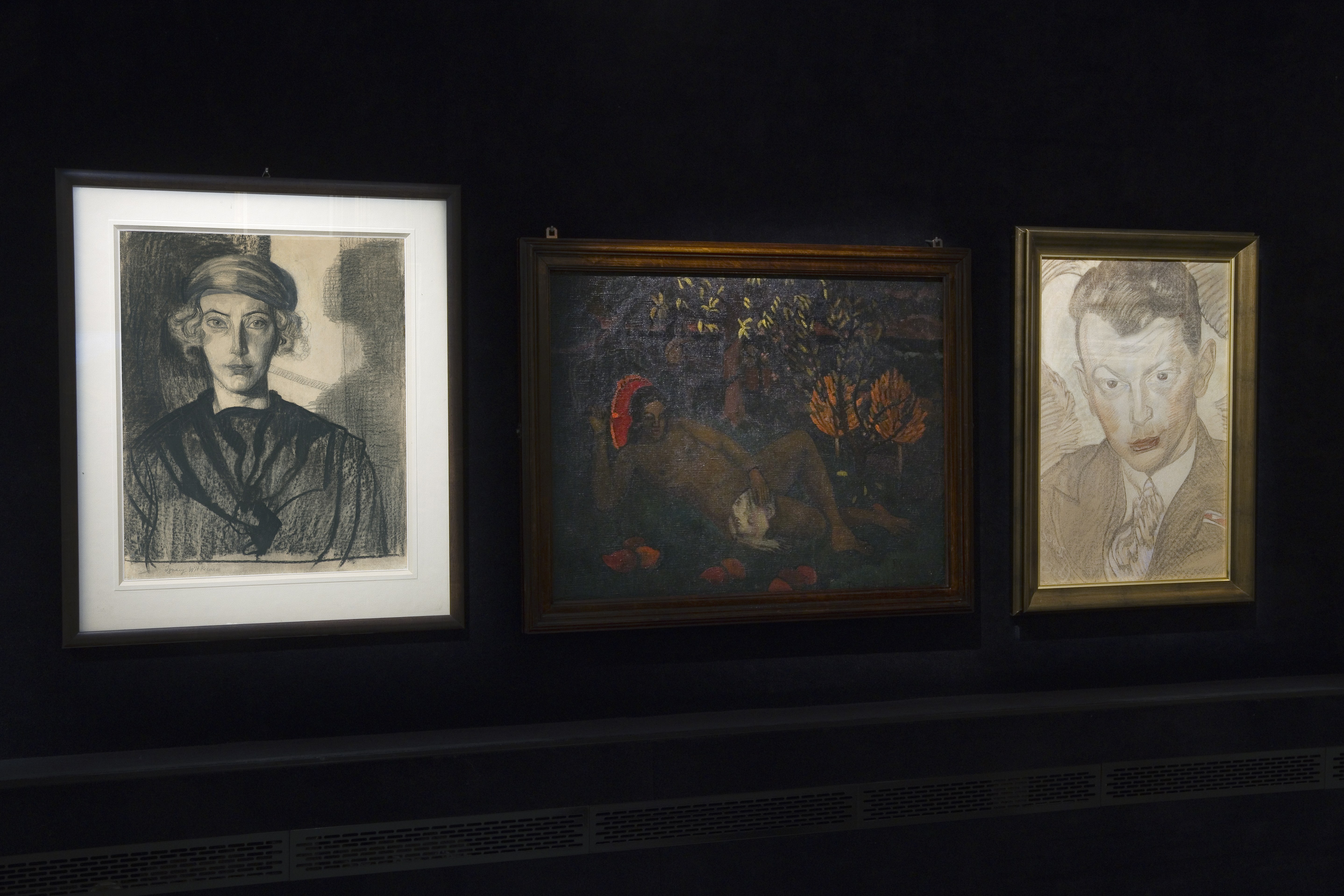
In Gauguin’s painting *Te Arii Vahine*, Witkacy saw the most complete realization of his own reflections on color harmony, which formed the cornerstone of his theory of art (which he published in 1919 in his dissertation *New Forms in Painting and the Resulting Misunderstandings*). Before proceeding to a theoretical analysis, however, he tested these concepts in practice by painting a copy of Gauguin’s canvas, which he considered a model solution for intense color harmonies and disharmonies. He may have used a sketch with color markings—which he might have made during the exhibition in Vienna—or a photographic reproduction.
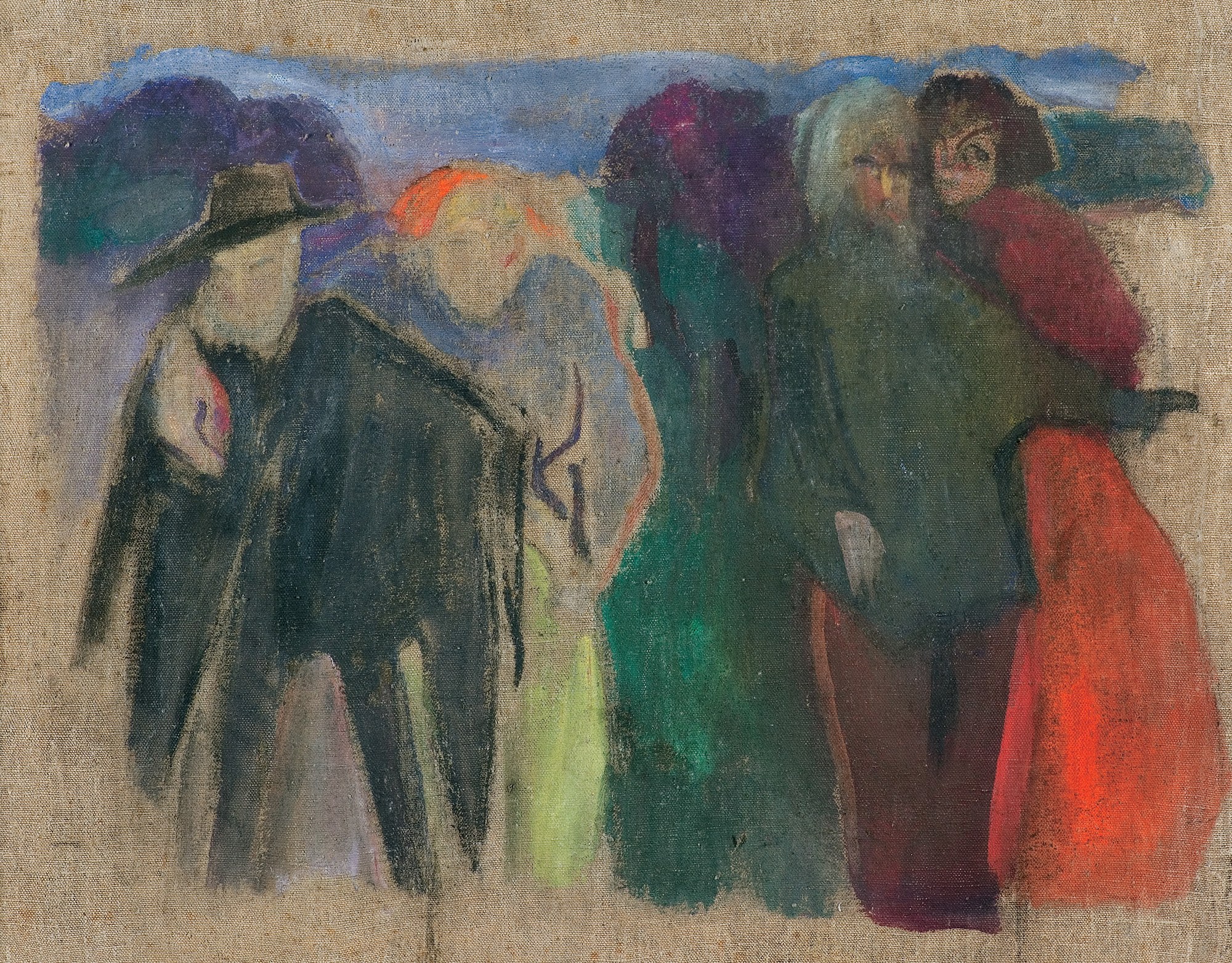
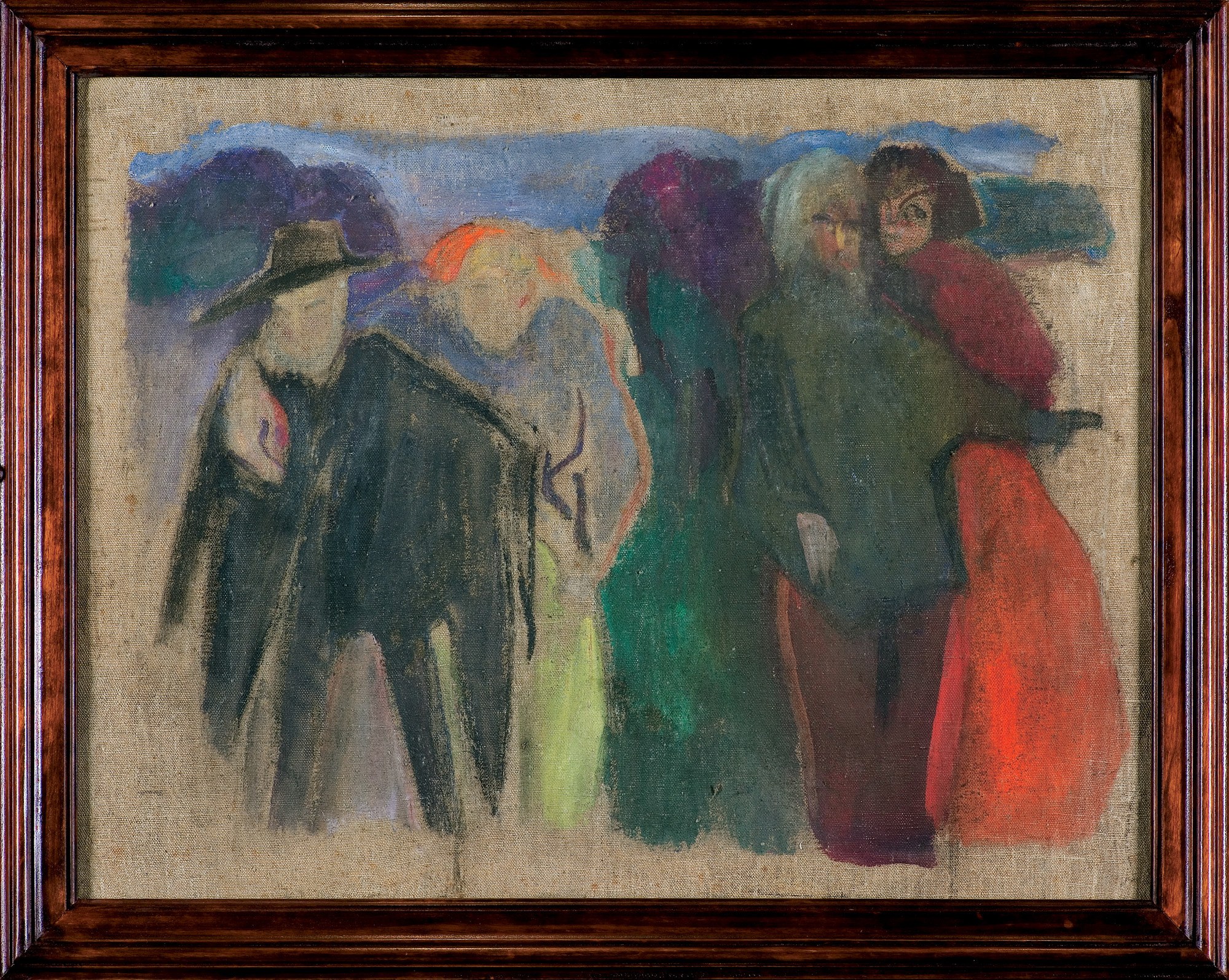
While painting a copy of Gauguin’s painting on the front—a work essential to his theoretical reflections— Witkacy used a canvas with an unfinished composition on the reverse side. There is a sketch of caricatured figures (so-called “monsters”) there, likely depicting people from the artist’s social circle. This depiction likely refers to characters from Tadeusz Miciński’s novel *Nietota* (1910) and to Witkacy’s own work—*622 Falls of Bunga, or The Demonic Woman*.
The manner in which the figures are depicted is consistent with the painter’s style after 1910 and shows parallels to a composition from 1911, currently held in the collection of the National Museum in Warsaw. This allows the unfinished sketch to be dated to 1910–1911, while the copy based on Gauguin created afterward can be dated to around 1911.
Both the front and the back are valuable examples of Witkacy’s early work and illustrate the process by which he formulated his original theory of Pure Form.
According to an expert opinion by Dr. Anna Żakiewicz
Provenance: The painting comes from the family of Eugenia Dunin-Borkowska—a friend and frequent model for Witkacy’s portraits.
She owned a sizeable collection of his early works, a large portion of which has fortunately survived to the present day thanks to her heirs.
The painting has been exhibited, mentioned, and reproduced, among others, in: – Stanisław Ignacy Witkiewicz 1885–1939. Catalog of Paintings, edited by Irena Jakimowicz in collaboration with Anna Żakiewicz, Warsaw 1990, item I 257, repr. 14;
– Anna Żakiewicz, “The Color Space of Pure Form: Color in the Theory and Creative Practice of Stanisław Ignacy Witkiewicz,” *Przestrzenie Teorii* 2010, no. 14, pp. 123–134, repr.;
– Anna Żakiewicz, A Boy’s Youth: On the Early Work of Stanisław Ignacy Witkiewicz, Gdańsk 2014, pp. 197–198, repr. 157.
Stanisław Ignacy Witkiewicz (Warsaw 1885 – Jeziory in Volhynia 1939) was educated at home under the guidance of his father, Stanisław Witkiewicz. In 1903, he passed his high school graduation exam in Lviv. In 1904, he began traveling, visiting, among other places, Vienna, Italy, Munich, Paris, and London. From 1904 to 1910, he studied at the Academy of Fine Arts in Kraków under Prof. Józef Mehoffer, with periods of study under Władysław Ślewiński interspersed throughout. In 1914, he left for Australia as part of Bronisław Malinowski’s expedition; from there, he traveled directly to St. Petersburg, where, after the outbreak of World War I, he enlisted in the Russian army. In Russia, he witnessed the Bolshevik Revolution.
Upon his return to Poland in 1918, he became a member of the “Formists” group, with which he exhibited from 1918 to 1922. In his paintings from this period, he came closest to putting into practice his own theory of Pure Form, formulated during the war (which also applied to drama). Alongside Leon Chwistek, he was the group’s leading theorist. After 1924, he operated as a one-man business, the “S. I. Witkiewicz Portrait Firm,” creating portraits on commission. At the same time, he continued his literary (plays, novels) and philosophical work; above all, he practiced the “art of living”—which united all forms of his activity and was not fully appreciated until the end of the 20th century. He committed suicide at the beginning of World War II, the day after the Soviet invasion of Poland.













최근 확인한 경매
경매품 리스트를 확인하려면 로그인하세요
관심있는 경매품
경매품 리스트를 확인하려면 로그인하세요