


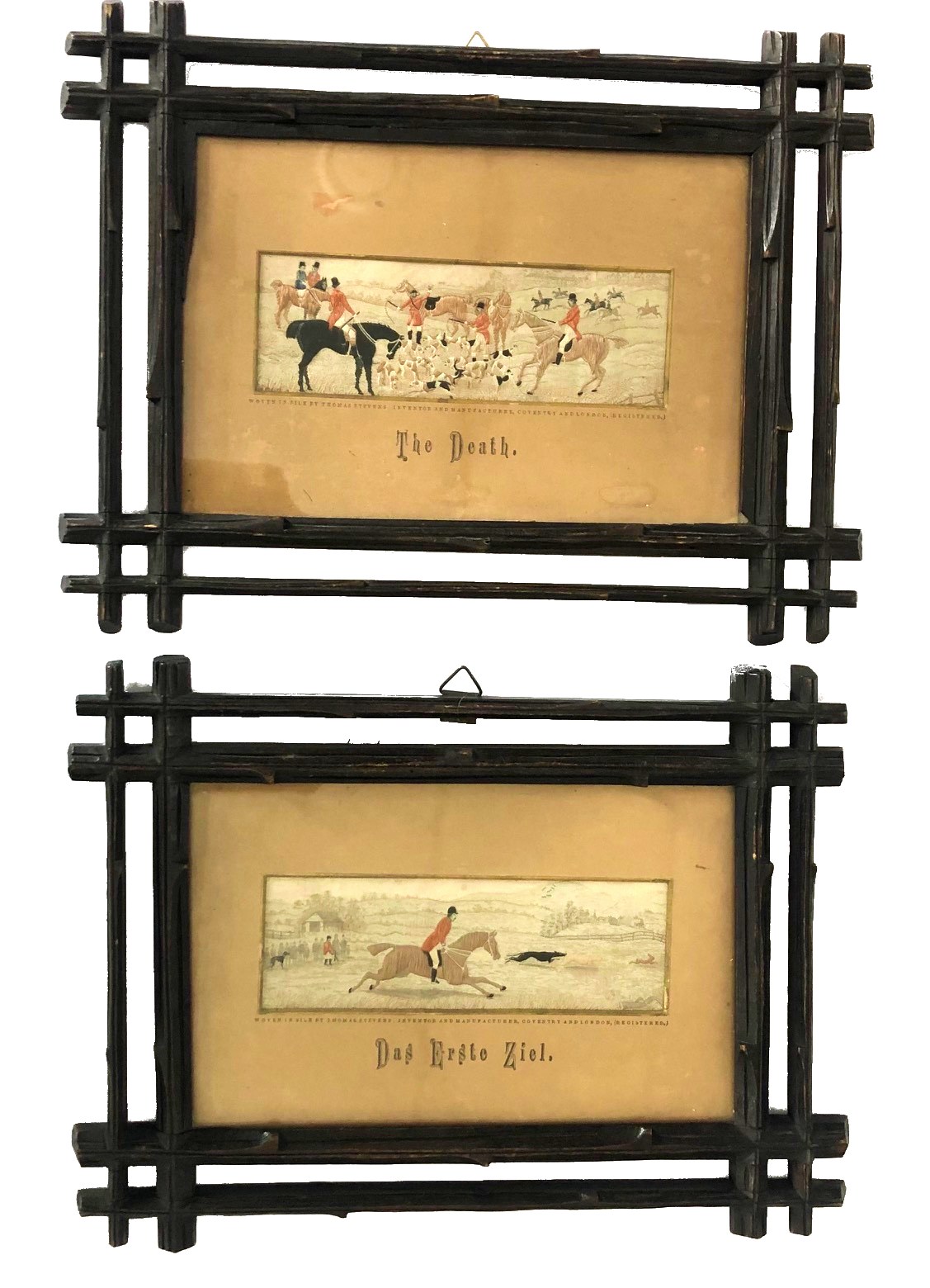
A 19th-century weaver and inventor of the "stevengraph"
Thomas Stevens was from Coventry, which in the 19th century was the center of the British weaving and textile industry. Unfortunately, due to the Cobden–Chevalier Treaty of 1860, which ensured free trade between France and England, Coventry faced a serious economic crisis.
Thomas Stevens decided to develop new products that would generate profits. He had extensive experience working with a Jacquard loom, which inspired him to devise a method for creating colorful images from silk. In 1875, he named his invention the “stevengraph” and introduced the products to the mass market, selling them as small, framed pictures. Since the 1930s, stevengraphs have been considered collector’s items, particularly popular in the United Kingdom among enthusiasts of the Victorian era.










