


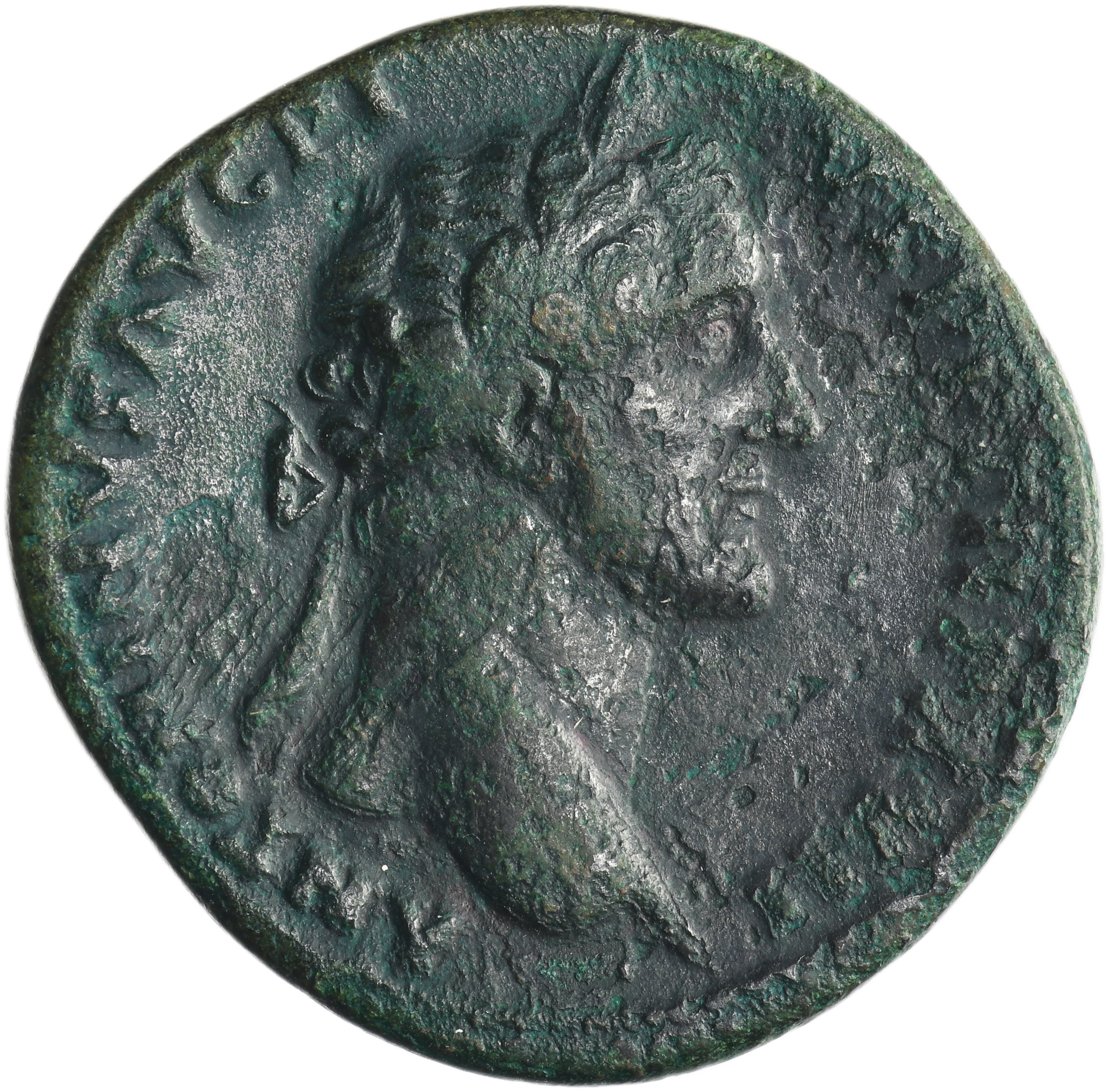
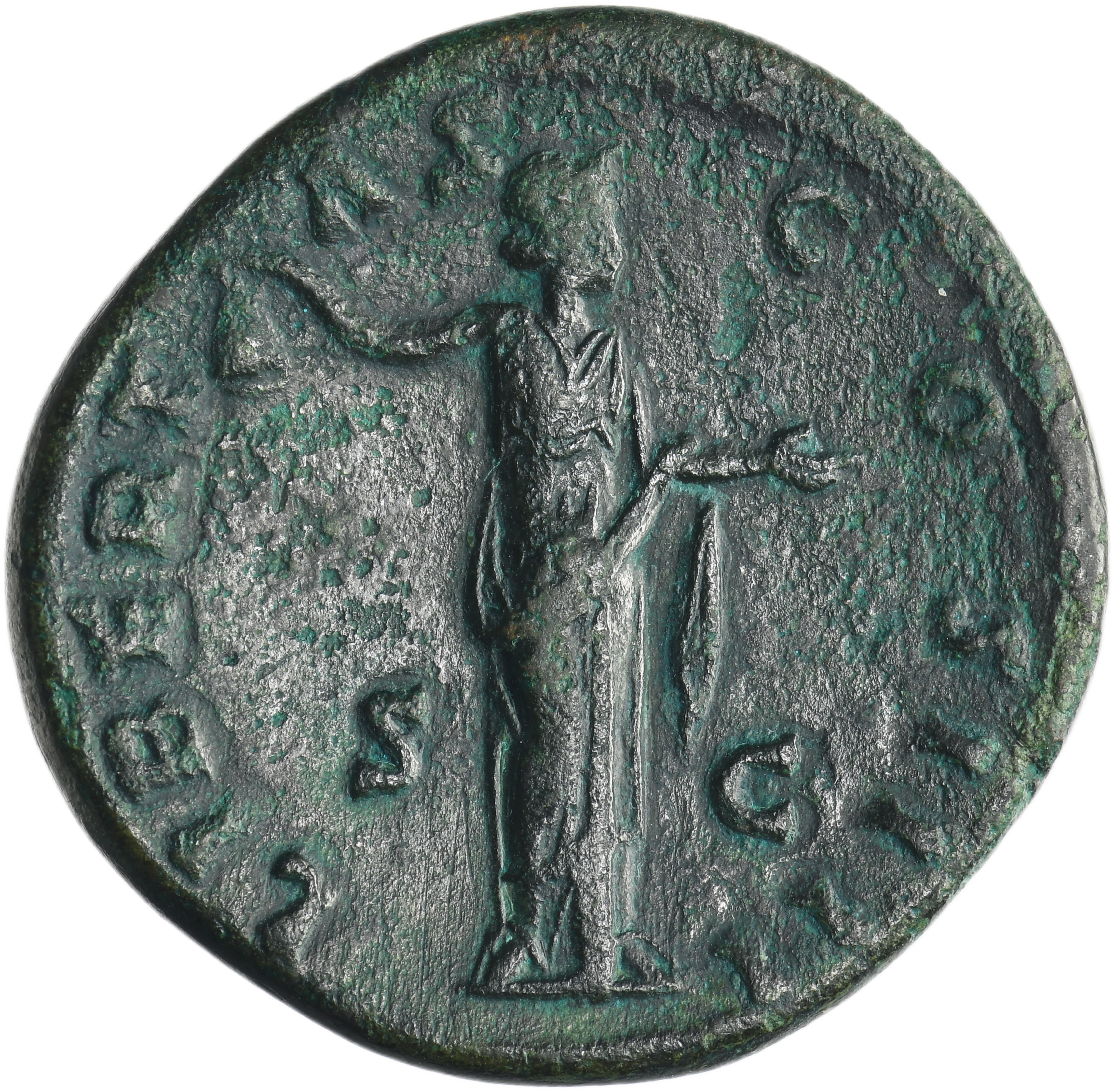


Bronze sestertius of Antoninus Pius (AD 138–161) struck at the Rome mint in AD 153–154, belonging to issues produced during the later phase of his reign.
The obverse shows the laureate head of the emperor facing right with the legend ANTONINVS AVG PIVS P P TR P XVII, containing elements of the official titulature of Antoninus Pius. The reference to the seventeenth tribunician power (TR P XVII) provides the primary chronological indicator allowing the issue to be dated to AD 153–154.
The reverse depicts the personification Libertas standing right and holding a pileus, the characteristic cap of freedmen that served in Roman culture as a symbol of liberty. The accompanying legend LIBERTAS COS IIII refers to the concept of liberty guaranteed under imperial rule, while the designation COS IIII indicates the fourth consulship of Antoninus Pius.
The figure of Libertas belongs to a well-established iconographic type in Roman coinage and appears regularly on imperial issues as the personification of civic freedom and political stability. In the coinage of Antoninus Pius this type occurs in issues of the mid-reign period and forms part of a broader iconographic program emphasizing harmony between imperial authority and the traditional values of the Roman state, a theme characteristic of a reign widely regarded by historians as one of the most stable periods in the history of the Roman Empire.
Roman Imperial
Antoninus Pius (138-161), Sestertius 153-154, Rome mint
Obverse: laureate head right
ANTONINVS AVG PIVS P P TR P XVII
Reverse: Libertas, draped, standing right, holding pileus in extended right hand and extending her left hand, S-C across fields
LIBERTAS COS IIII
Diameter 33 mm, weight 22.83 g











