


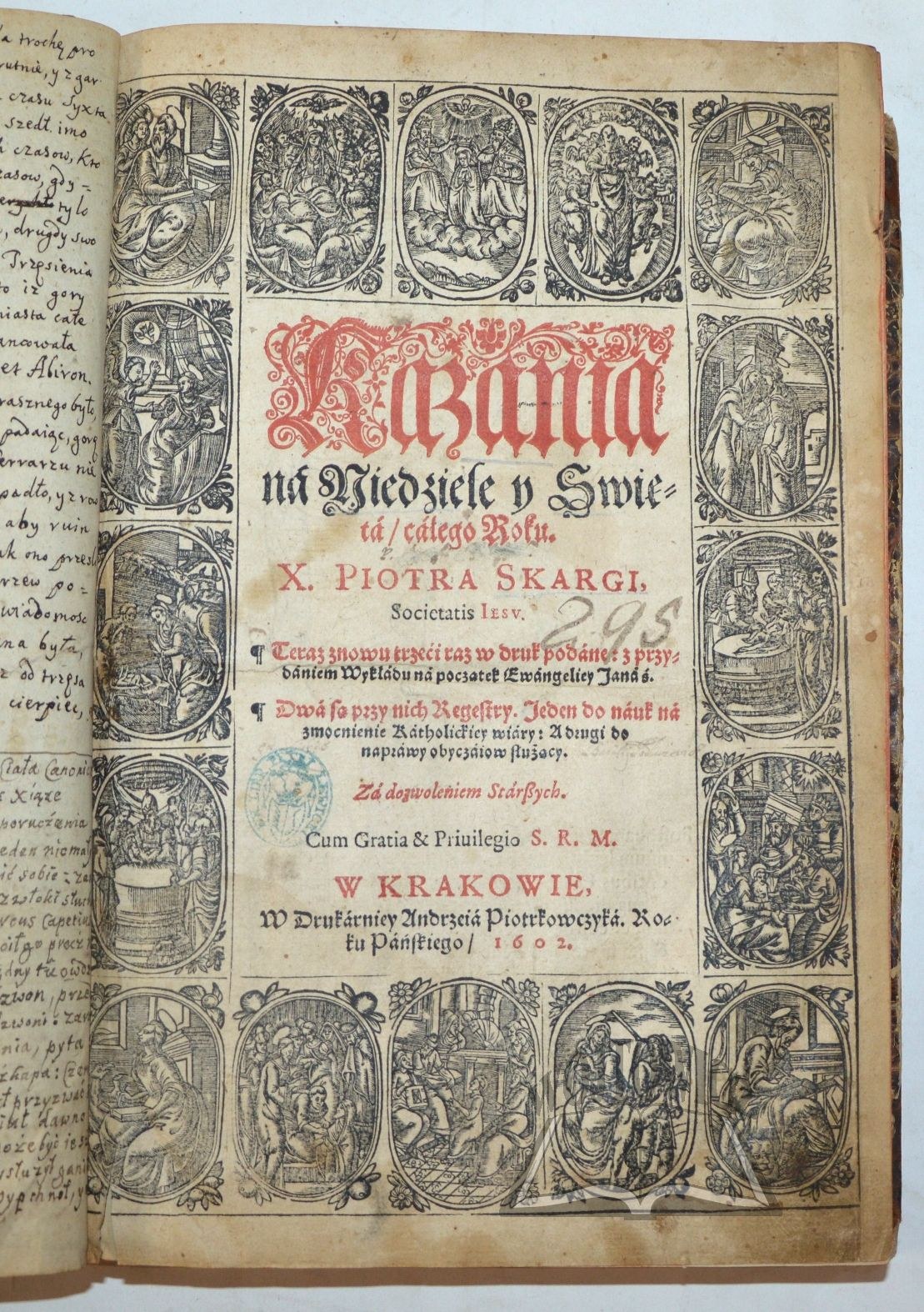
Sermons for Sundays and Feast Days Throughout the Year.
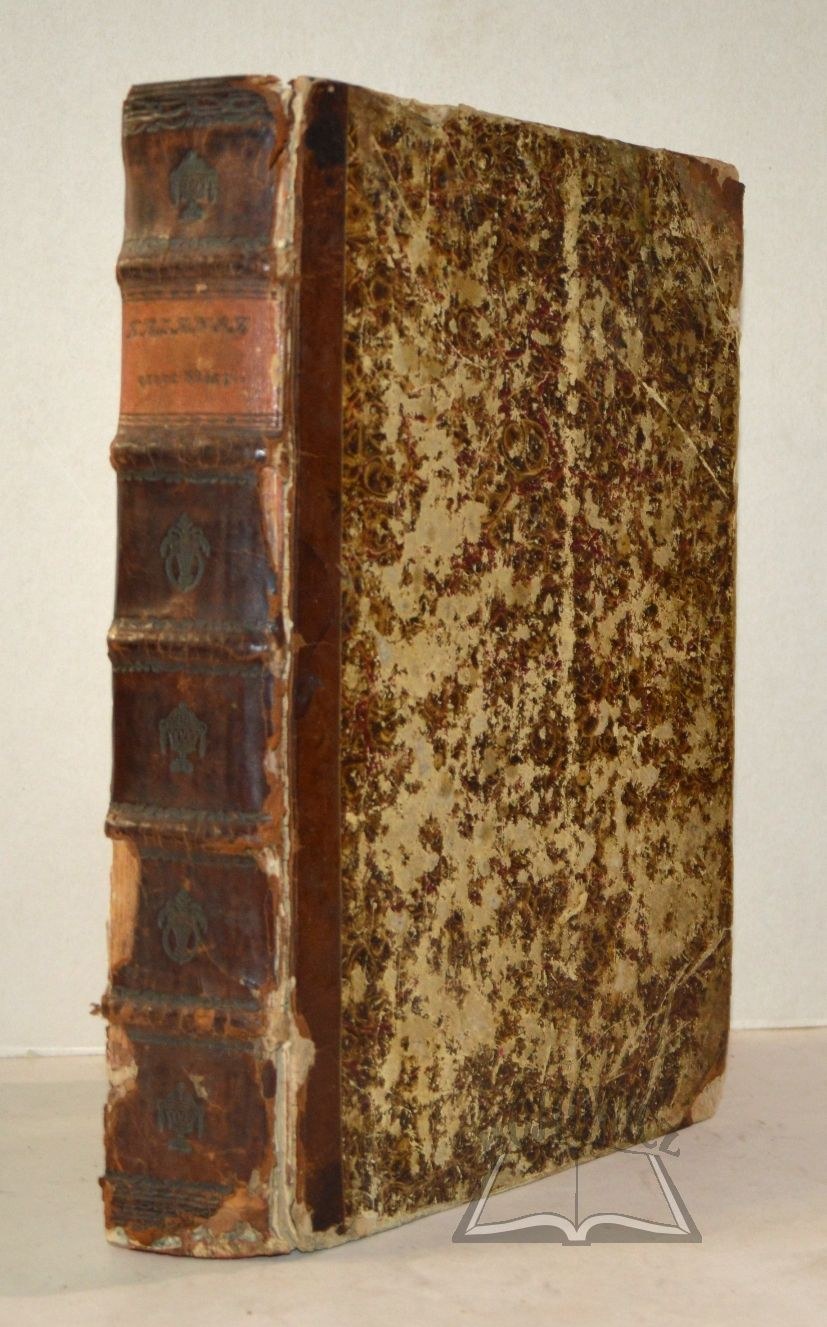
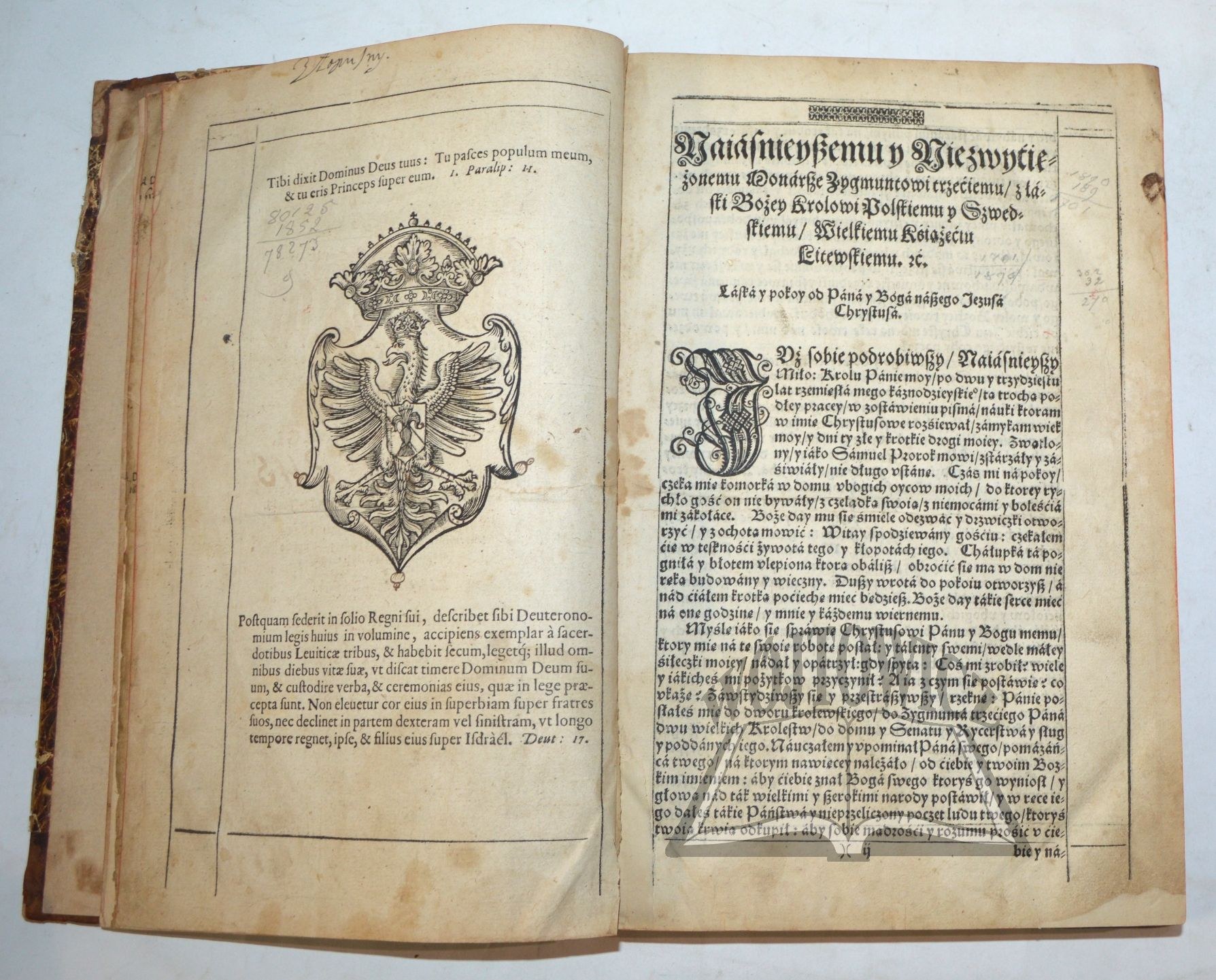
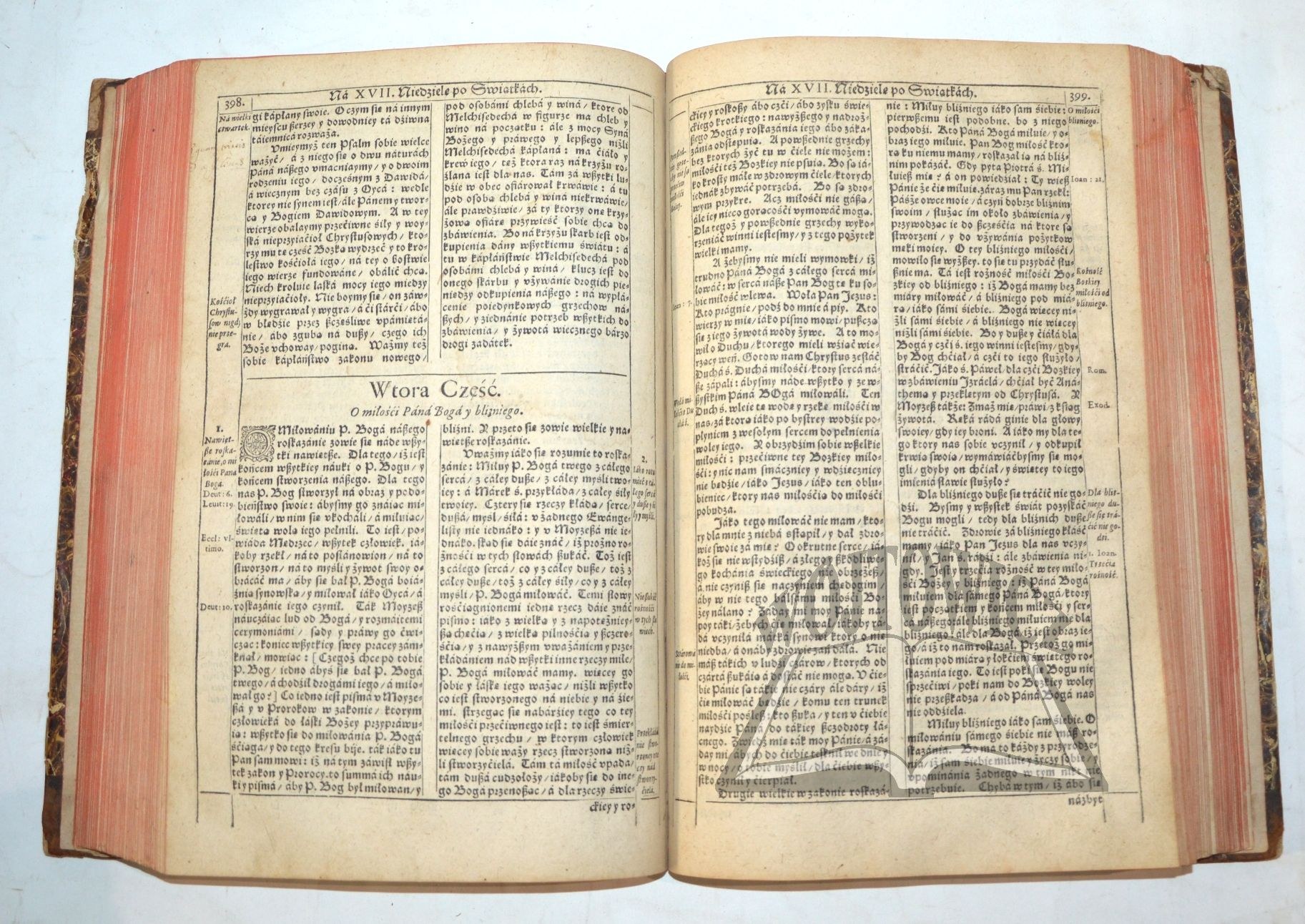
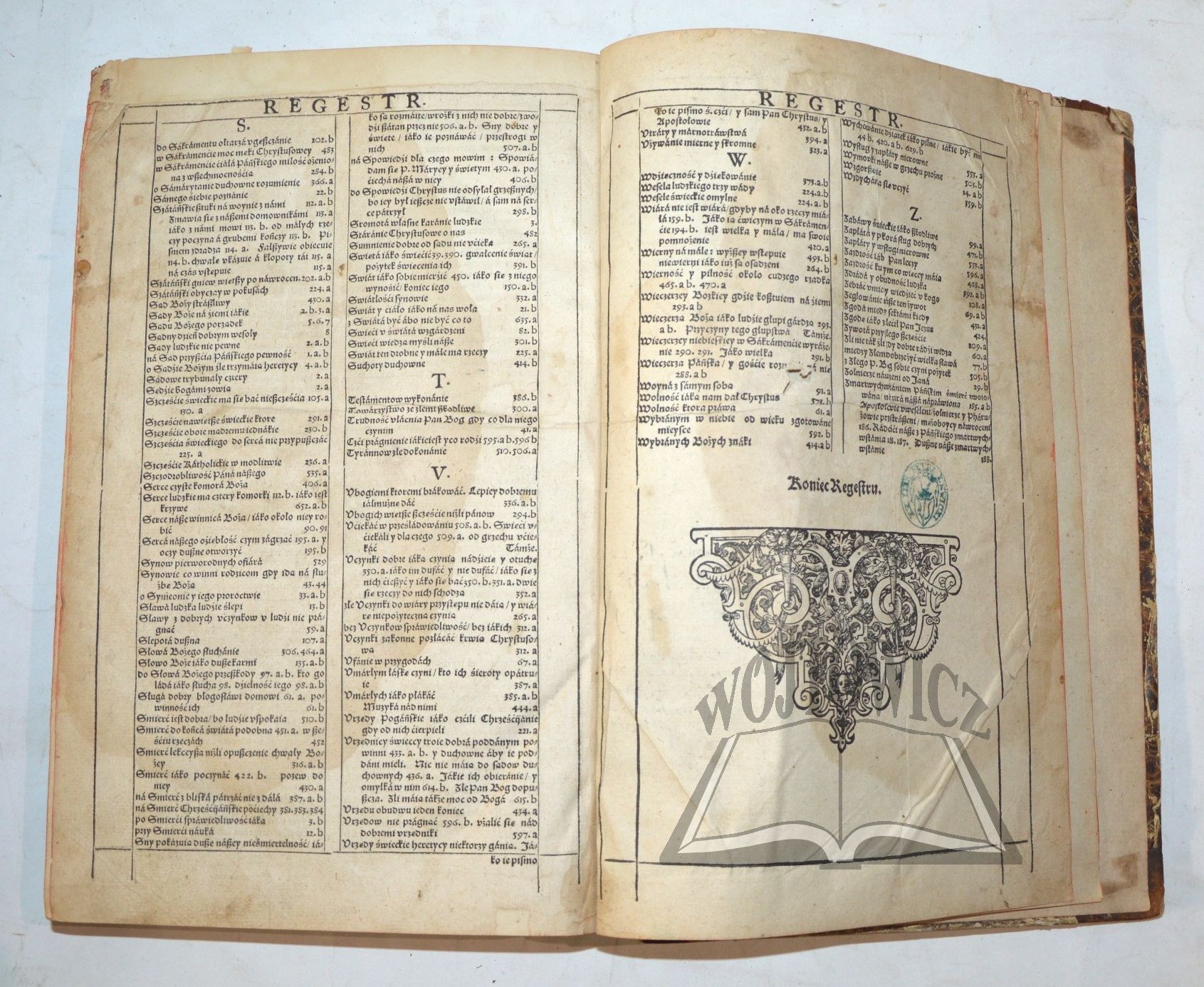
Now published for the third time: with the addition of an exposition on the beginning of the Gospel of St. John. Two indexes accompany them. One is for teachings to strengthen the Catholic faith; the other is for the improvement of moral conduct. With the permission of the Elders. Cum Gratia & Priuilegio S. R. M. (3rd ed.). In Kraków, 1602. Printed at the Press of Andrzej Piotrkowczyk, in the Year of Our Lord (31 x 21.5 cm), p. [4], p. 660, fol. [6], woodcut title page, White Eagle on the verso, secondary leather binding.
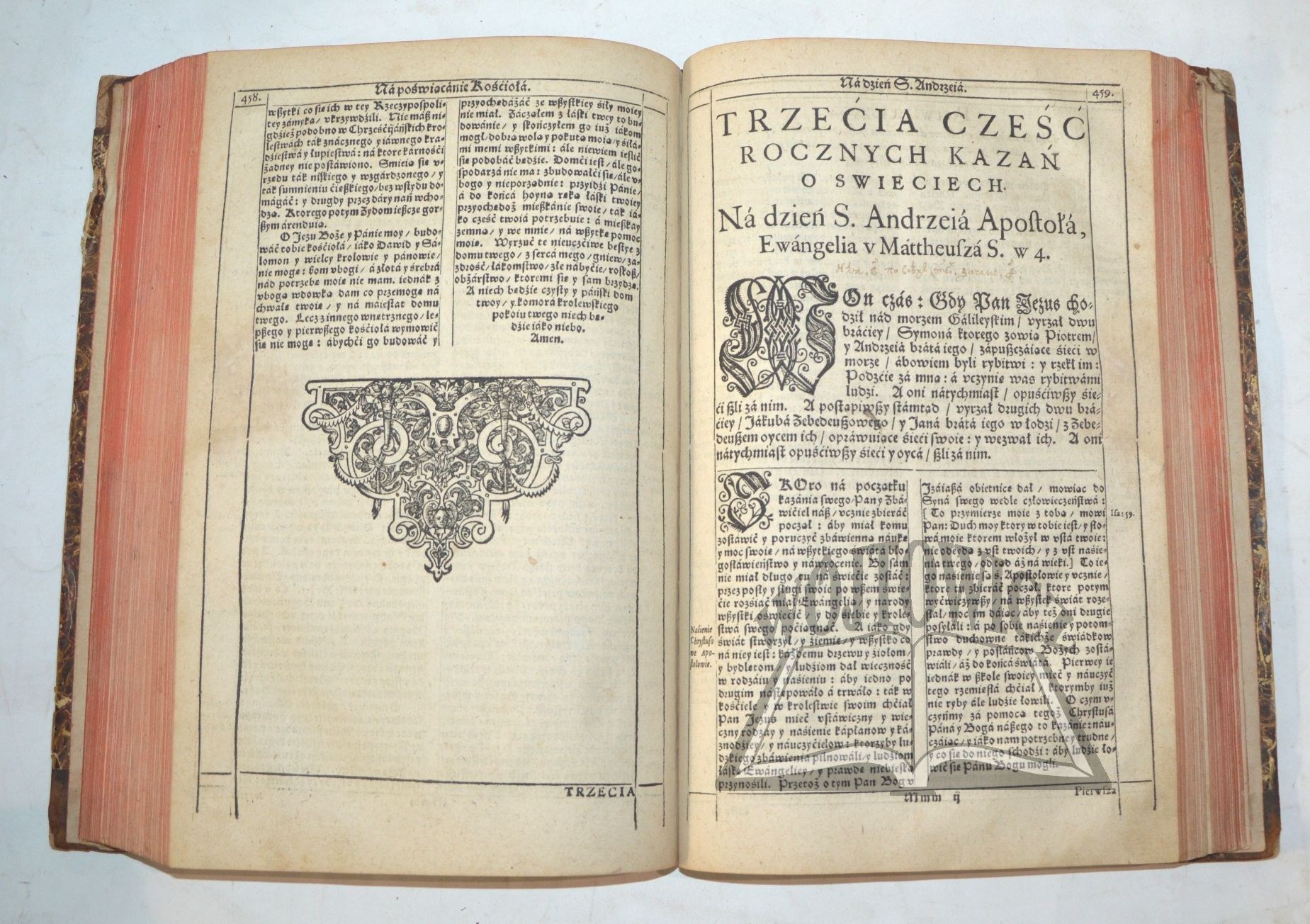
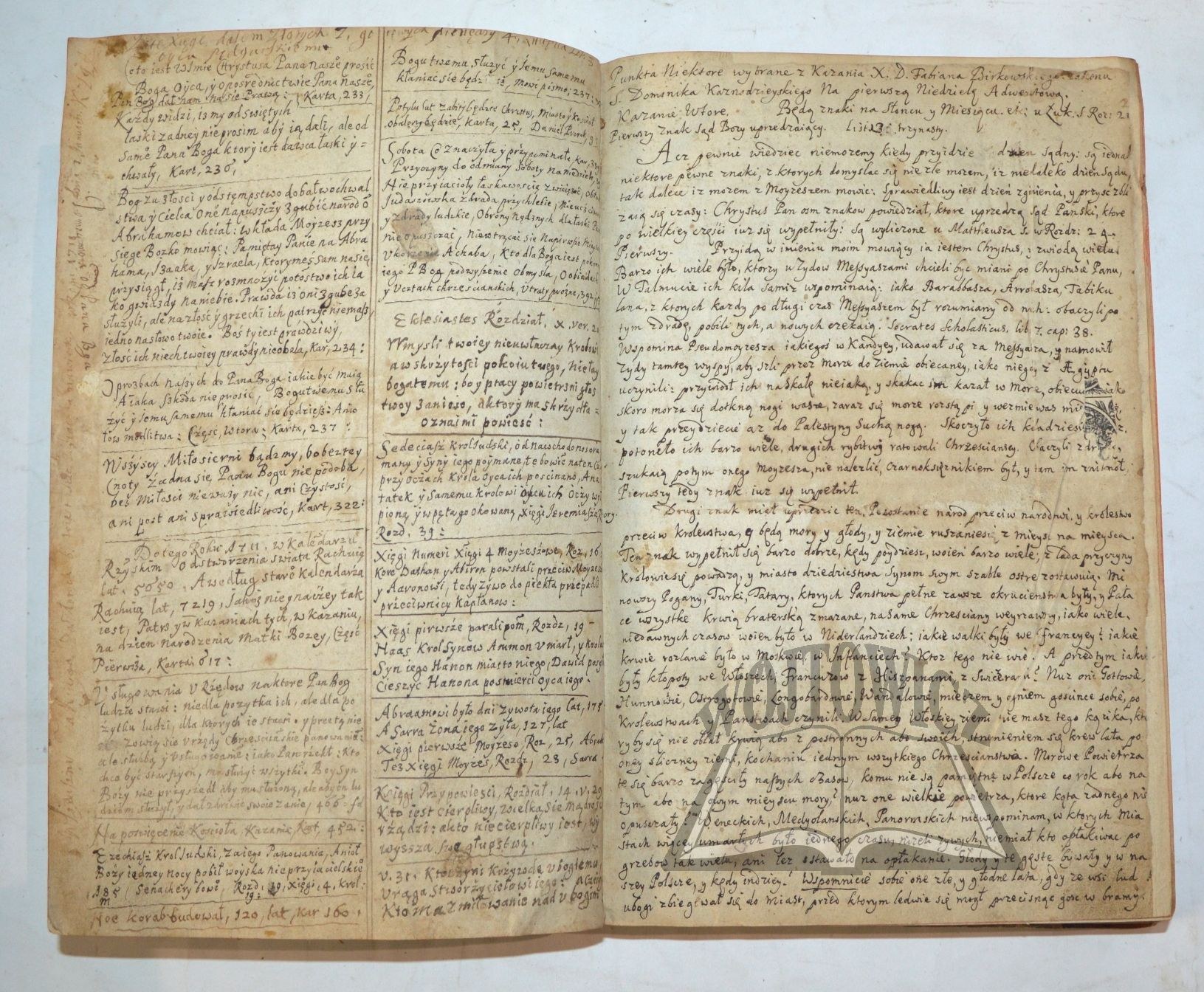
( Estr. Vol. 28). The third edition of one of the most important works by Piotr Skarga, a Jesuit, preacher to King Sigismund III Vasa, and one of the most prominent figures of the Polish Counter-Reformation. A monumental collection of sermons intended for all Sundays and feast days of the liturgical year, which is also one of the finest examples of Polish religious prose from the turn of the 16th and 17th centuries. The first edition was published in Kraków in 1595; the second edition was published in 1597 and expanded to include, among other things, sermons delivered at the Sejm and a funeral sermon for Anna Jagiellonka. The 1602 edition retains the comprehensive nature of the previous edition, and the title additionally emphasizes “an exposition on the beginning of the Gospel of St. John” as well as two extensive indexes: the first designed to help locate teachings on strengthening the Catholic faith, and the second—“for the reform of morals.” These are a very characteristic element of the book’s practical nature: it was intended not only as reading material but also as a practical handbook for preachers and readers. This edition is also particularly interesting from the perspective of the history of Polish political and social thought. Skarga’s preaching was not limited to expounding religious principles. In his reflections, he addressed issues of public morality, duties toward the state, the obligations of rulers and subjects, the condition of the Polish-Lithuanian Commonwealth, and the dangers arising from the decline of morals. His writings became one of the most distinctive voices of Polish Counter-Reformation culture. From a typographical standpoint, the 1602 edition is also very interesting. It was printed by Andrzej Piotrkowczyk’s printing house, one of the most important printing houses in Kraków at the turn of the 16th and 17th centuries. Traces of moisture and slight staining; the two pages preceding the title page contain handwritten notes; early notes on the reverse of the last page; the last page has a glued-in margin; publisher’s seals. 18th-century binding?, spine with slight damage, a crack along the spine. Very rare.











최근 확인한 경매
경매품 리스트를 확인하려면 로그인하세요
관심있는 경매품
경매품 리스트를 확인하려면 로그인하세요