


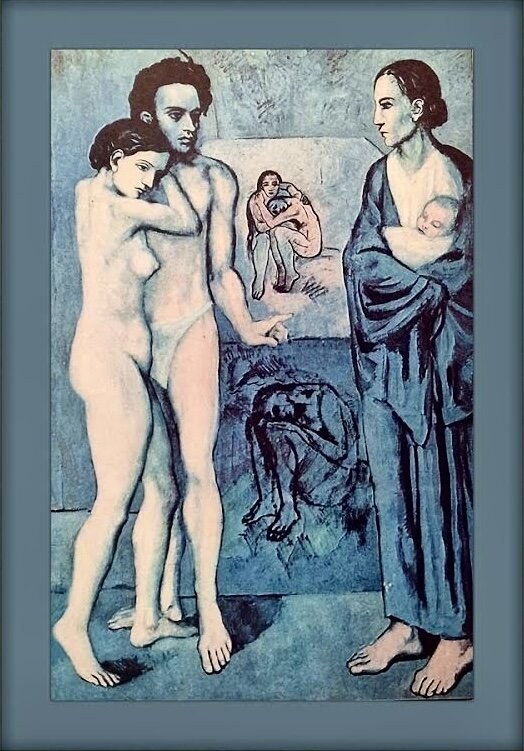
Workshop lithograph, paper 300 g, 47 x 32 cm in light passe - partout size 57 x 42 cm
Publisher: Centro Diffusione Cultura Milano; paper specially produced for this edition by Cartier Sterzi
Editionof 1000 copies; lithographic plates were destroyed to avoid unauthorized prints.
The image according to which, the presented lithograph was created Picasso painted in 1903 during the so-called Blue Period.
The Blue Period in the work of Pablo Picasso, which lasted from 1901 to 1904, was a watershed time marked by a deep personal tragedy - the suicide of the artist's friend Carlos Casagemas in 1901.This event became a turning point for Picasso, which triggered intense melancholy and depression, reflected directly in his paintings. The blue style is characterized by the dominance of cold, muted shades of blue - a color symbolizing sadness, loneliness and introspection. Picasso
consciously used this color palette to emphasize the emotional weight of his works, giving them a deep, psychological expression. His paintings from this period are almost a visual poetry of suffering, in which the aesthetics of color are combined with the expressive, simplified forms of the figures.
The blue period was followed by the pink period in Picasso's work between 1904 and 1906. It was a time of optimism and a warming of the image of his works after the melancholic blue period.
The painting Vita, consisting of several plans, the man in the painting is his friend Carlos Casagemas. The structure of the work, called an "enigmatic painting" because of the vagueness of its meaning, aims to show different aspects of existence. Through a complex and intricate montage, Picasso shows the figures of a mother and child and a couple as actors on the stage of the theater of life.
The setting shown in the visuals is for illustrative purposes only and does not constitute a commercial offer.










