


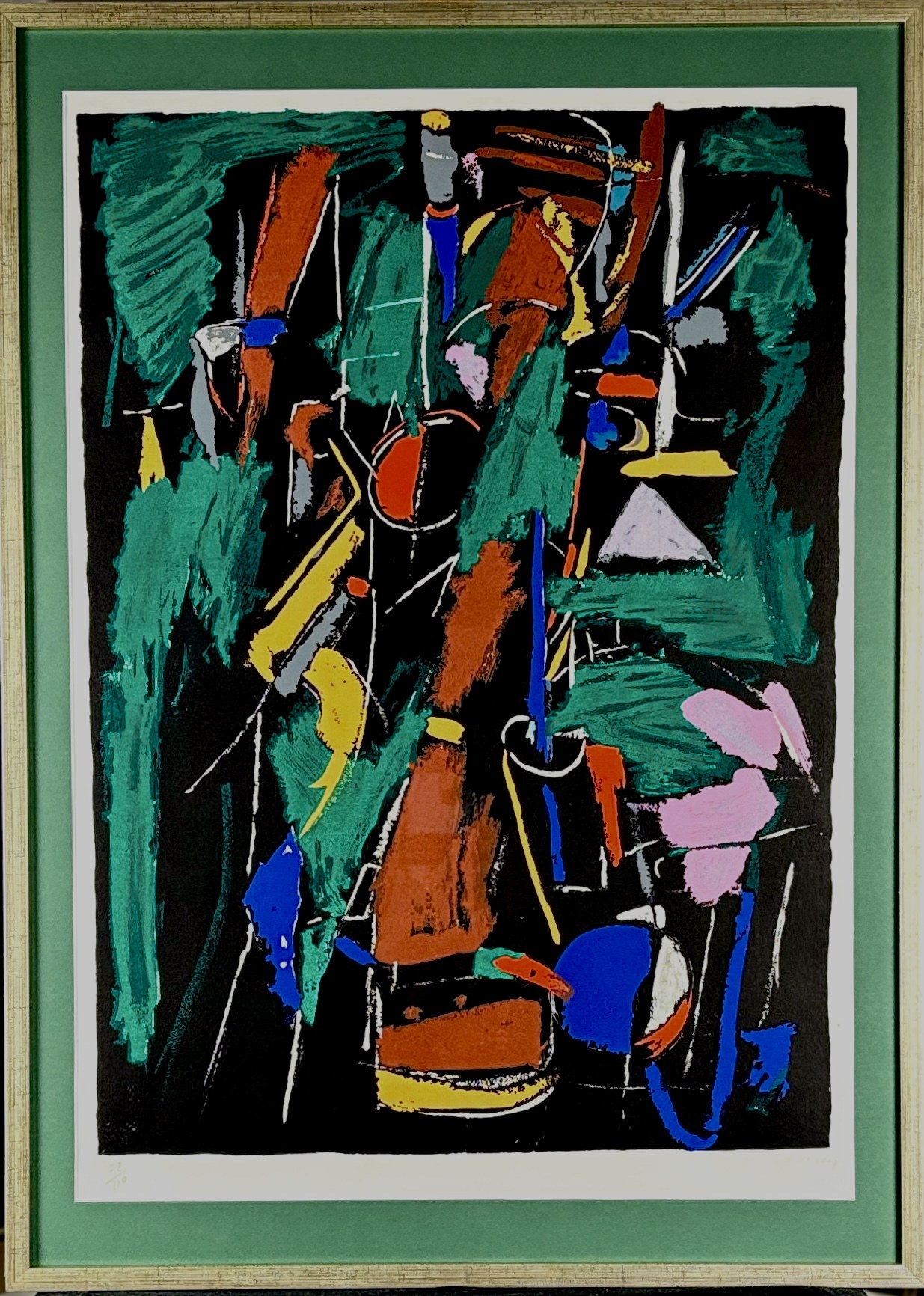
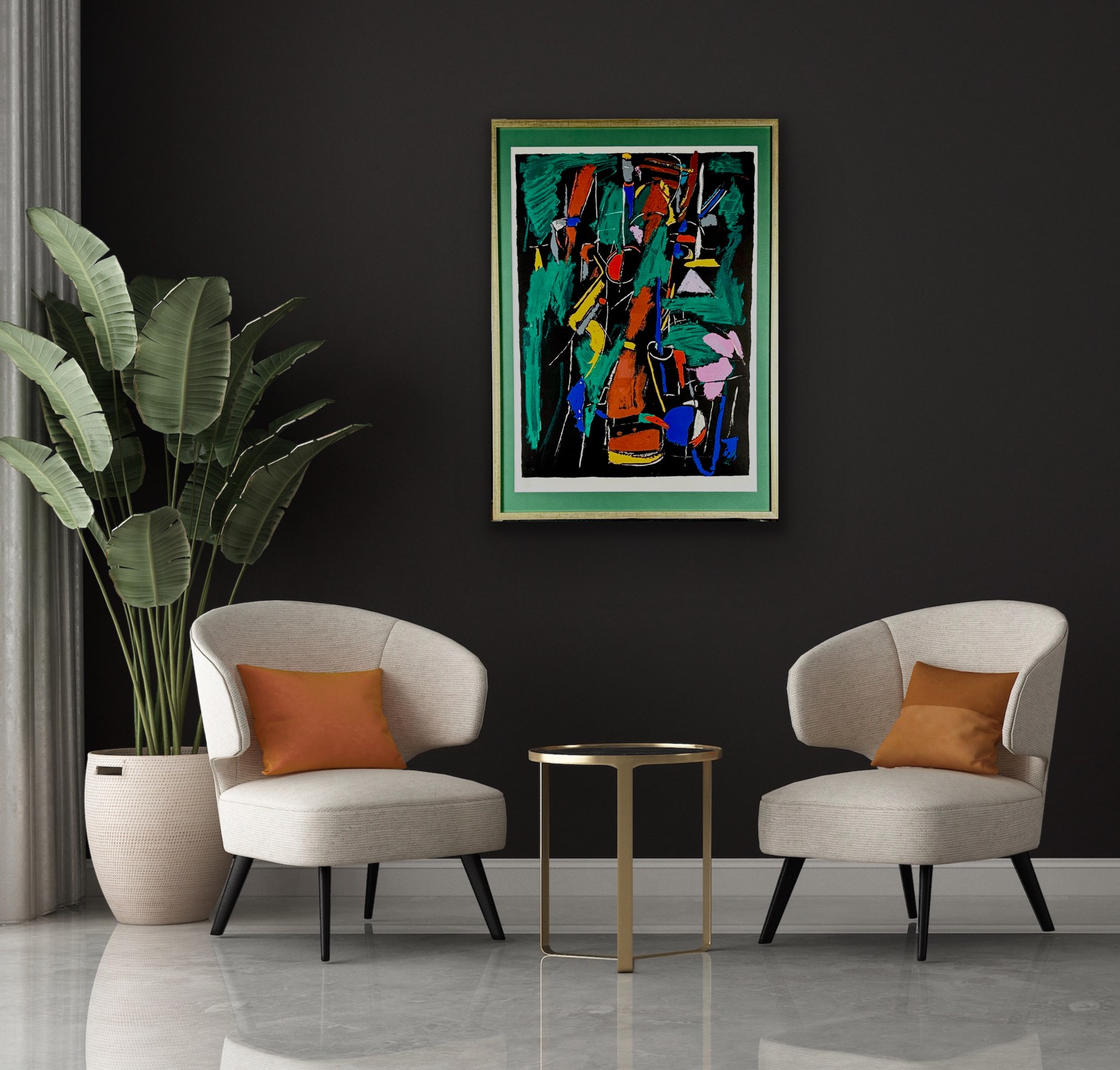
Workshop lithograph; Arches velin paper(Velin d'Arches); framed 70 x 50 cm; signed in pencil by the author p.d. "Lanskoy"; numbered in pencil l.d. 53/110;
Publisher - Louis Broder
Print - Atelier Mourlot,Paris - Lanskoy created his most important graphic works there.
André Lanskoy - Born in Moscow to a noble family (his father was a count). After the outbreak of the October Revolution, he fought in the White Army. In 1921, after a brief stay in Constantinople, he arrived in Paris. It was there that he spent the rest of his life, becoming an integral part of the so-called École de Paris (School of Paris).
At the beginning of his journey, Lanskoy painted still lifes, portraits and scenes of everyday life in a style reminiscent of Primitivism and Expressionism (he was inspired by Soutine and Van Gogh). He was quickly noticed by Wilhelm Uhde, a famous collector and art dealer, who discovered, among others, Rousseau's Cellist. He had his first solo exhibition as early as 1925, which opened the door to the best Parisian galleries.
The turning point for him was an exhibition of works by Wassily Kandinsky in 1944. It was under its influence that Lanskoy completely abandoned the representation of reality. He became a leading representative of Tashism, especially Lyrical Abstraction. His works from this period are dynamic compositions in which color not only fills the form, but becomes the form itself.
Tashism (from tache - stain) is a direction in abstract painting (non-geometric abstraction) that emerged after World War II, characterized by spontaneous, violent application of paint.
Lanskoy believed that color has its own rhythm and music. His style is characterized by:
- Dense texture: He often applied paint thickly, almost sculpturally.
- Contrast: He loved to juxtapose intense colors (reds, blues, yellows) with deep blacks or pure whites.
In addition to oil painting and lithography, he designed magnificent tapestries and illustrated luxury editions of books (including Gogol's "Diary of a Madman").
He died in Paris in 1976, at the height of his fame. Today he is considered one of the most important abstract painters of post-war Europe.
- His works are in the world's most important collections, including the Musée d'Art Moderne de la Ville de Paris, the Centre Pompidou, MoMA in New York and the Tate Modern in London.
- Prices for his oil paintings at world auctions regularly reach ceilings of tens to hundreds of thousands of euros, while his prints are highly sought after by collectors who appreciate the Paris School.










