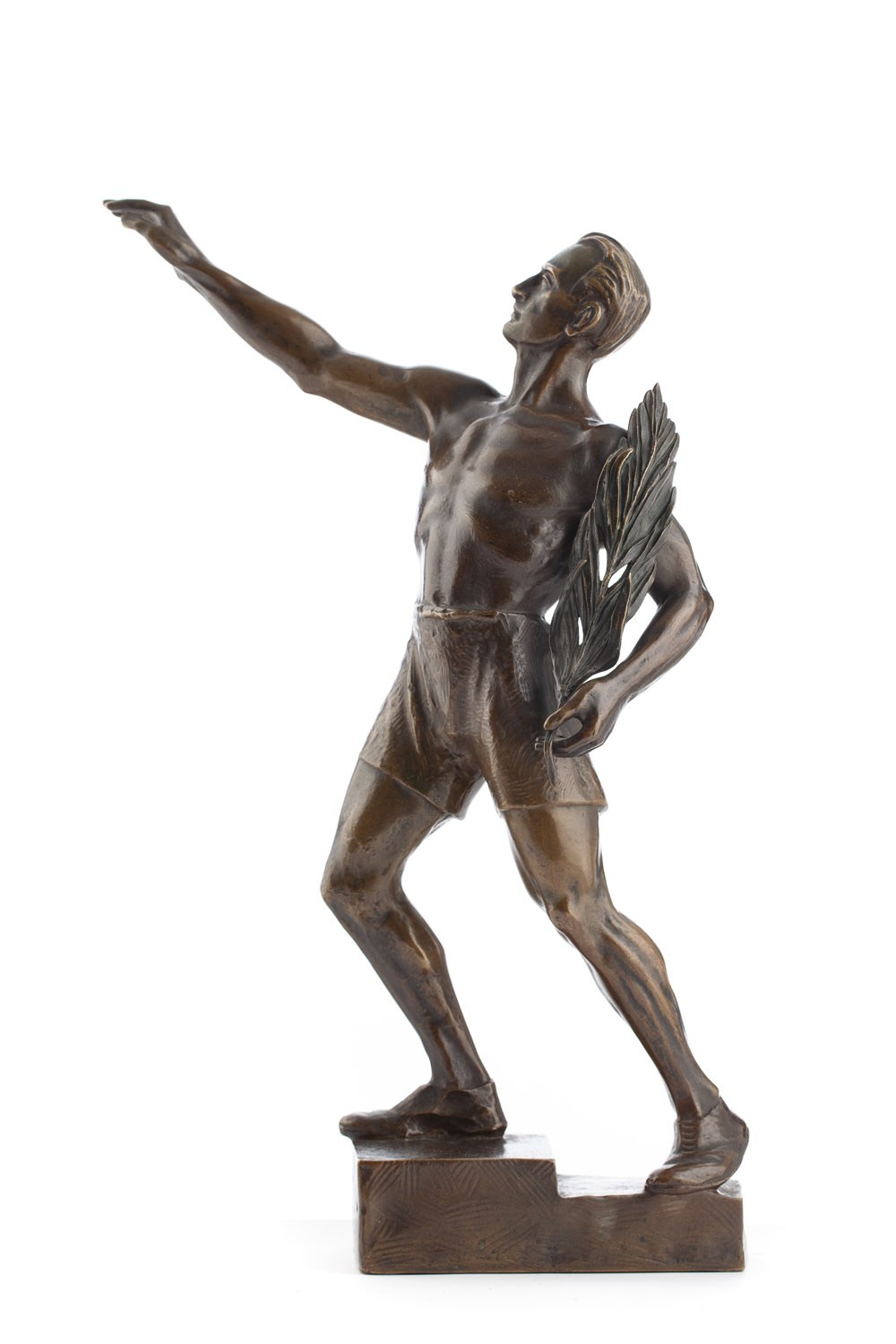
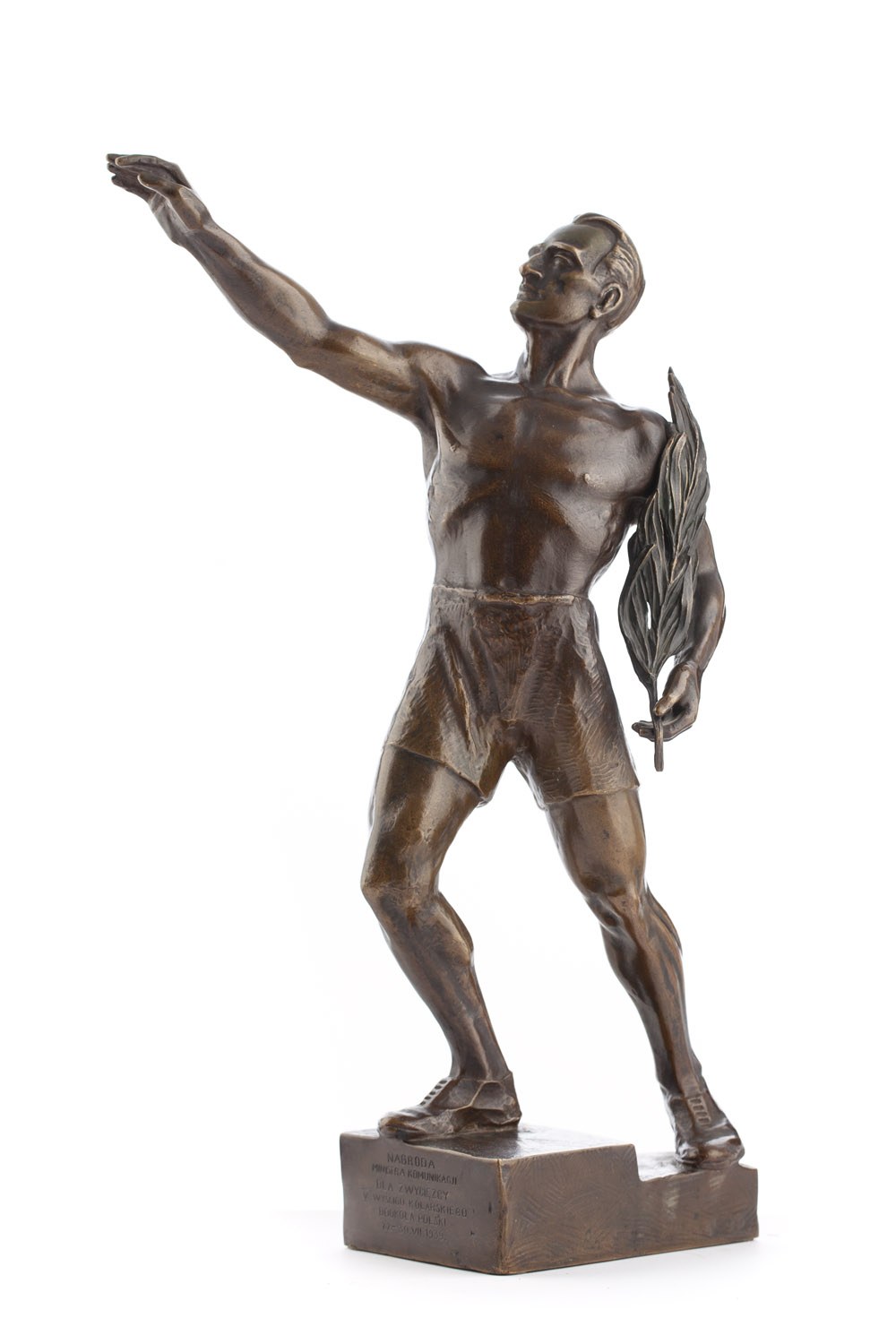
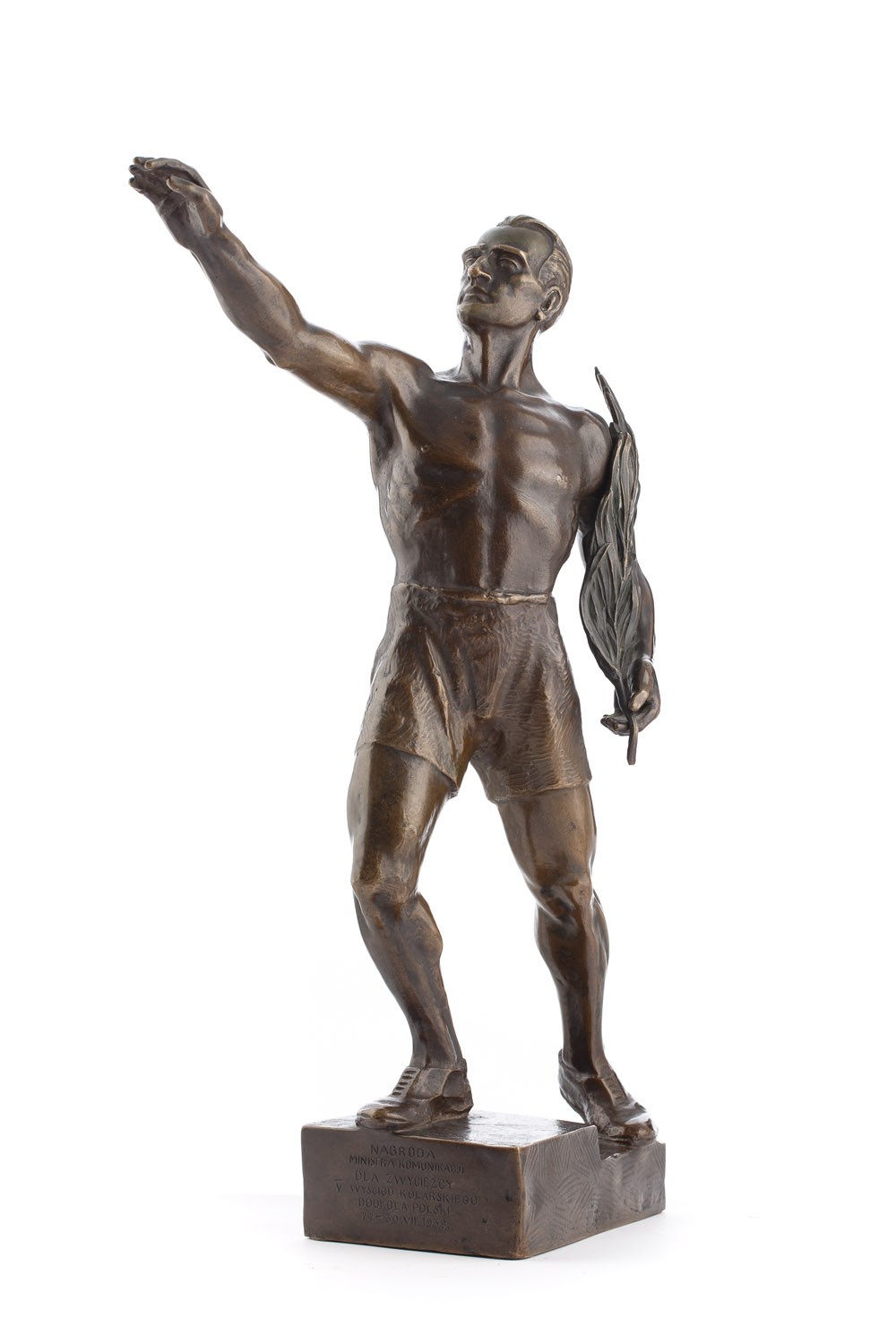
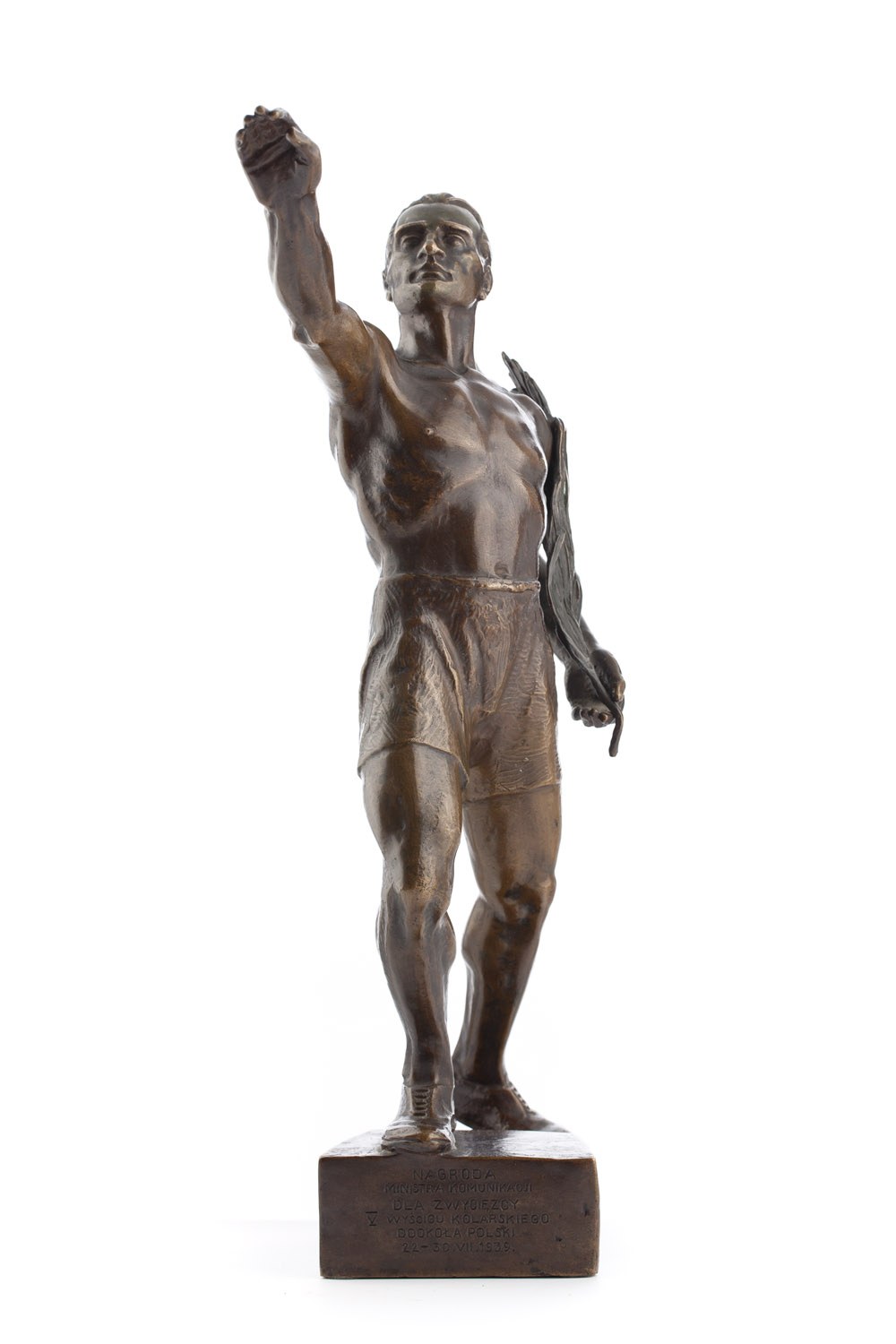
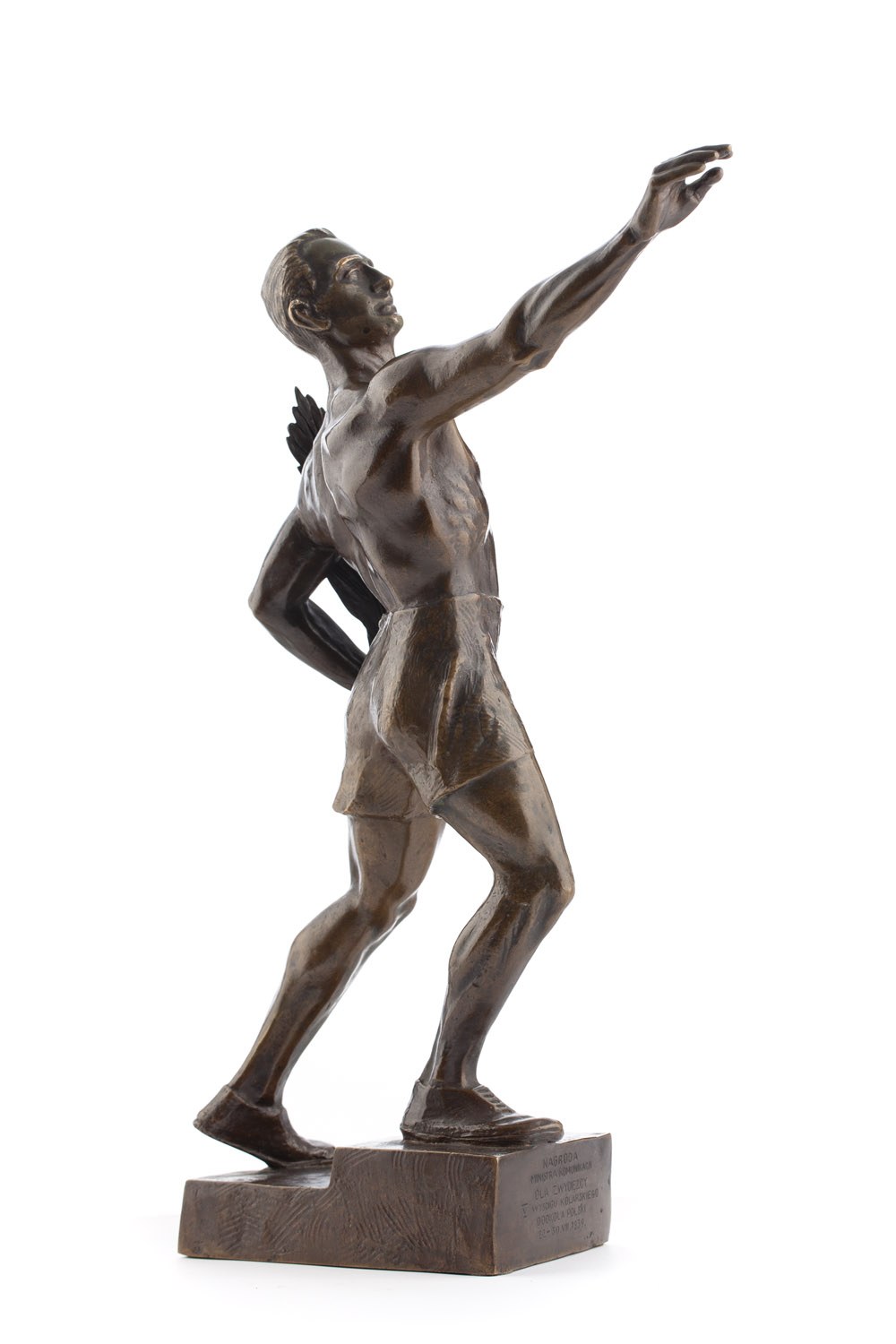
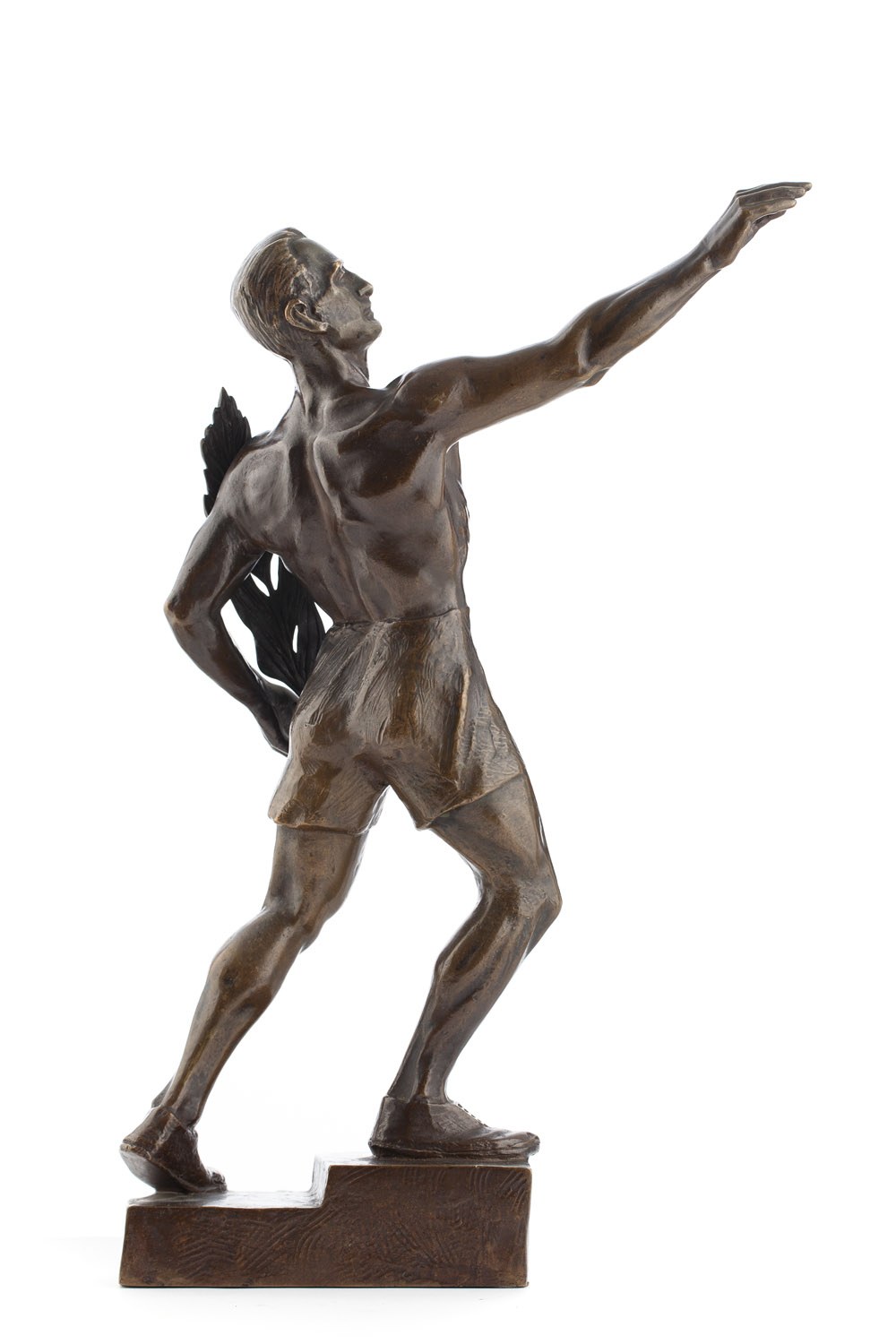
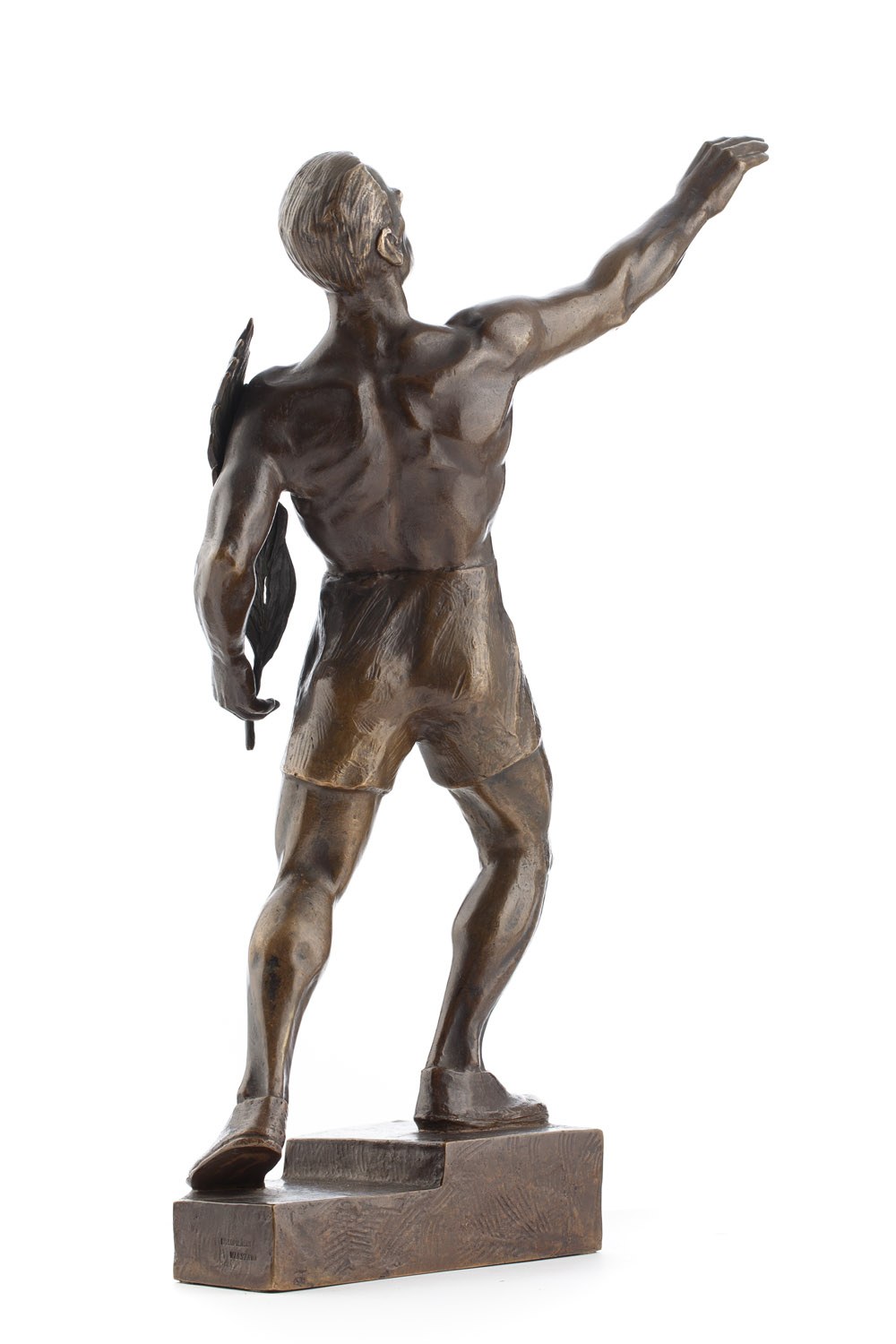
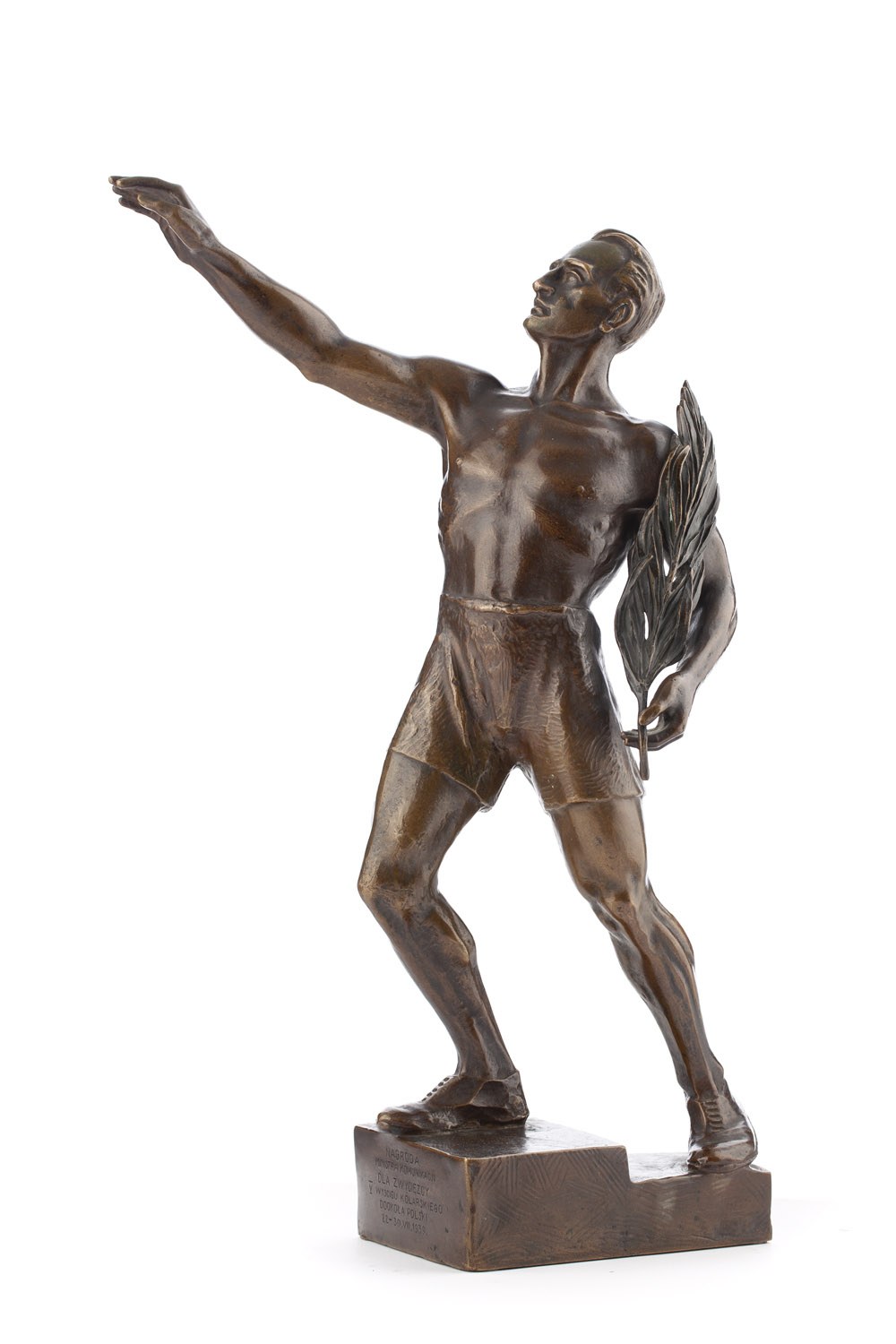
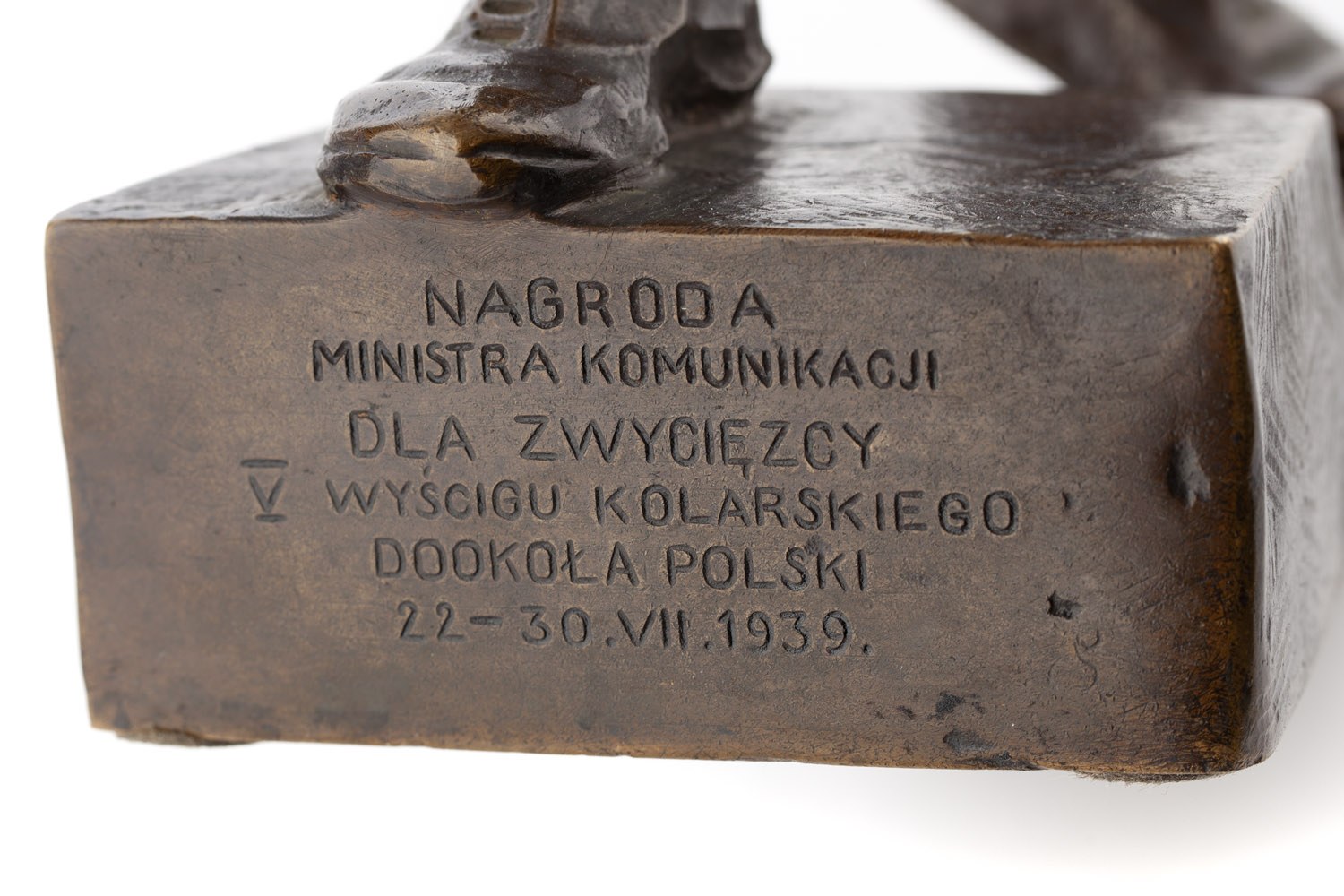
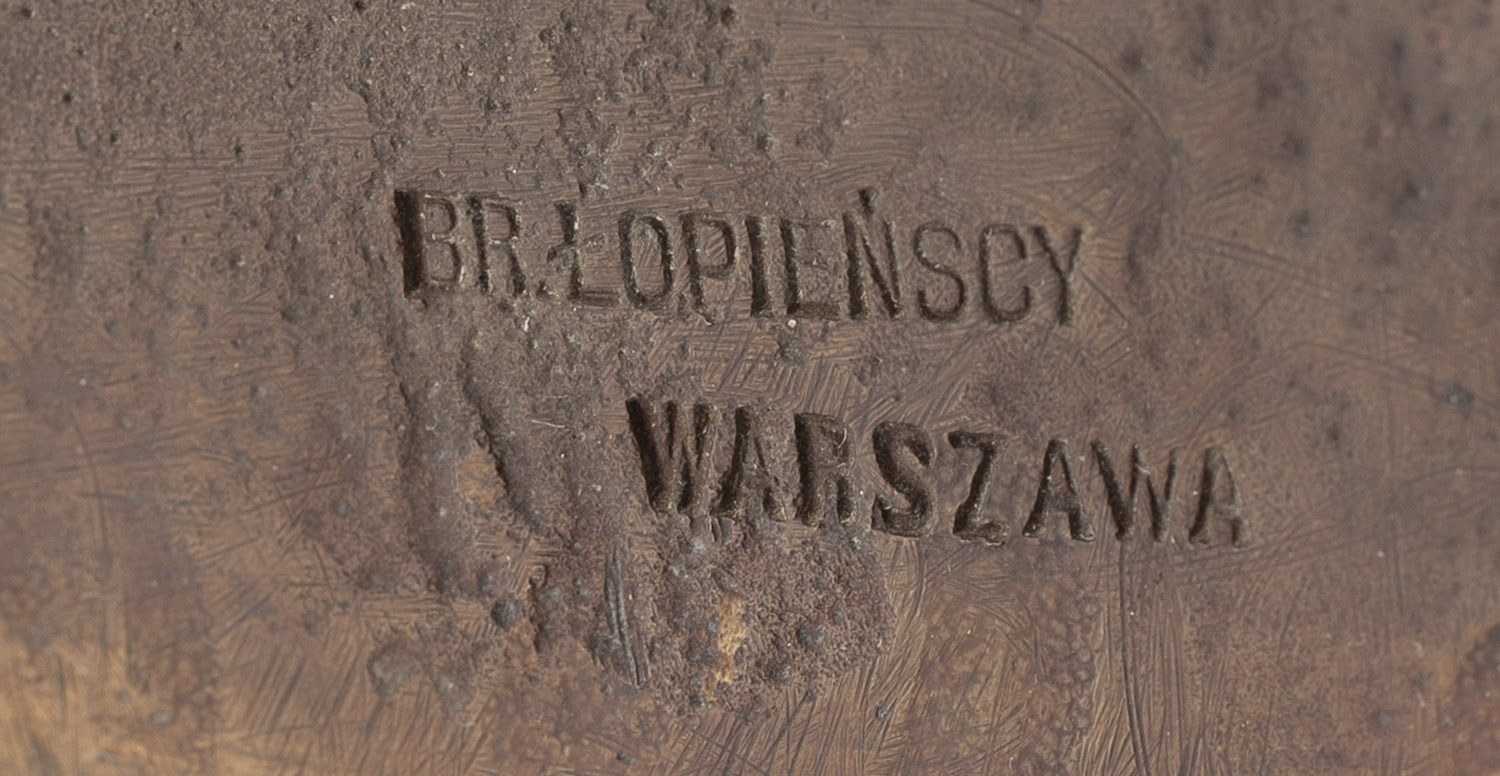
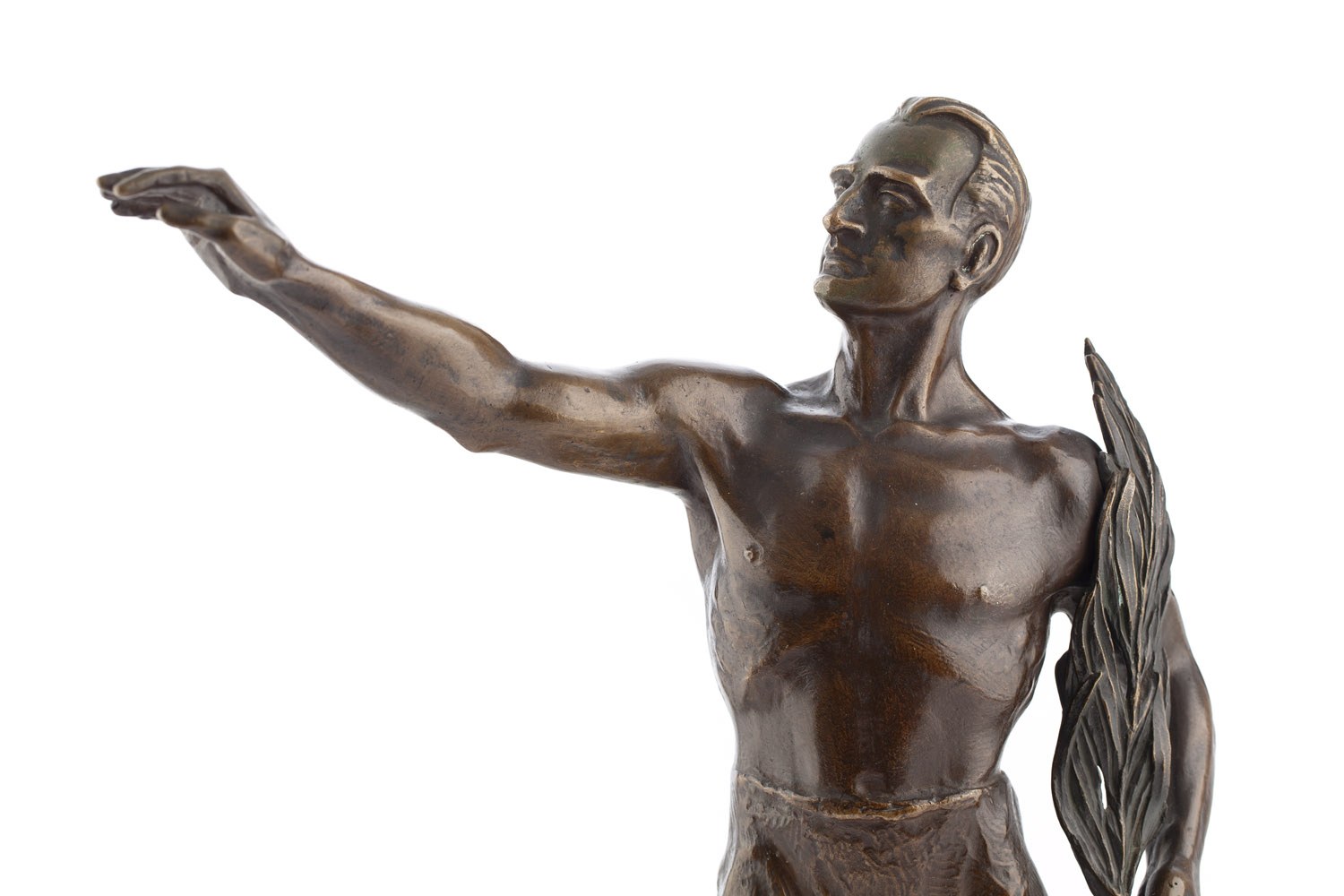
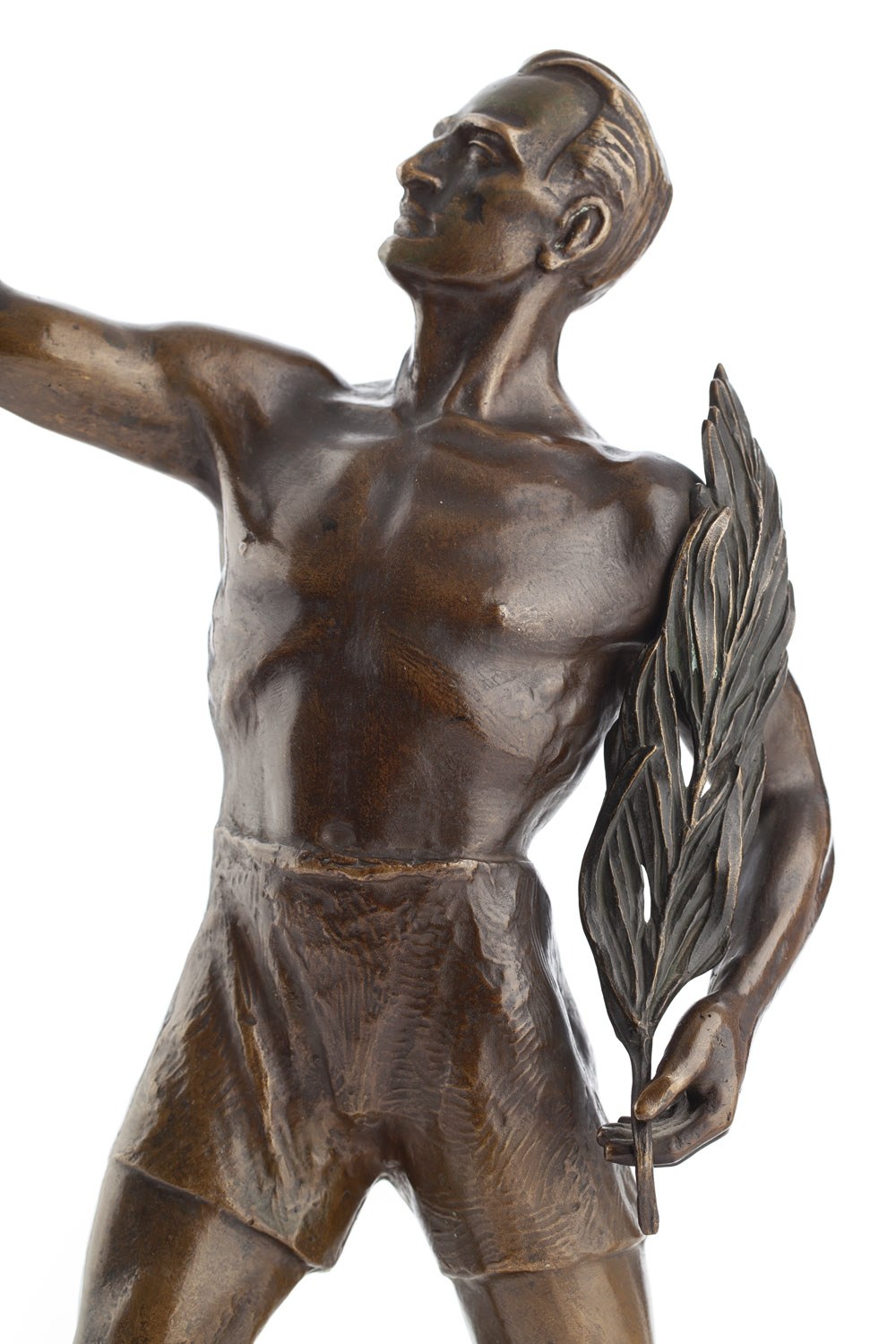
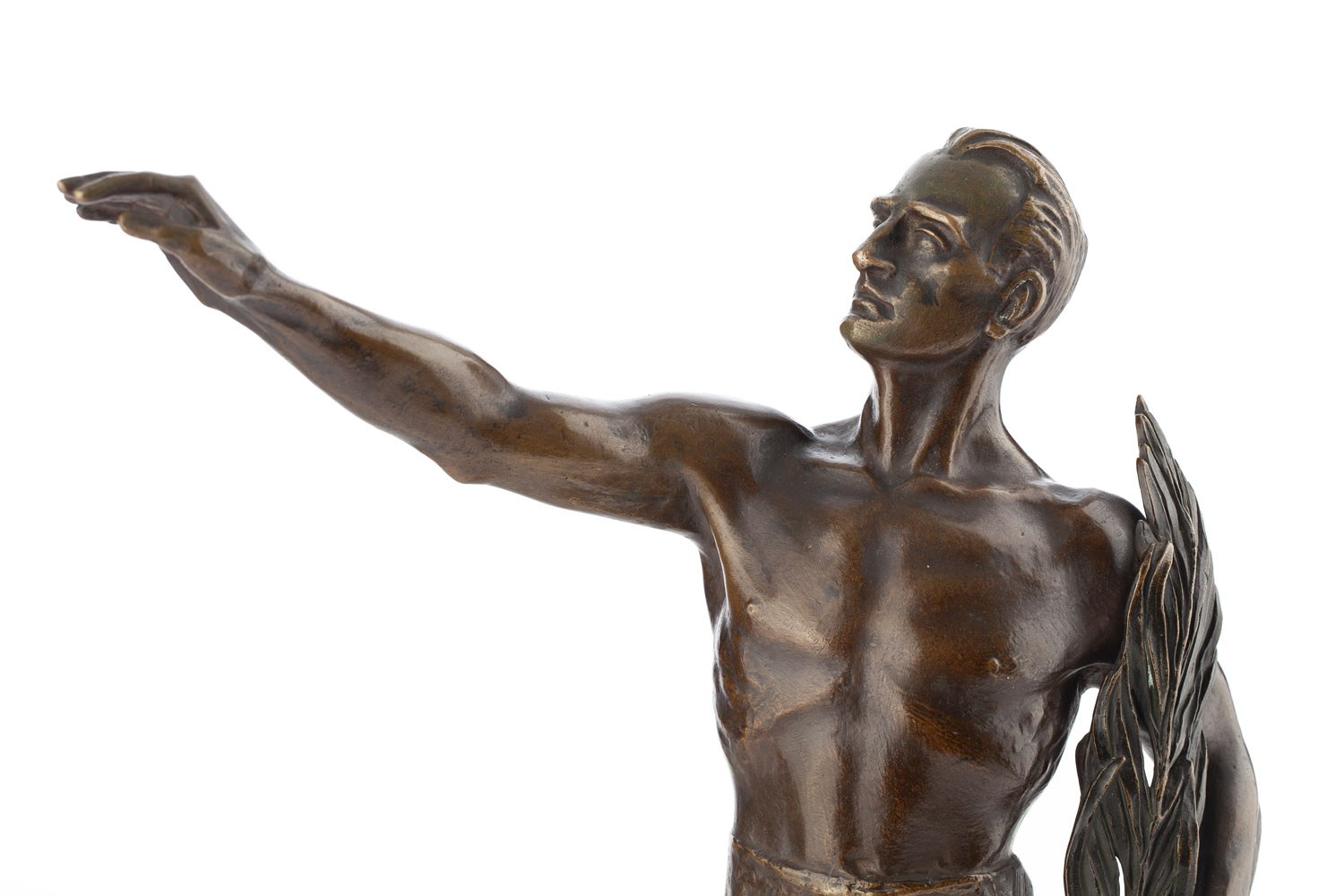
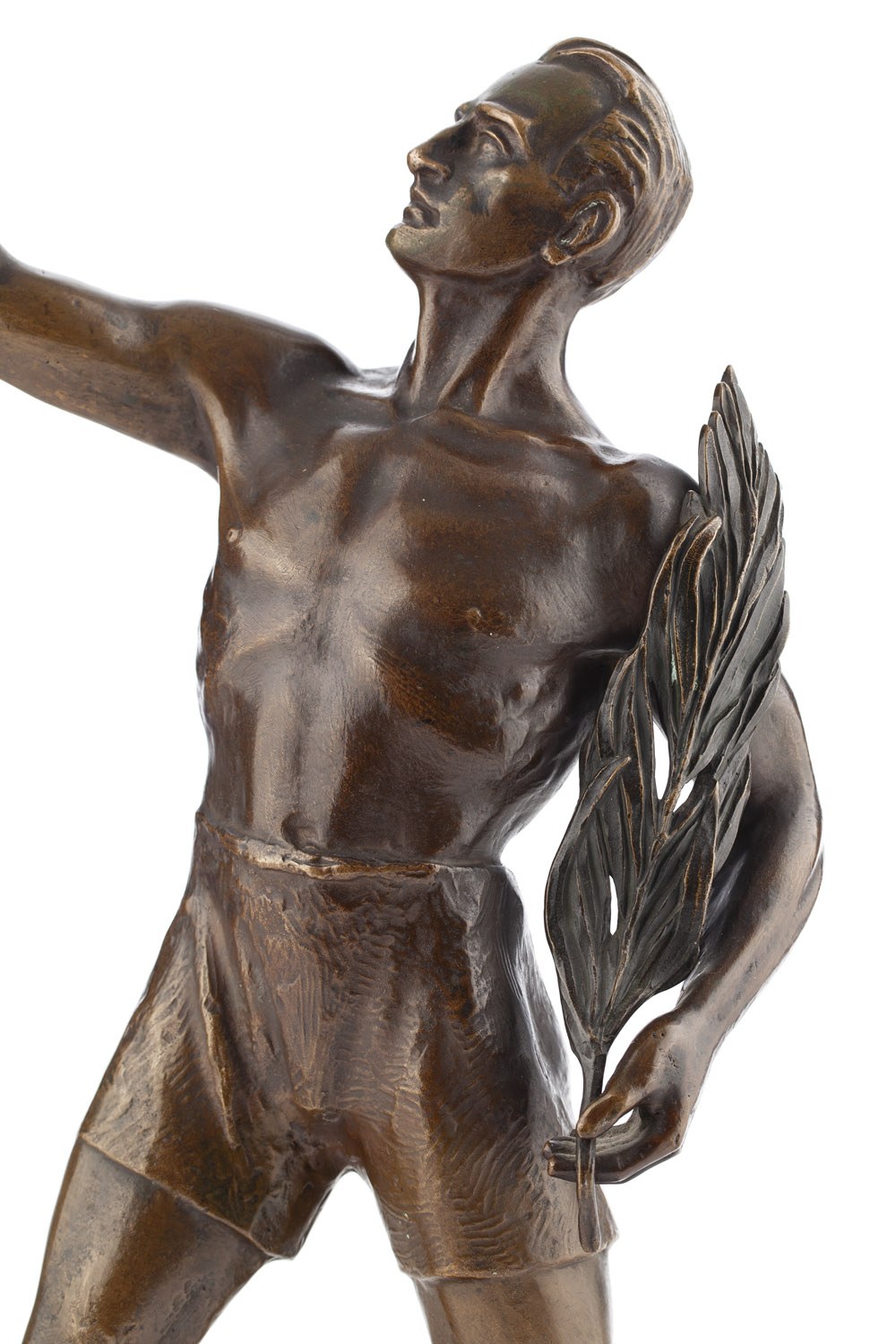
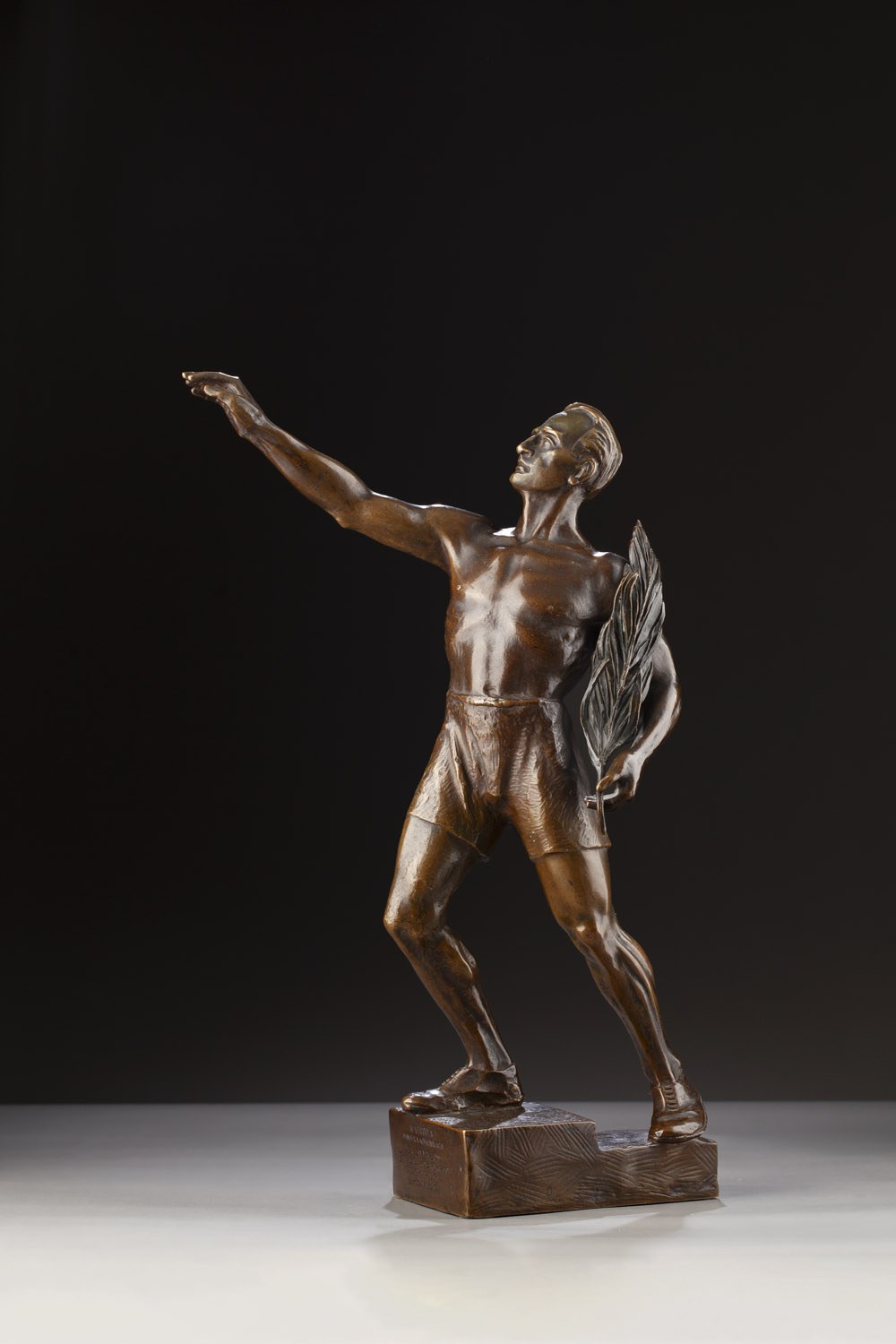
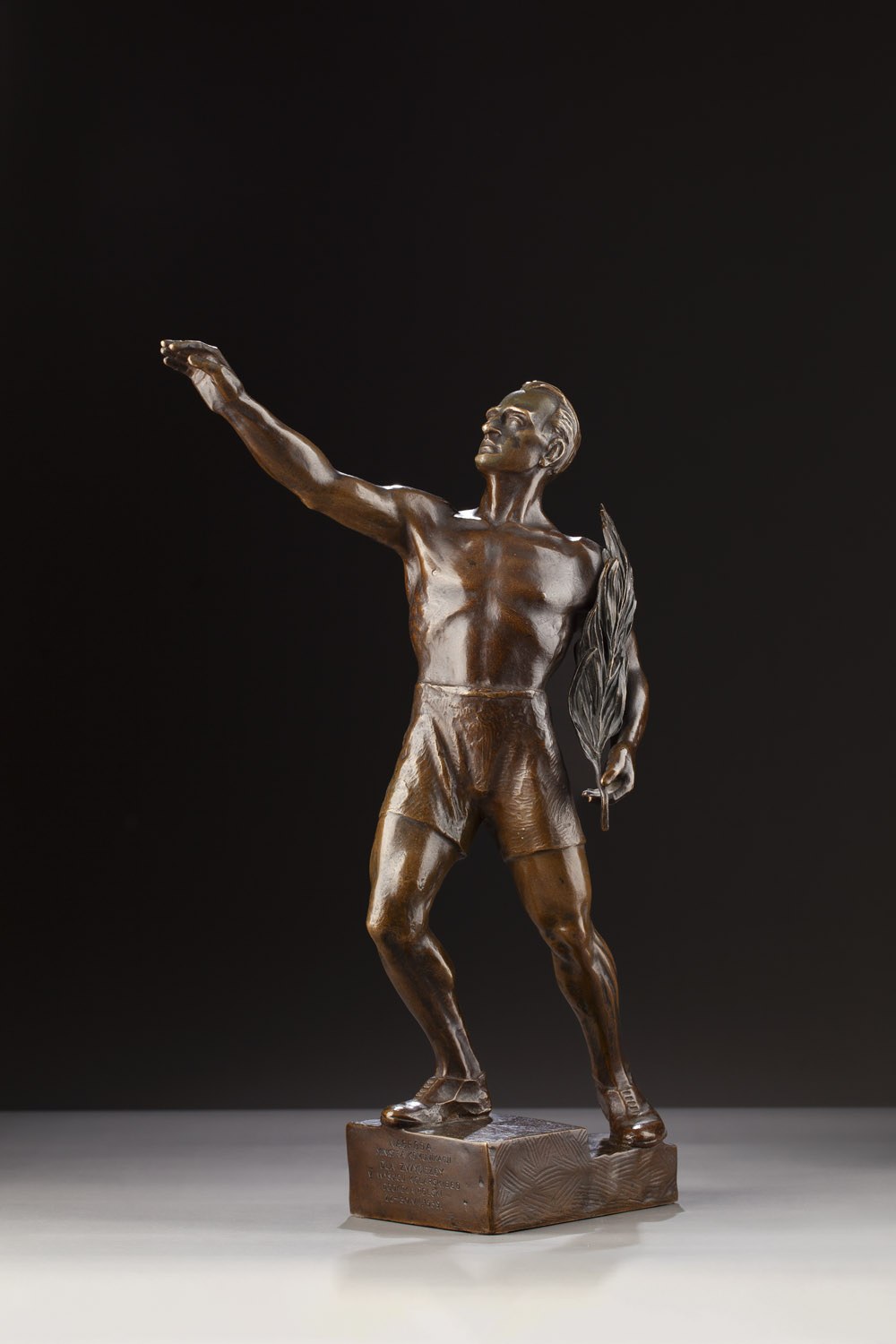
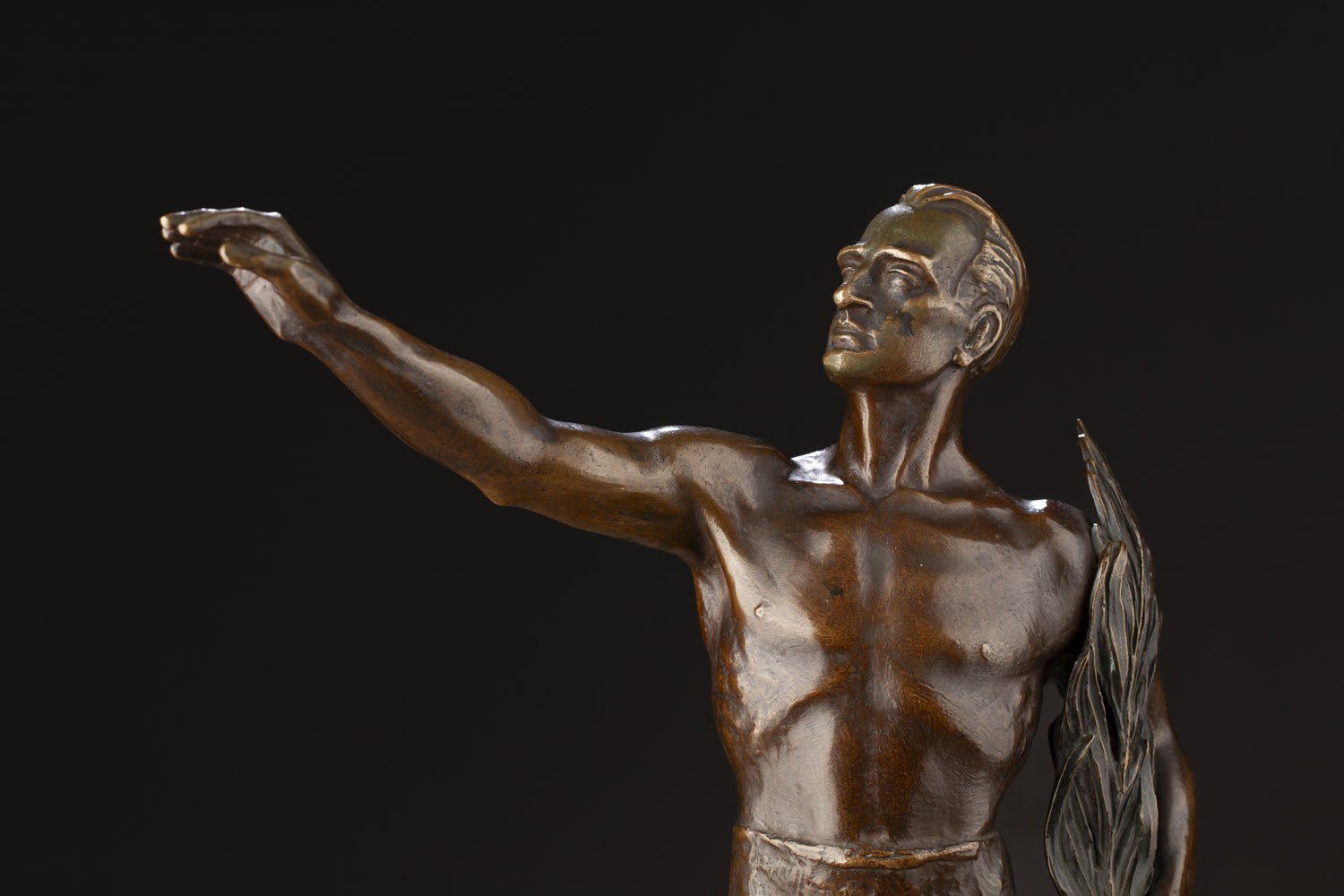
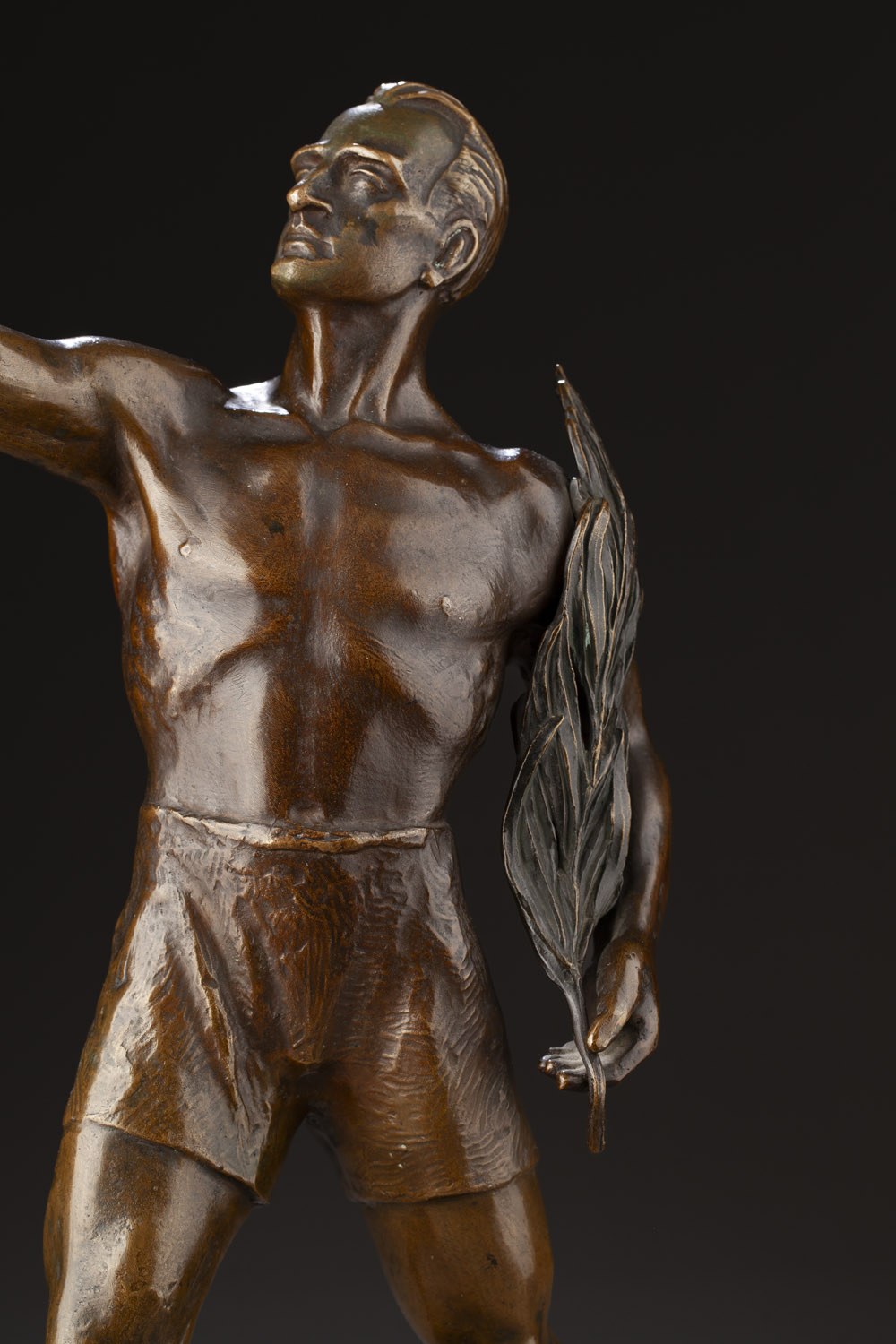
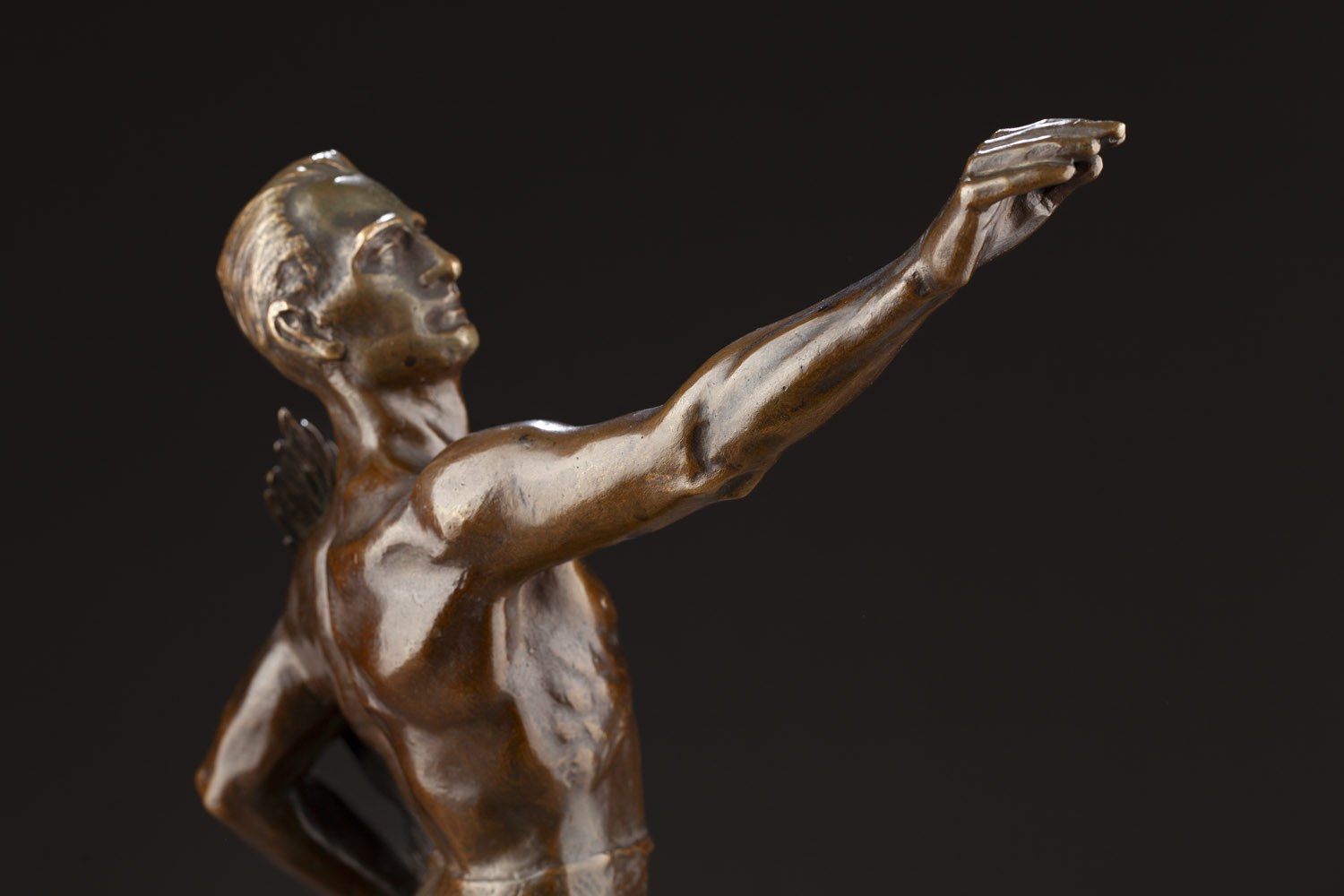
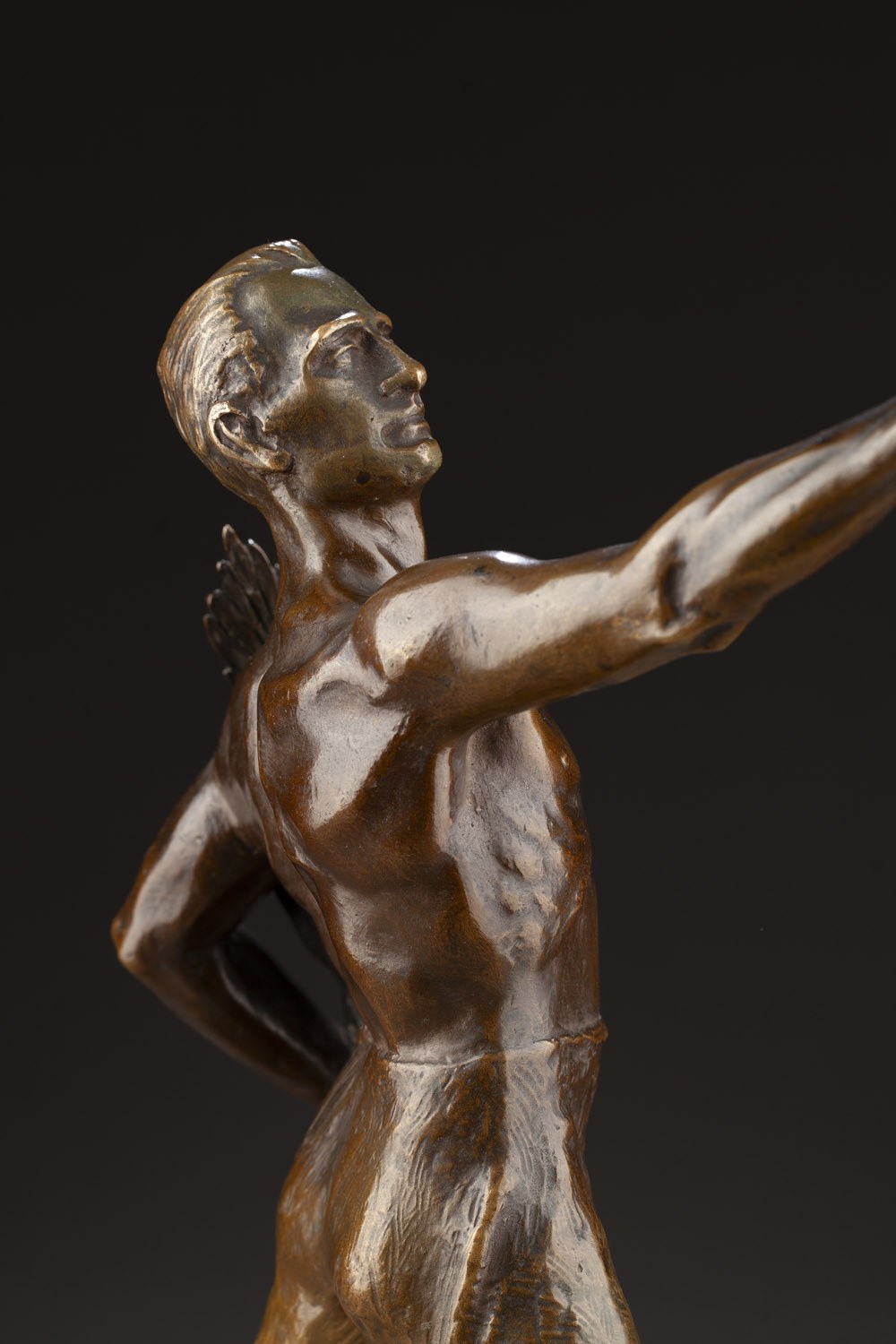
Dimensions: 48 x 18 x 12 cm
Signed on the base: 'BR. ŁOPIEŃSCY | WARSAW'
described on the base: 'PRIZE | MINISTER OF COMMUNICATIONS | FOR THE WINNER | V CYCLING RACE | AROUND POLAND | 22-30. VII. 1939'
Provenance
private collection, Poland
Exhibited
160 Years of the Lopienski Brothers Company, Branicki Palace annex, Warsaw, October 3-November 19, 2022
Literature
160 Years of the Lopienski Brothers Company, exhibition catalog, ed. by Beata Madany, Agnieszka Kasprzak, Katarzyna Zawila, City of Warsaw, 2022, p. 43 (il.)
Biography
"Łopieńscy Brothers" is the most famous Polish bronzing company of the turn of the century and the interwar years. The founder of the factory was Jan Lopienski (1838-1907) - a bronze worker-tzeler, educated in the workshops of Krakow, Vienna and Paris, who opened the "Bronze Products Factory" in 1862. From 1884, the factory was run by his sons Gregory (1863 - 1939) and Felix (1866 - 1941). Gregory took over the artistic and technical management of the company, while Felix took care of its commercial side. In the last years of the 19th century, they changed their name to "Lopienski Brothers Bronze and Silverware Factory." The factory offered a varied assortment of goods: table and salon bronzes, fine decorative and commemorative sculpture, lighting apparatus, church apparatus. Its products were very popular; every Warsaw home had to have at least one object coming from the Lopienski Brothers' workshop. The company also ran a large sculpture foundry. Among those who cast their works here were Henryk Glicenstein, Konstanty Laseczka, Czesław Makowski, Pius Waloński, Edward Wittig, Antoni Kurzawa. The company's products were repeatedly awarded at national exhibitions (Exhibition of Industry and Agriculture in Warsaw, 1872 - honorary diploma for a set of bronzes for the Warsaw palace of banker Leopold Kronenberg) and foreign exhibitions (1879 - Art Exhibition in Paris - silver medal for a balustrade in Louis XVI style for the palace of Count Zawisza in Warsaw). In the interwar period, Lopienskis cast monuments - they were the main suppliers of bronzes for government offices and diplomatic missions. In the mid-1930s, the company was taken over by the next generation of the Lopienski brothers: the sons of Grzegorz - Tadeusz, Wladislaw and Zdzislaw. The fashion for bronzes in private homes continued - great success was enjoyed by their bronzes in both historical and modern, art déco styles. After the Second World War, the Lopienskis' company resumed operations. It was here that almost all Warsaw monuments destroyed during the war were cast.