


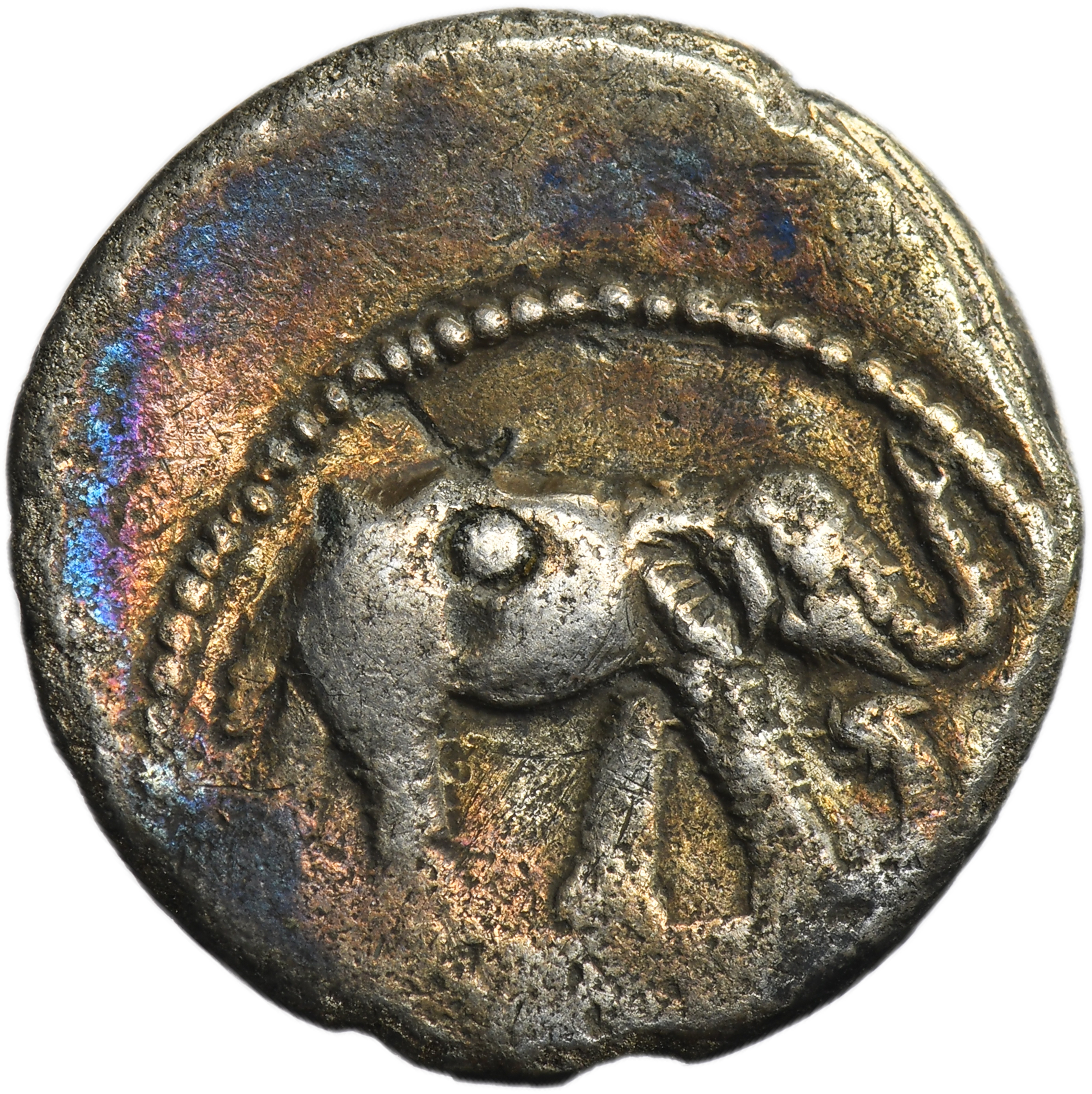
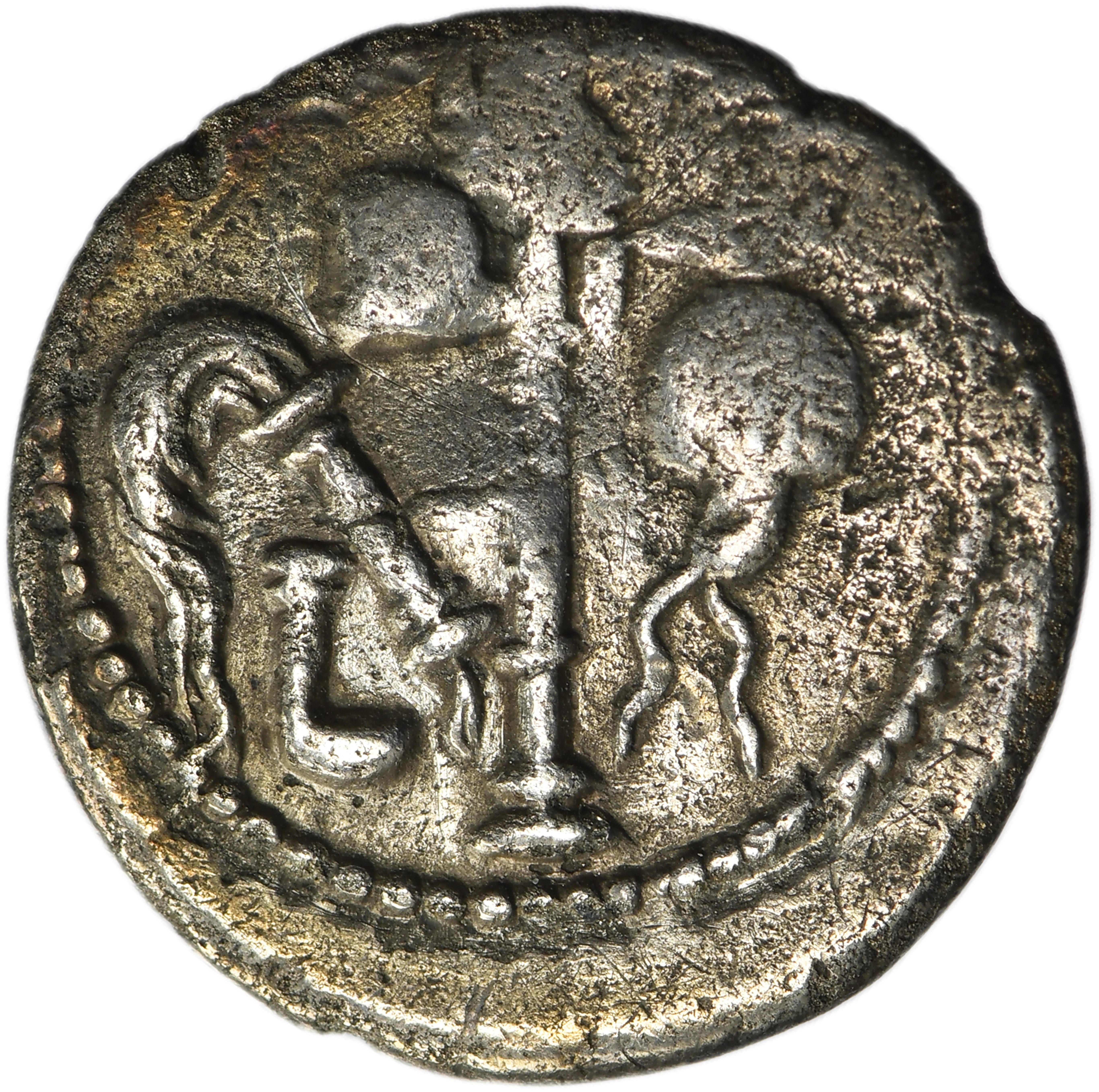


Probably the most common denarius of Julius Caesar, struck between 49 and 48 BC at a mobile military mint in northern Italy, at the time when his troops crossed the Rubicon, initiating a series of civil wars that ultimately led to the fall of the Roman Republic.
The obverse depicts an elephant walking right, trampling a serpent, with the legend CAESAR in the exergue. This imagery is often interpreted as a symbol of the triumph of good over evil, civilization over chaos, or politically the victory of Caesar over his enemies. The elephant, associated with strength and power, conveys dominance and inevitability of success.
The reverse shows the implements of the pontificate: culullus, aspergillum, axe, and apex, attributes of the pontifex maximus. These refer directly to Caesar’s religious office, emphasizing his authority not only as a military leader but also as the chief priest of the Roman state.
The combination of military imagery on the obverse and religious symbolism on the reverse creates a coherent propagandistic message, portraying Caesar as a figure uniting both secular and sacred authority.
Denarii of this type are among the most recognizable coins of antiquity, symbolizing the beginning of the end of the Roman Republic and the emergence of a new political order.
Roman Republic
Iulius Caesar, Denarius 48-49, military mint moving with Caesar in northern Italy
Obverse: elephant advancing right, trampling horned serpent, CAESAR in exergue
Reverse: pontifical implements: culullus, aspergillum, ax with wolf's head at the top, and apex
Diameter 18 mm, weight 3.4 g











