


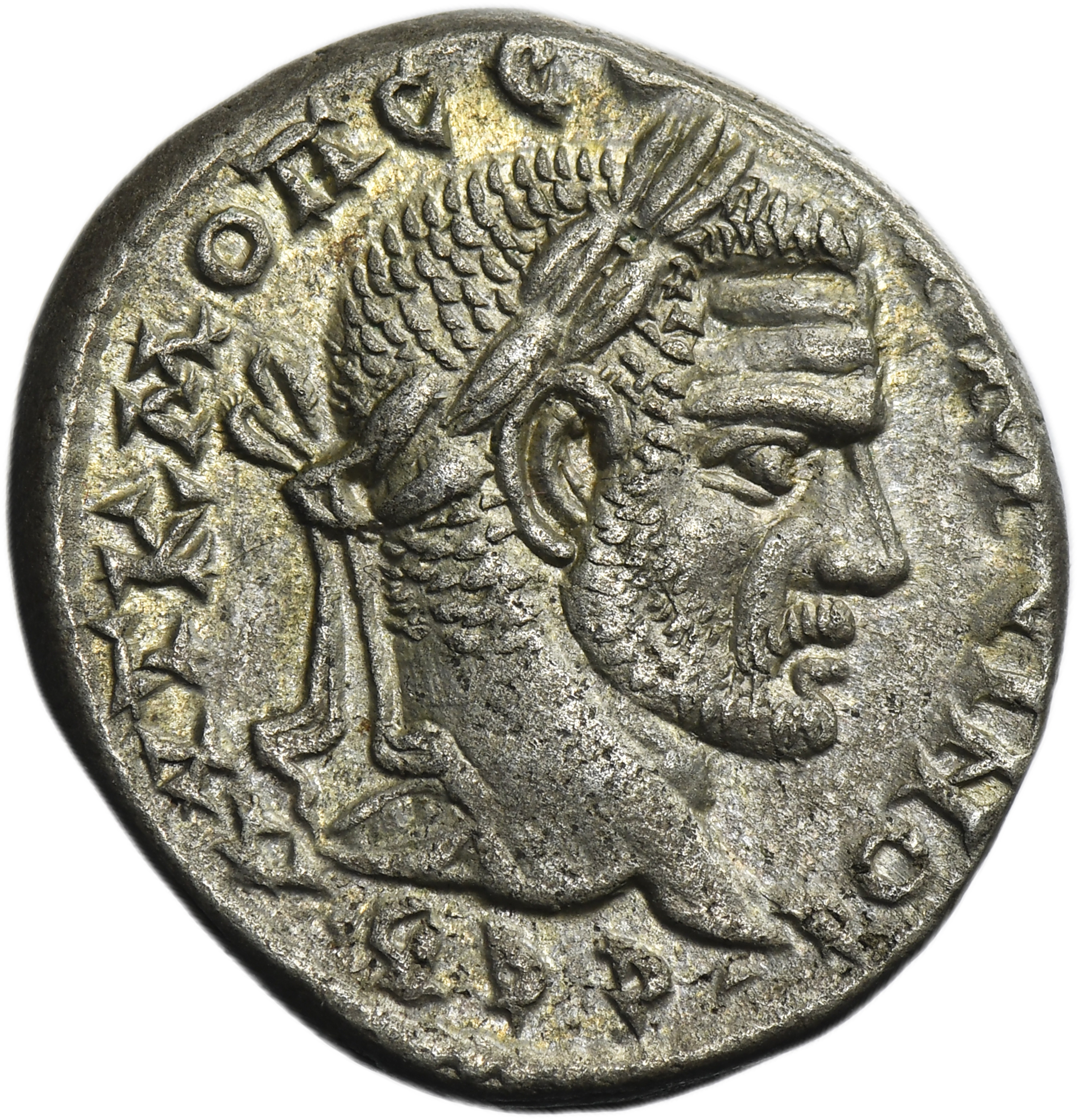


Billon tetradrachm of Macrinus (AD 217–218), struck at Laodicea ad Mare in Syria, belongs to the eastern provincial issues operating within a distinct tetradrachm-based monetary system. The brief reign of Macrinus the first Roman emperor of equestrian origin is clearly reflected in the coinage, which played a key role in legitimizing his authority.
The obverse features a laureate head of the emperor facing right, with the Greek legend AYT K M OΠ CEOY MAKPINOC CEB, presenting his full titulature as autokrator and augustus.
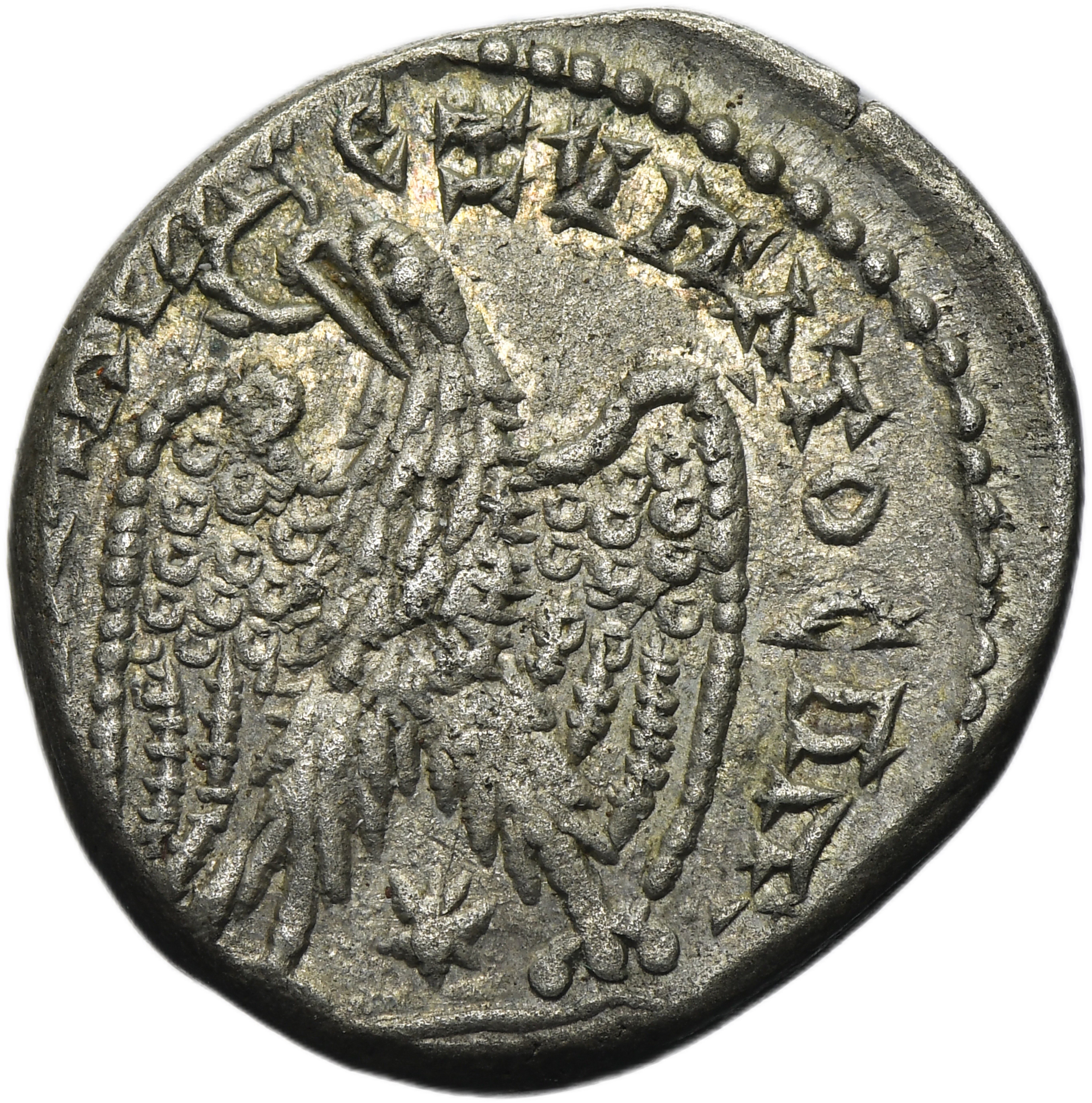
The reverse depicts an eagle with outstretched wings, facing front with its head turned left, holding a wreath in its beak, accompanied by the legend ΔΗΜΑΡΧ ΕΞ ΥΠΑΤΟϹ Π Π, with a star below. The eagle (aquila) serves as a primary symbol of imperial authority and the Roman army, while the wreath signifies victory and favor. The frontal depiction with spread wings is characteristic of Syrian provincial coinage.
The reverse legend refers to the emperor’s tribunician power (tribunicia potestas) and his consular rank, forming a standard element of imperial titulature and serving as a chronological indicator. The presence of the star beneath the eagle is a typical feature of issues from Laodicea and is generally interpreted either as a control mark or as an astral symbol, both well attested in the coinage of the region.
Roman Provincial
Syria, Laodicea ad Mare, Macrinus (217-218), Tetradrachm
Obverse: laureate bust of Macrinus to right
AYT K M OΠ CEOY MAKPINOC CEB
Reverse: eagle standing front, with wings spread, head left, holding wreath in his beak, star below
ΔΗΜΑΡΧ ΕΞ ΥΠΑΤΟϹ Π Π
Diameter 27 mm, weight 16.13 g











