




Provincial bronze issue of Philip I “the Arab” (AD 244–249), struck at Nisibis in Mesopotamia between AD 247–249, belongs to the civic coinage of a key frontier center of the Roman East. As a Roman colony situated on the border with the Sasanian Empire, Nisibis held major strategic and administrative importance, a status clearly reflected in its local mint output.
The obverse shows a radiate and cuirassed bust of the emperor facing left, with the Greek legend AYTOK K M IOYΛI ΦIΛIΠΠOC CЄB, presenting his full titulature as autokrator and augustus. The left-facing portrait represents a less common variant in provincial iconography and serves as a noteworthy typological feature of this issue.
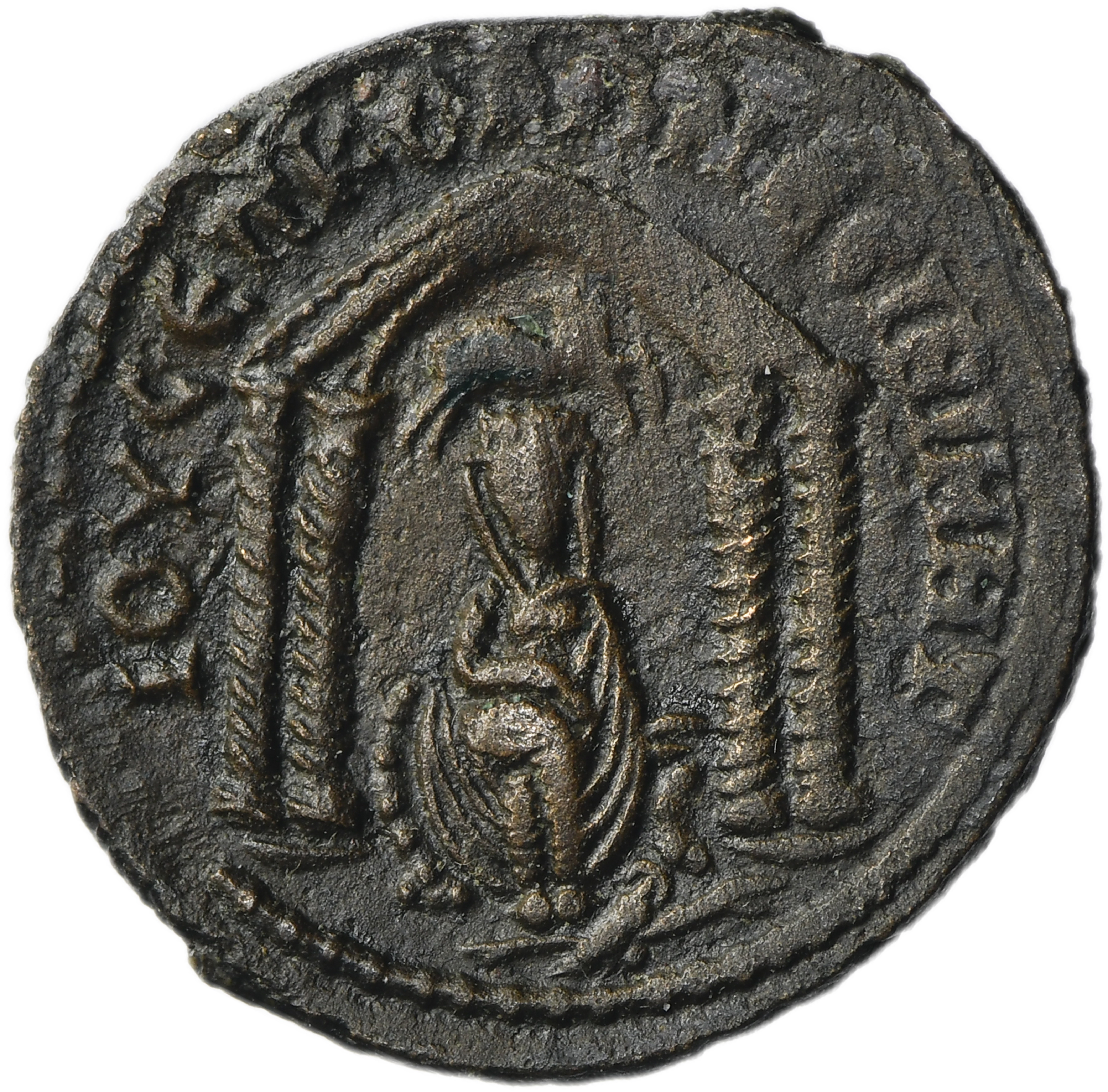
The reverse depicts a tetrastyle temple, within which stands a statue of Tyche, while below appears a river deity, accompanied by the legend ΙΟΥ ϹƐΠ ΚΟΛΩ ΝƐϹΙΒΙ ΜΗΤ, referring to the city as a colonia and metropolis. This composition combines two central elements of civic identity: Tyche as the guardian of the city and the river god as a representation of the local natural environment, emphasizing the importance of water resources and geography to the life and function of Nisibis.
Roman Provincial
Mesopotamia, Nisibis, Philip I (244-249), AE 247-249
Obverse: radiate, cuirassed bust left
AYTOK K M IOYΛI ΦIΛIΠΠOC CЄB
Reverse: tetrastyle temple, statue of Tyche within, river god below
ΙΟΥ ϹƐΠ ΚΟΛΩ ΝƐϹΙΒΙ ΜΗΤ
Diameter 25 mm, weight 9.99 g











