


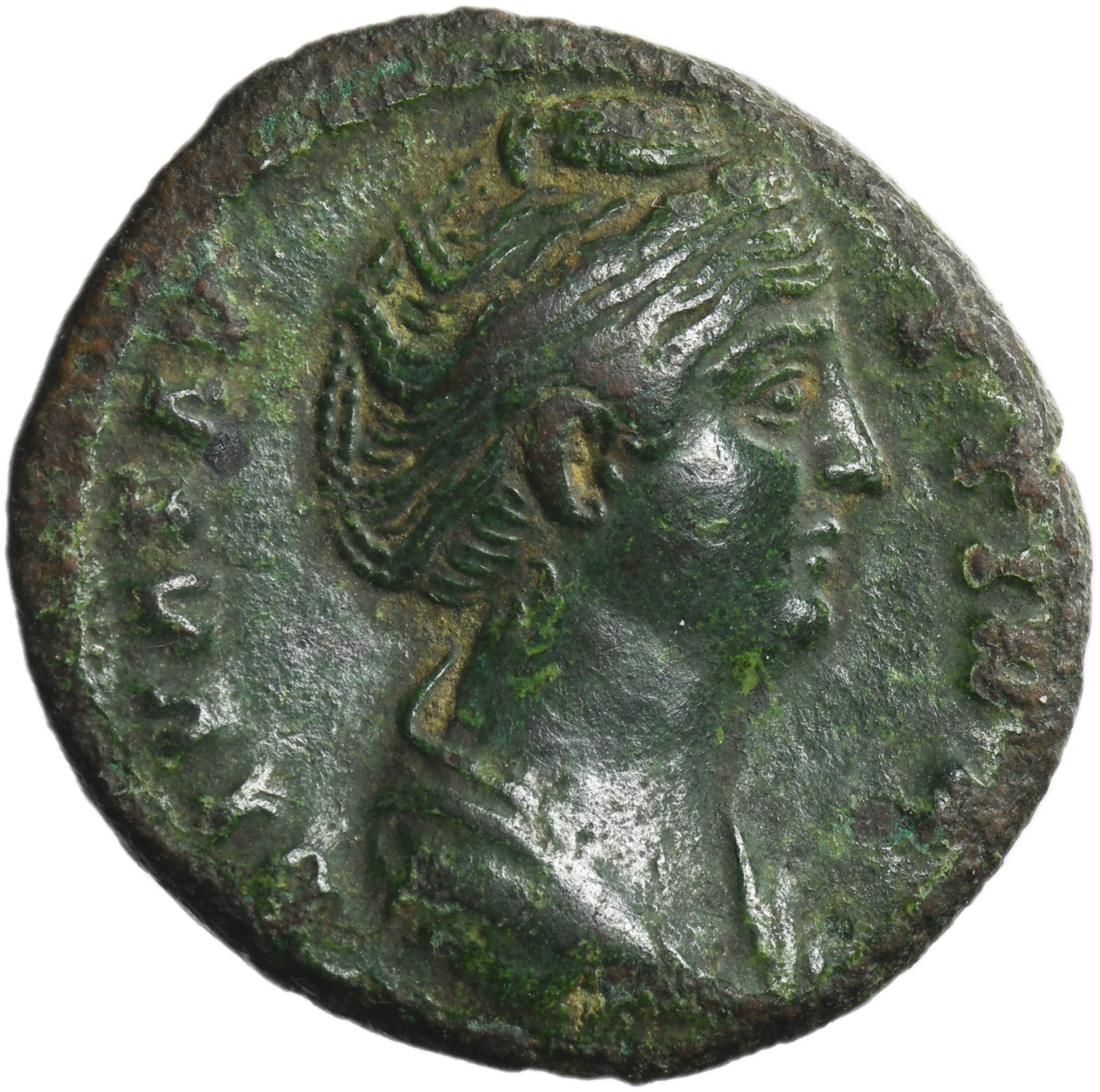
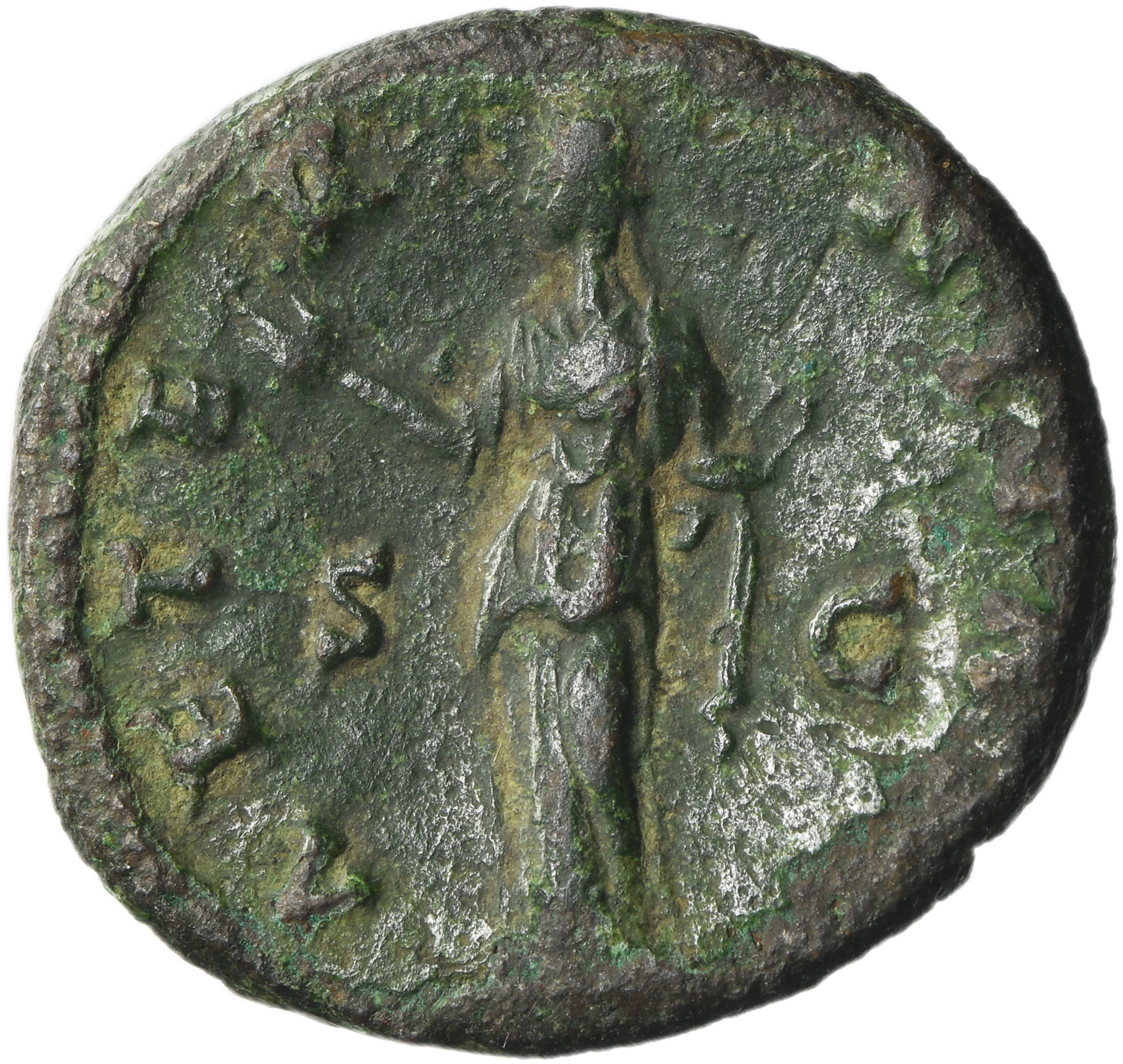


Bronze as of Faustina the Elder, wife of Antoninus Pius, struck at the Rome mint after her death in AD 141, belongs to the earliest series of posthumous issues (consecratio) produced immediately following her deification.
Faustina the Elder died in AD 140, after which Emperor Antoninus Pius arranged her official consecration, a fact confirmed by historical sources as well as by numerous coin issues bearing the legend DIVA FAVSTINA. Following her deification, the Senate formally recognized her cult, and a temple dedicated to her memory was erected in Rome, today known as the Temple of Antoninus and Faustina on the Roman Forum.
The obverse presents the bust of the deified empress facing right with the legend DIVA FAVSTINA, identifying Faustina as a member of the imperial family elevated to divine status. The portrait corresponds to the standard iconographic type used in posthumous imperial coinage, where the depiction of deceased members of the ruling dynasty served as part of the promotion of the imperial cult.
The reverse depicts the personification Pietas standing left and holding an incense box (acerra) used in sacrificial rituals. The figure of Pietas refers to the Roman virtue of religious devotion and the fulfillment of duties toward the gods and the family, while the legend AETERNITAS emphasizes the concept of the eternal remembrance and divine status of the deified empress.
Roman Imperial
Faustina I (138-141, wife of Antoninus Pius), Posthumous As 141, Rome mint
Obverse: draped bust right, hair waved and coiled on top of head
DIVA FAVSTINAReverse: Pietas standing left, holding box of incense S-C across fields
AETERNITAS
Diameter 26 mm, weight 12.45 g











