


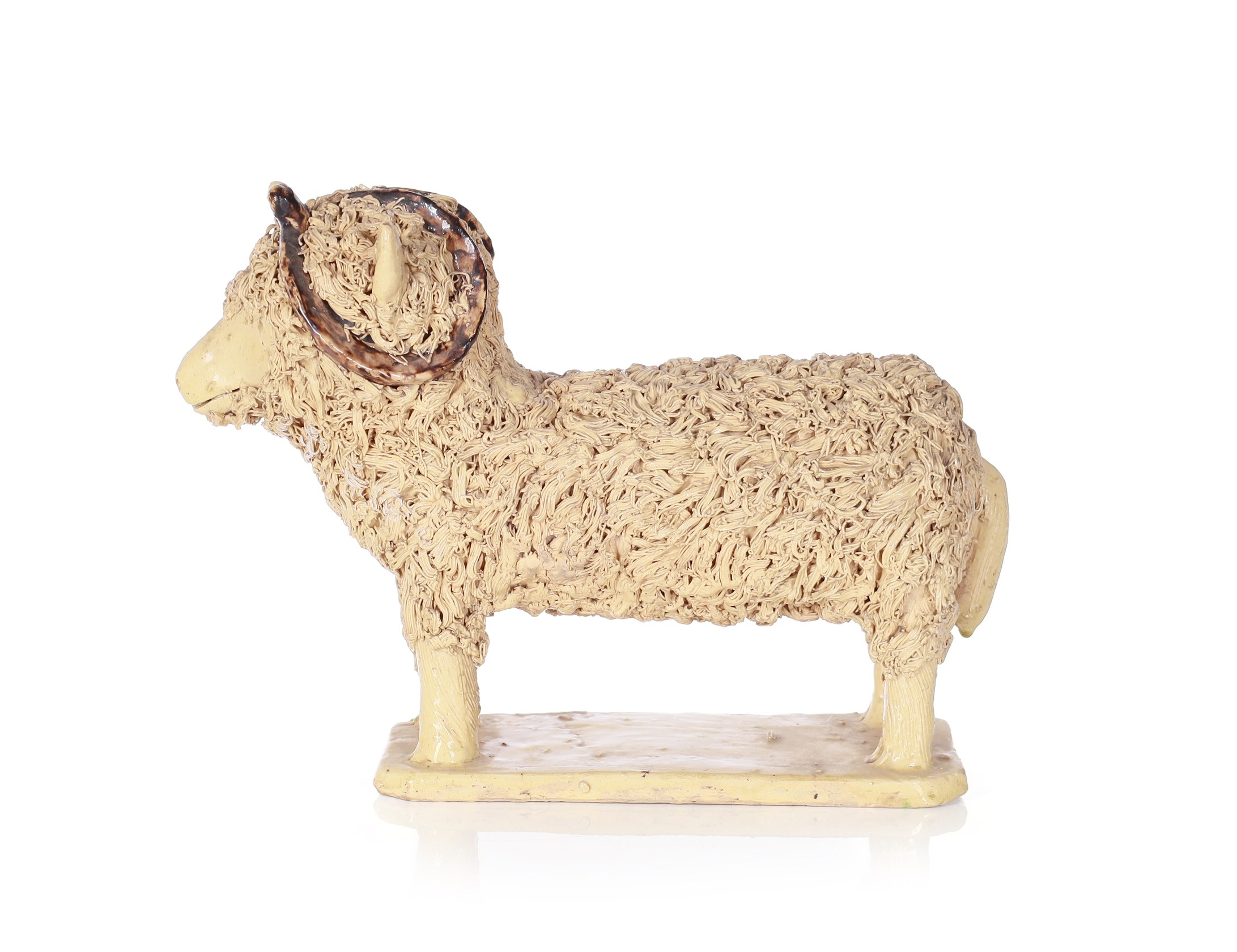
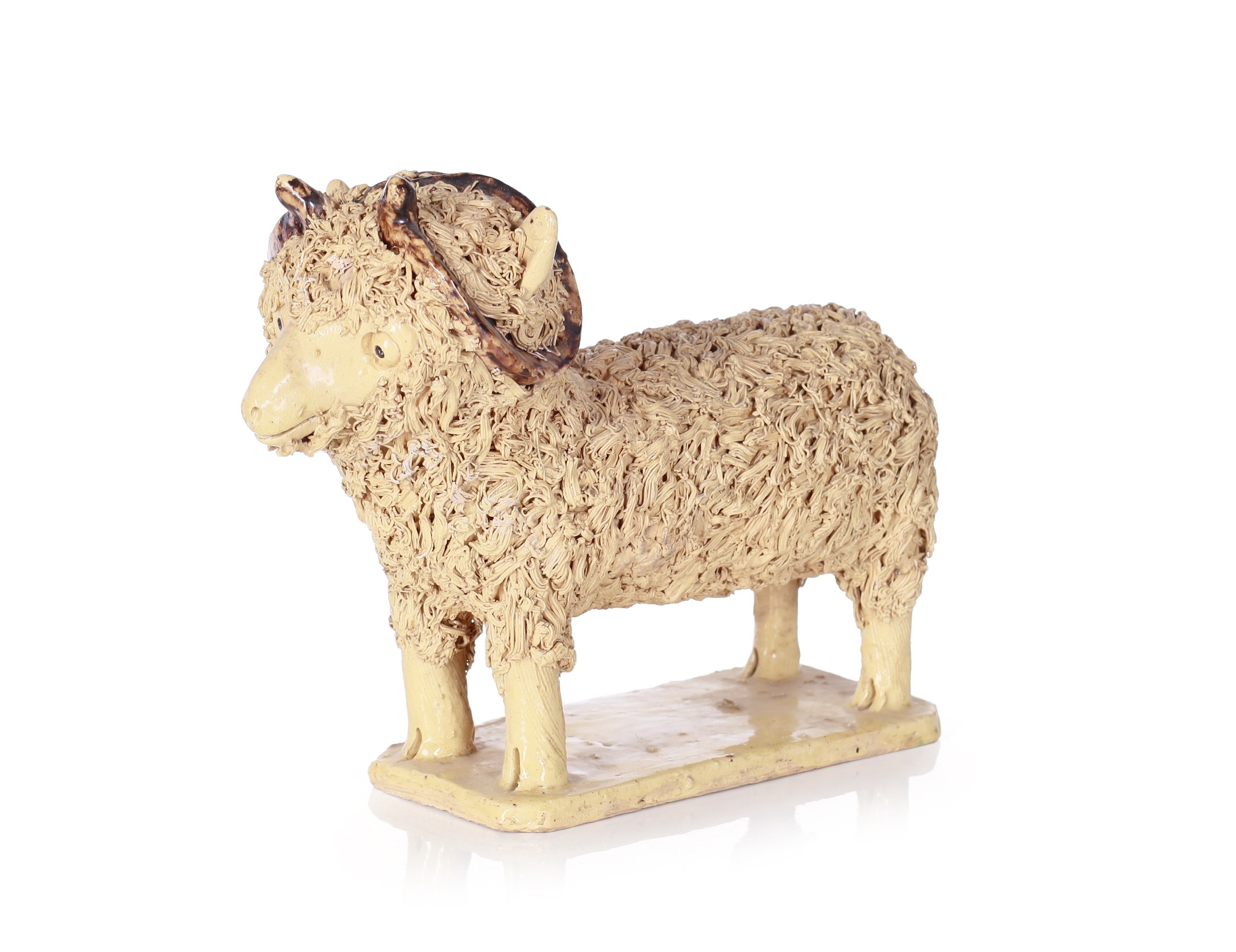
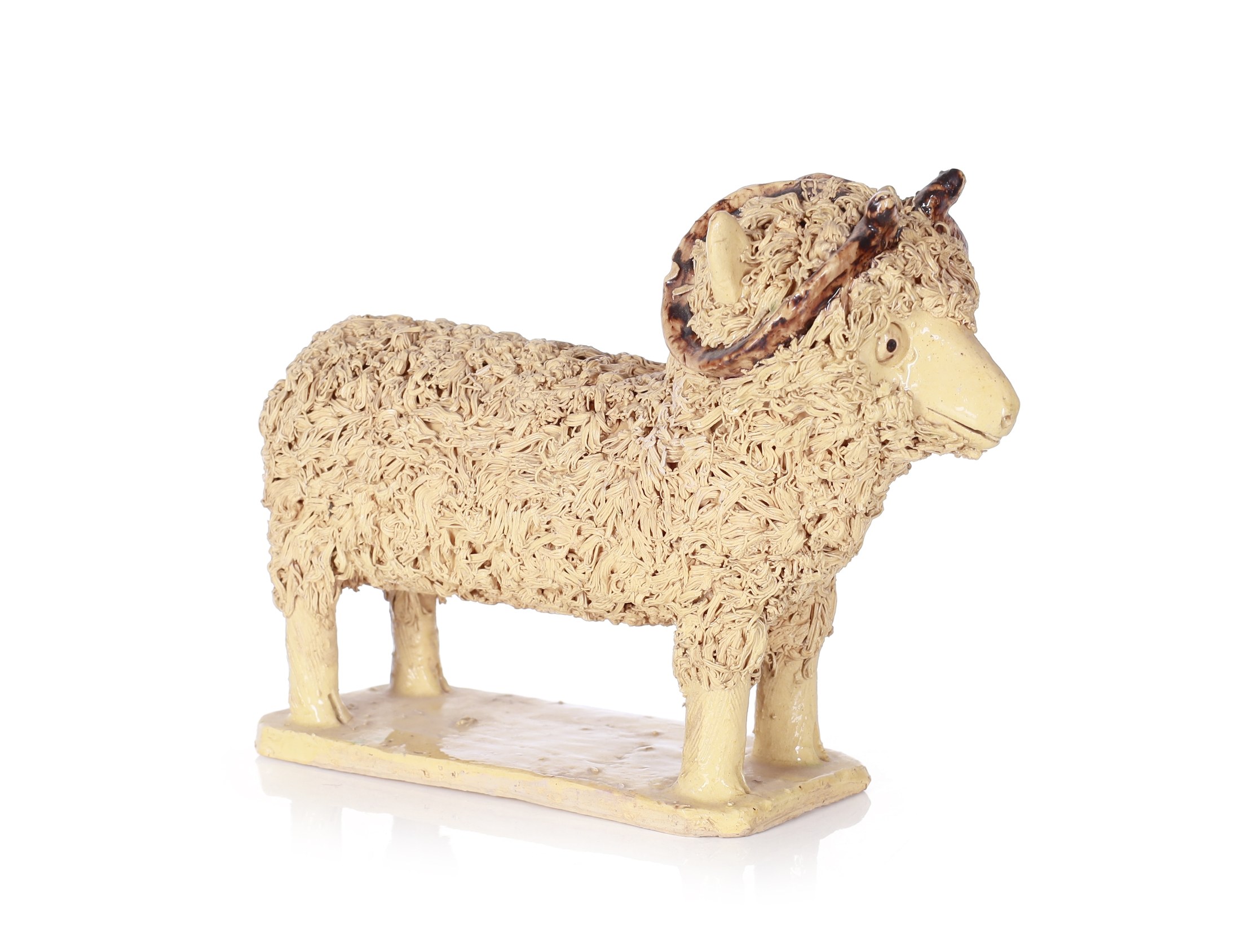
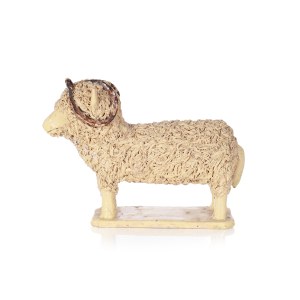
clay; 20.5 x 26 x 9.3 cm
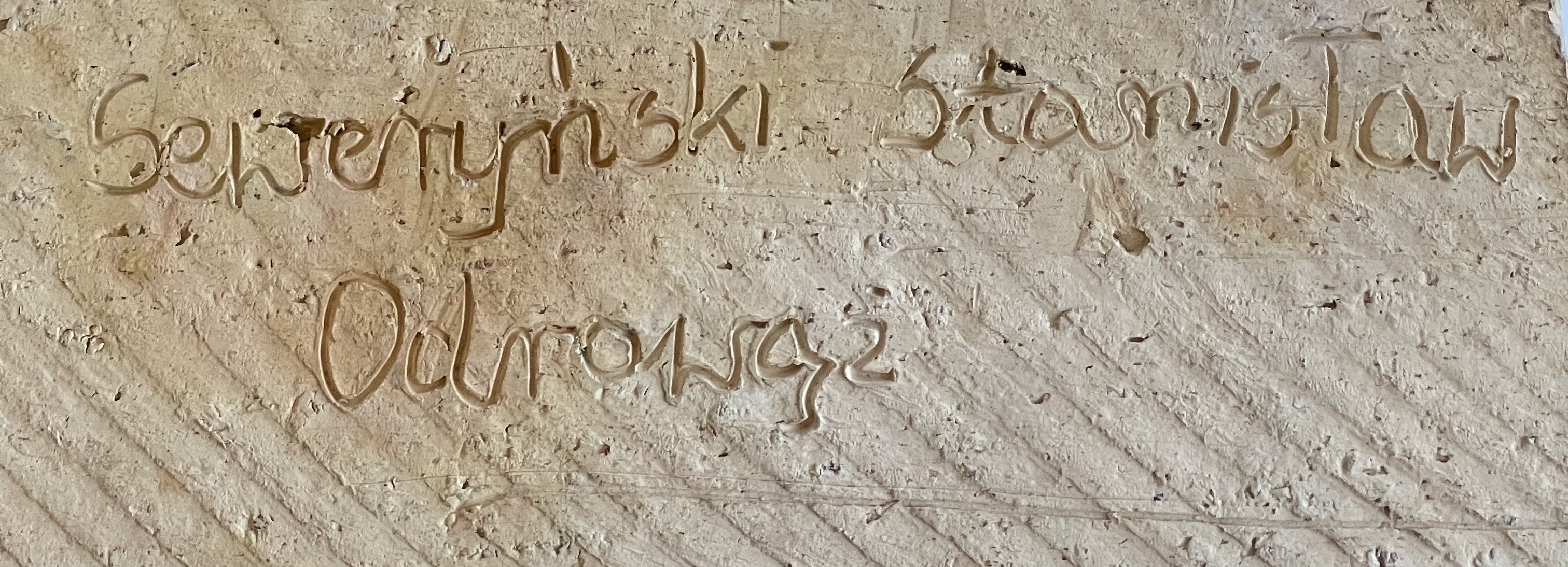
Engraved signature on the bottom: Seweryński Stanisław / Odrowąż
He was born on June 24, 1903, in Rędocin; from 1950 onward, he lived in nearby Odrowąż. He began learning the pottery trade at the age of seven in the workshop of Jan Krawczyński, who, having left Ćmielów around 1893, founded a new pottery settlement—Rędocin. Soon, other potters joined him there: Jan Kwapisz, Jan Szubartowski, Tomasz Wroński, and Andrzej Rokita. After Krawczyński’s death, A. Rokita took over the workshop; he had married Seweryński’s sister. For several years, A. Rokita and S. Seweryński worked together. In 1950, S. Seweryński moved to Odrowąż, where he established his own workshop and became a member of the “Chałupnik” Cepelia Pottery Cooperative, based in Iłża
He participated in a folk ceramics exhibition in Iłża for the first time in 1962. Later, he frequently took part in folk art competitions and exhibitions in Kielce, as well as in nationwide competitions and exhibitions, such as the “M. Kopernik” – Toruń 1973, “Great Poles” – Toruń 1975, “Polish Army” – Warsaw 1976, “Folk Art for Children” – Toruń 1976, and others, winning awards and honors. He was a member of the STL and a scholarship recipient from the Ministry of Culture and Art; he was awarded numerous diplomas from the CPLiA and other cultural and educational associations and institutions.
S. Seweryński’s works, held in museum collections (Warsaw, Kraków, Kielce, Toruń, Radom, Płock, Łódź, and others), were frequently displayed in permanent and temporary exhibitions.
Stanisław Seweryński died in 1992. (Oskar Kolberg Award)










최근 확인한 경매
경매품 리스트를 확인하려면 로그인하세요
관심있는 경매품
경매품 리스트를 확인하려면 로그인하세요