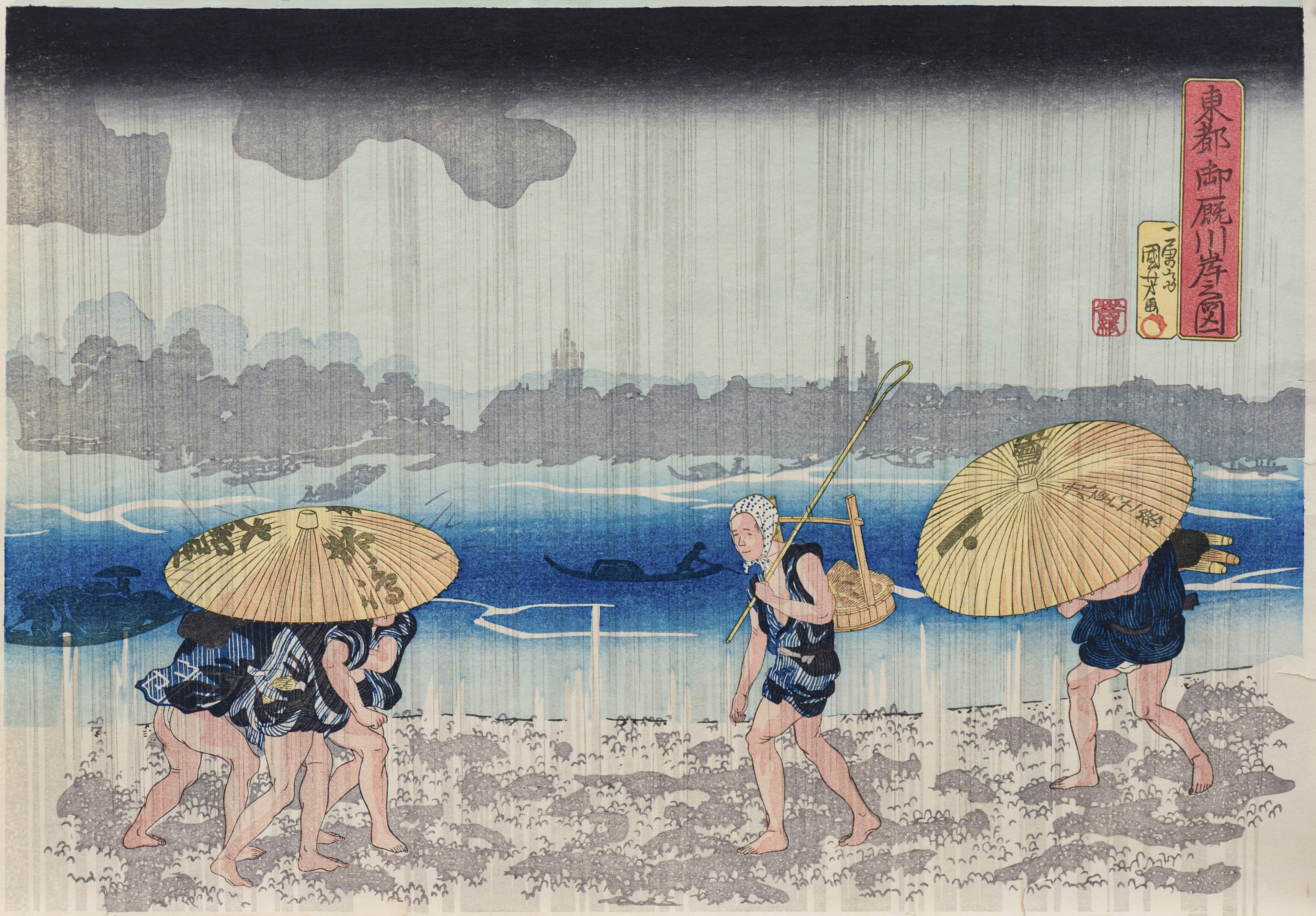
Color woodcut, ink, paper, 27x39 cm, artist's signature
The depiction of torrential rain is a display of both Kuniyoshi's imagination and keen observation, and the skill of the sculptor and printer who so successfully transferred the artist's vision to paper. The unique atmosphere of this work consists of vertical lines of rain of varying thickness and density, heavy raindrops bouncing off the sand, boats on the river shrouded in darkness, and people in the foreground. Five barefoot men trudge through torrential rain on the banks of the Sumida River in Edo. Four of them shield themselves with umbrellas, while the fisherman in the middle, carrying a bucket of eels, has to make do without protection, but doesn't seem the least bit worried about it.
Utagawa Kuniyoshi ( 1798 - 1861) was one of the last great masters of Japanese ukiyo-e woodcut. Kuniyoshi's range of subjects covered many genres: landscapes, warriors, women, kabuki actors, cats and mythical animals. He is known for his depictions of battles of legendary samurai heroes. Kuniyoshi was born the son of a silk dyer and was originally named Yoshisaburō. He helped his father in business as a pattern designer, and some researchers suggest that this experience influenced his rich use of color and textile patterns in prints. Yoshisaburō proved his drawing talents at the age of 12, quickly attracting the attention of the famous ukiyo-e printing master Utagawa Toyokuni. He was officially admitted to Toyokuni's studio in 1811 and became one of his main students. He remained a student until 1814, when he was given the name "Kuniyoshi" and became an independent artist. Between 1815 and 1817, he created a number of book illustrations, and also printed his own independent color prints of kabuki warriors and actors. In the 1820s. Kuniyoshi created a series of heroic triptychs, which show the first signs of an individual style. In 1827, he received his first major commission for a series of depictions of one hundred and eight heroes from the hugely popular Chinese tale Shuihu Zhuan. Despite his artistic success, Kuniyoshi faced challenges in his personal life. He was accused of producing prints critical of the Shogunate, which led to him being placed under government surveillance.