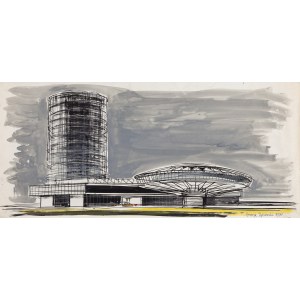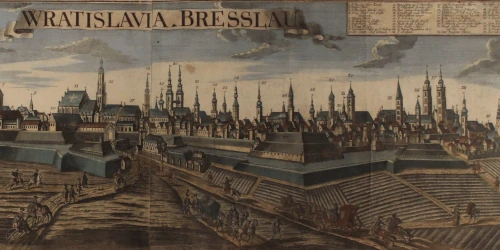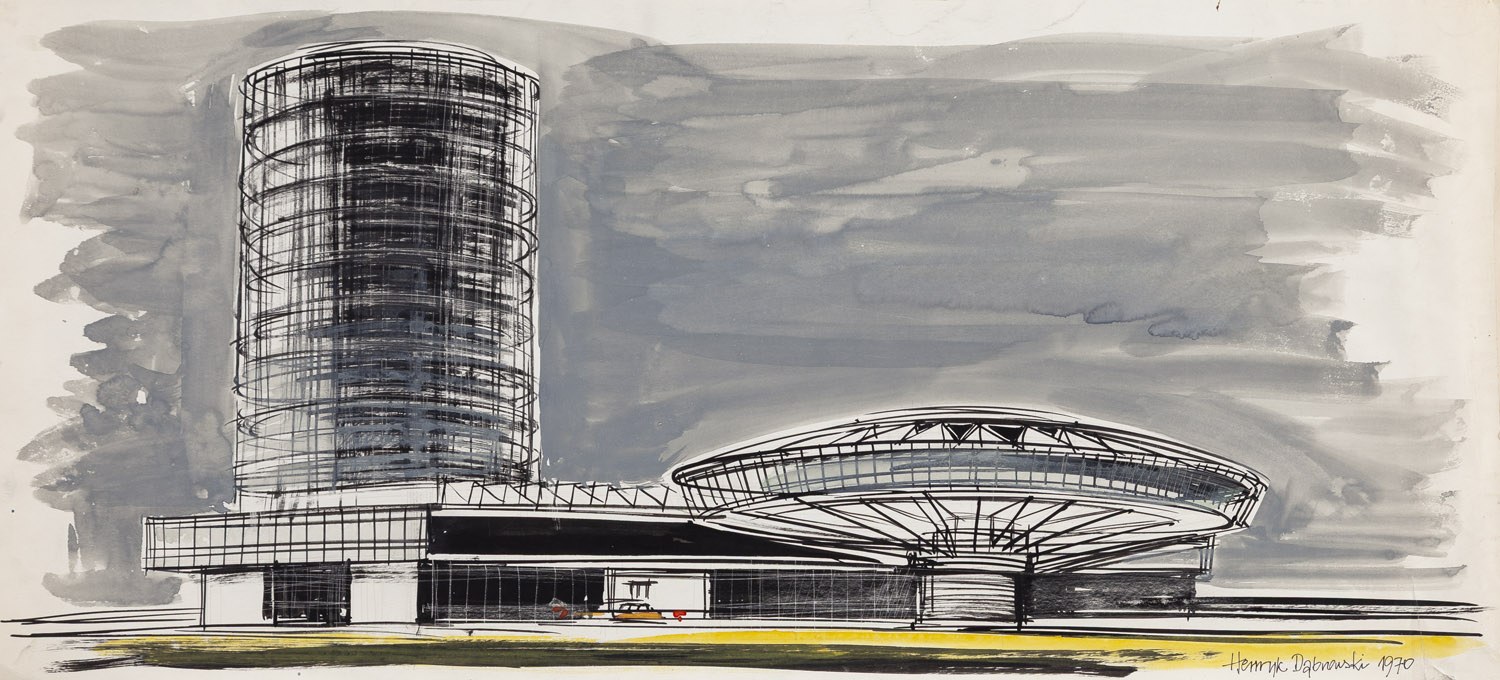
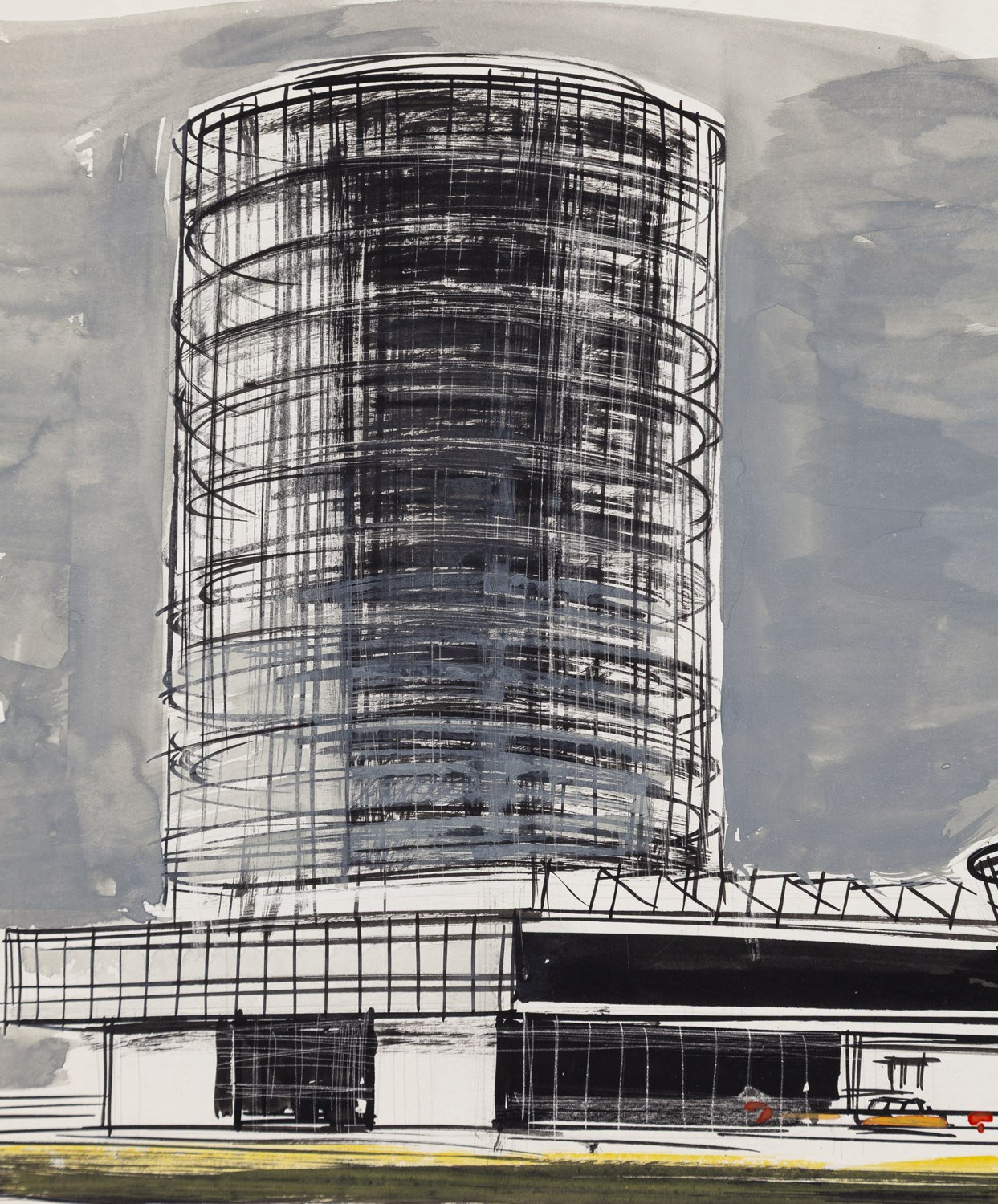
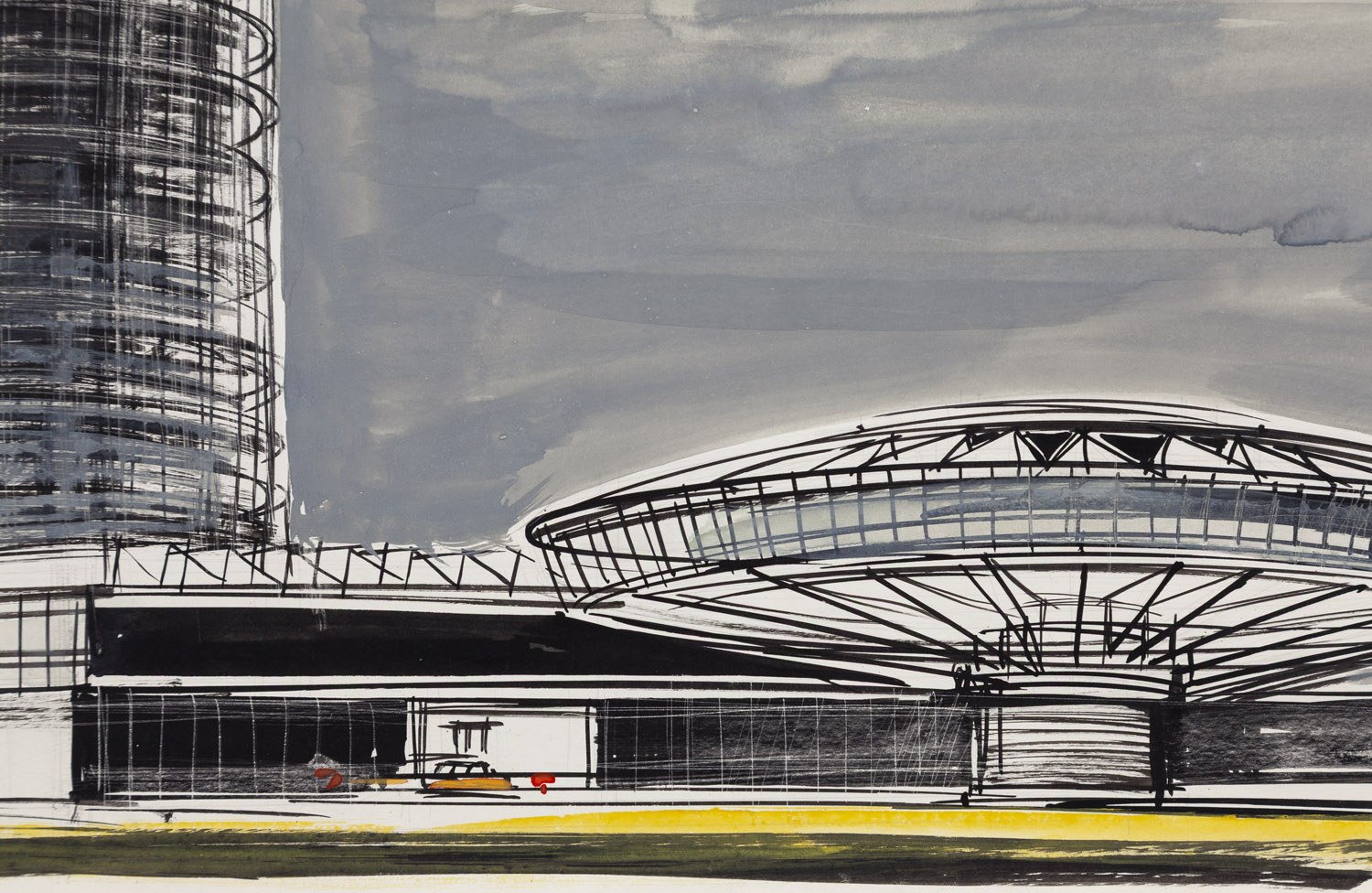


Dimensions: 32 x 69 cm
signed and dated lower right: 'Henryk Dąbrowski 1970'
Biography
Architect and painter. After World War II, he studied architecture at the Warsaw University of Technology. He was a student of Jan Koszyc Witkiewicz. He participated in design projects for Warsaw’s Muranów district. A master of drawing, co-founder of the Warsaw School of Drawing, and an outstanding architect. He was active for many years in teaching, research, and artistic practice at the Faculty of Architecture of the Warsaw University of Technology (1951–2006). A drawing instructor for many generations of architects. He served for many years as Head of the Department, Division, and Drawing Studio at the Faculty of Architecture. He was awarded the title of professor in 1992. As an active designer, he is the architect behind the historic urban complex of Kazimierz Dolny (including townhouses on Senatorska and Klasztorna Streets, as well as numerous granaries). He is also the creator of the contemporary graphic version of the coat of arms of Kazimierz Dolny, based on heraldic studies and research (1994). The artist’s drawings and graphic designs have been published in numerous publications. He developed design sketches for the Rector of the Warsaw University of Technology and designed the graphic layout of documents—diplomas on parchment—for the honorary academic title of Doctor “Honoris Causa” from 1956 to 2006. Approximately 100 of his drawings, graphic works, and paintings are held in private and state collections, as well as in collections in Rome, London, Paris, Madrid, Geneva, Lugano, and New York. Henryk Dąbrowski’s drawings on the subject of Polish architecture remain to this day in the collection of the Museum in Rapperswil. His drawings, prints, and paintings have been exhibited at numerous solo and group exhibitions both in Poland and abroad. Professor Henryk Dąbrowski is often referred to by drawing experts as the “Polish Piranesi.” Dąbrowski’s work reflects the professor’s unique personality, his mastery of drawing, and his skill as a watercolorist. The artist depicts the most fascinating architectural gems, their interiors, and city panoramas. Outside of Poland, the artist has a particular fondness for Italy—where he resided from 1963 to 1967—creating monumental, and at times even intimate, visions of classical buildings. The professor’s works depict architecture realistically, while also capturing its aura and, on many occasions, a vision of its former glory. Of particular interest are the expansive panoramas of Polish cities—Warsaw, Gdańsk, Toruń, Kazimierz Dolny, Kraków, Tykocin, Pińczów, Krasiczyn, and others. Evoking the spirit of the old masters’ vedute, these works present a view of a city that has endured for centuries, yet is simultaneously a metropolis pulsing with modernity.